Oil and gas operations face two distinct security risks: theft from laydown yards where equipment, tools, and materials sit unattended overnight, and liability exposure from lease gates left open by contractors. Remote video monitoring addresses both, using AI-enabled cameras and a live monitoring team to deter theft in real time and alert the right people the moment a gate is not secured.
Why Oil and Gas Laydown Yards Are High-Risk Targets
Oil and gas laydown yards store some of the most valuable portable assets in any industry. Equipment, vehicles, trailers, tools, and materials are staged in open yards across multiple lease sites, often in remote locations with limited staffing after hours. That combination of high value and limited oversight makes these yards consistent targets for theft.
The risk is compounded by economic pressure. When commodity prices fluctuate and operational costs rise, the resale value of copper, steel, and specialized oilfield equipment remains high, making opportunistic theft a persistent problem regardless of market conditions. A single theft incident at a laydown yard can mean lost equipment, project delays, and significant replacement costs that strain operational budgets.
Traditional security measures, including fencing, locks, and basic cameras, provide a partial deterrent but cannot stop a determined theft in progress. Without someone actively watching and able to respond, a recorded incident is still a completed theft. That is where remote video monitoring changes the equation, adding a live human response layer that passive systems cannot provide.
The Real Cost of Open Lease Gates
Lease agreements are explicit on one point: gates must be kept closed. In practice, contractors regularly leave gates open after entering or exiting a site. The consequences range from landowner fines, sometimes triggered by nothing more than a photograph and a complaint, to more serious liability if livestock escapes onto a public road or causes an accident.
For production companies managing multiple leases across a wide geographic footprint, tracking gate compliance manually is not practical. Landmen and field supervisors cannot be everywhere at once, and by the time an open gate is discovered, the damage, the fine, or the liability event may have already occurred.
Reducing this exposure requires a system that detects an open gate immediately and notifies the right person, not one that documents the problem after the fact. This is the same proactive logic that makes remote video monitoring effective for insurance cost reduction across other high-risk industries, and it applies equally to lease gate compliance in oil and gas.
How Remote Video Monitoring Protects Laydown Yards
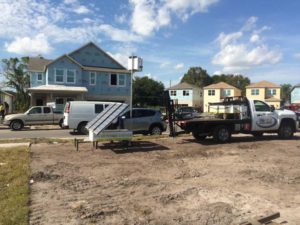
Pro-Vigil deploys solar-powered mobile monitoring units at laydown yards, providing an around-the-clock eye on assets without requiring any existing power or internet infrastructure at the site. AI-enabled cameras continuously scan the yard and trigger alerts when unusual activity is detected, such as a vehicle entering after hours or movement near equipment storage areas.
When an alert is triggered, the live monitoring team reviews the footage in real time and responds immediately. If someone is on the property without authorization, operators activate loud sirens and strobing lights to make the situation unmistakably clear. Most trespassers abandon the attempt immediately. If they do not, the monitoring team contacts local law enforcement directly with verified, real-time video to support a credible and rapid police response.
This active deterrence model is significantly more effective than recording-only systems. To understand the full sequence of events from detection to response, see what happens when a security event is detected. For laydown yards specifically, the speed of that response, often within seconds of detection, is what separates a prevented theft from a completed one.
The same principles that apply to equipment yard security in other industries translate directly to oil and gas laydown yards. Open footprints, remote locations, and high-value portable assets create nearly identical risk profiles, and the same monitoring approach addresses both.
How Pro-Vigil Monitors Lease Gates
Pro-Vigil’s gate guard solution monitors lease gate status and alerts your landman or field supervisor when a gate is left open. Cameras positioned at gate entry points detect when a gate has not been properly secured after a contractor or vehicle passes through, and a notification is sent to the designated contact before the situation becomes a liability.
This creates a documented record of gate activity, including timestamps of when gates were opened, closed, or left unsecured. That record is valuable in multiple ways: it supports disputes with landowners, provides evidence against unwarranted fines, and demonstrates operational diligence if a liability claim arises from a gate-related incident.
Gate monitoring also reduces the operational burden on field staff. Rather than relying on contractors to self-report compliance or dispatching a supervisor to verify gate status across multiple sites, the monitoring system handles verification automatically and escalates only when action is needed.
Solar-Powered Units Built for Remote Oil and Gas Sites
One of the most common objections to deploying monitoring technology at oil and gas sites is infrastructure. Remote leases rarely have reliable power or internet connectivity, and running conduit or fiber to a laydown yard is not a viable option for a temporary or rotating asset location.
Pro-Vigil’s mobile monitoring units are fully self-contained. Solar panels power the unit and charge onboard batteries for overnight operation, while cellular connectivity handles all data transmission back to the monitoring center. No grid power, no internet service, and no permanent installation are required. As explained in more detail in how remote video monitoring works in off-grid locations, this makes the units viable anywhere cellular service reaches, which covers the vast majority of active oil and gas operating areas.
Deployment is fast. Pro-Vigil can have a unit operational at a new site in as little as eight days from order confirmation. For operators dealing with an active theft problem or a newly opened lease, that speed is critical.
A Scalable Solution Across Multiple Sites and Leases
Oil and gas operations rarely involve a single site. Most operators manage multiple yards, several active leases, and assets distributed across a wide geographic footprint. Covering that footprint with security guards would require enormous staffing costs and still leave gaps. Remote video monitoring scales differently: a single monitoring center watches all connected sites simultaneously, with no increase in per-site staffing cost as coverage expands.
Mobile units can also be repositioned as operational priorities change. If a lease winds down and assets move to a new location, the monitoring unit moves with them. This flexibility is particularly valuable for operators whose active sites shift seasonally or as drilling programs progress.
For operators looking at the full picture of risk management across their portfolio, remote video monitoring addresses both the physical security risk, theft from laydown yards, and the compliance and liability risk, open lease gates, within a single solution. This positions it as one of the most effective tools for reducing business risk in remote, high-value operating environments.
A Proactive Approach to Oil and Gas Security
The two biggest security vulnerabilities for oil and gas operators, laydown yard theft and lease gate liability, are both preventable with the right monitoring in place. Companies such as Pro-Vigil specialize in AI-enabled detection, live operator response, and solar-powered mobile deployment that addresses both risks within a single, scalable program.
From the moment a Pro-Vigil unit is deployed, your laydown yards are watched around the clock and your lease gates are monitored for compliance. Theft attempts are deterred in real time. Open gates are flagged immediately. And everything is documented, giving your team the records they need to manage disputes, respond to fines, and demonstrate operational accountability.