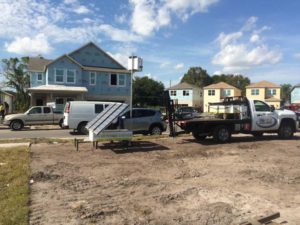
Yes, remote video monitoring works in remote and off-grid locations. Mobile monitoring units are self-powered via solar panels and batteries and transmit video and alerts over cellular networks, making them fully operational at sites with no electrical grid connection or internet infrastructure.
Remote Video Monitoring in Off-Grid and Remote Locations: How It Works
Many businesses operate in areas where power and internet are limited or not yet available. This is especially common for construction sites, solar farms, and rural properties.
A common concern is whether security systems can still function in these environments.
The answer is yes. Remote video monitoring works in remote and off-grid locations by using mobile, solar-powered systems that detect suspicious activity, while a monitoring agent responds when something unusual occurs.
This allows businesses to protect their property even before permanent infrastructure is in place.
Why Remote Locations Are More Vulnerable
Remote and off-grid sites often face higher security risks because they lack visibility and immediate response. These environments typically include:
- Construction sites in early development phases
- Solar farms located far from urban centers
- Rural properties with limited nearby activity
- Infrastructure projects without permanent utilities
Because these sites are often unattended after hours, they can become easy targets for:
- Theft of tools, materials, or copper wiring
- Equipment damage or vandalism
- Trespassing across large, open areas
Without active monitoring, incidents may go unnoticed until significant damage has already occurred.
The Challenge With Traditional Security Systems
Most traditional CCTV security systems depend on:
- Fixed electrical power
- Wired internet or network connections
- Permanent installation locations
In remote environments, these requirements create limitations. Security may not be installed early enough, or coverage may be incomplete as the site expands.
This leaves a gap during the exact time when a site is most vulnerable.
How Mobile Remote Video Monitoring Solves the Problem
Remote video monitoring systems designed for off-grid environments use mobile units that operate independently of traditional infrastructure.
These systems typically include:
- Solar-powered cameras that do not require external electricity
- Cellular connectivity to transmit alerts and video
- Elevated camera towers that provide wide visibility across the site
- Integrated deterrent systems that activate when suspicious activity occurs
Because they are self-contained, these units can be deployed quickly and repositioned as the site changes.
Real-Time Protection Without Power or WiFi
Even without traditional utilities, remote video monitoring still provides active protection.
When suspicious activity is detected:
- AI-enabled cameras flag the event
- A monitoring agent reviews the footage in real time
- Deterrents such as sirens or alarms can be activated
- Authorities can be contacted if the situation escalates
This process allows businesses to intervene while activity is happening, not hours later.
At the same time, the system records and stores video, providing documentation if an investigation is needed.
Why This Matters for Construction and Solar Sites
Construction and solar projects often face their highest risk before infrastructure is fully established.
Materials, equipment, and wiring are stored on site, but:
- There may not be power
- Internet access may be limited
- The site layout may change frequently
Mobile, solar-powered monitoring units allow security to be deployed early and adjusted as the project evolves.
This helps protect assets, tools, and materials from day one instead of waiting until permanent systems can be installed.
Flexible Security That Moves With the Project
One of the key advantages of mobile monitoring units is flexibility. As construction progresses or site conditions change, units can be relocated to cover:
- New material storage areas
- Expanded laydown yards
- Newly accessible entry points
This ensures that security coverage keeps pace with the project, rather than falling behind it.
A Practical Solution for Remote Protection
Remote and off-grid environments require security solutions that do not rely on traditional infrastructure.
Remote video monitoring provides that flexibility by combining:
- Solar-powered systems that operate without external electricity
- Cellular connectivity for real-time alerts
- Monitoring agents who respond to suspicious activity
- Recorded footage that supports investigations
Companies such as Pro-Vigil specialize in mobile and remote monitoring solutions, helping businesses secure construction sites, solar farms, and rural properties even in challenging environments.
For organizations operating outside of traditional infrastructure, remote video monitoring offers a reliable way to detect, deter, and document activity without compromise.
Frequently Asked Questions
Yes. Mobile remote video monitoring units are designed specifically for off-grid environments. They use solar panels and battery banks for power and connect to the monitoring center via cellular (4G/LTE) networks. This means they can be deployed and operational at any location with cellular coverage, regardless of whether power lines or internet service reach the site.
Mobile monitoring units typically use a combination of solar panels for daytime charging, high-capacity battery banks for overnight operation, and optional generator backup for extended overcast periods. Most units are designed to operate continuously through multiple cloudy days before requiring a generator supplement, making them reliable in most climate conditions.
Mobile units transmit video data over cellular networks using 4G LTE or 5G connections, depending on local carrier coverage. The unit’s built-in cellular modem continuously streams or transmits event-triggered footage to the monitoring center. For very remote sites with limited cellular signal, directional antennas or satellite connectivity options can extend coverage.
Yes, this is one of the most common use cases. Solar farm sites often have the greatest theft and vandalism risk during construction, before any on-site electrical infrastructure is operational. Mobile monitoring units can be deployed immediately, using their own solar power, and provide security from day one of site preparation through commissioning and beyond.
Contact your monitoring provider before deployment to assess cellular signal strength at the site. Many providers carry signal testing equipment or can consult coverage maps. Solutions for weak signal areas include directional cellular antennas, cellular signal boosters, or, for very remote locations, satellite-based connectivity. Most sites with any commercial cellular service are viable for mobile monitoring.