Remote video monitoring is most valuable for businesses that manage high-value assets in open or outdoor environments, operate after hours with limited staffing, or face significant theft and trespassing risks. Industries that benefit most include construction, auto dealerships, solar farms, warehouses, cannabis facilities, retail centers, and vacant commercial properties.
The Industries That Benefit Most From Remote Video Monitoring
Remote video monitoring is used across a wide range of industries, but it is especially effective for businesses that manage large properties, valuable assets, or locations that are unattended after hours.
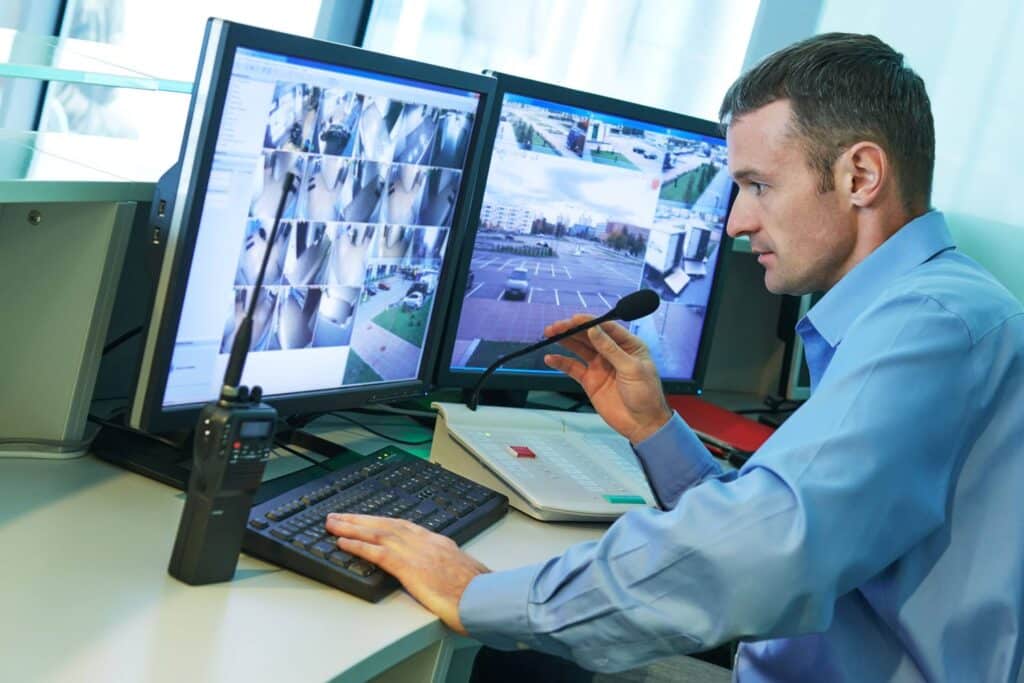
Unlike traditional cameras that record video, remote video monitoring detects suspicious activity and a monitoring agent responds when something unusual occurs. This proactive approach helps deter crime before it impacts operations while still capturing recorded footage that can support investigations.
While nearly any property can benefit from improved visibility, certain industries see the greatest impact due to the nature of their risk.
Construction Sites and Job Sites
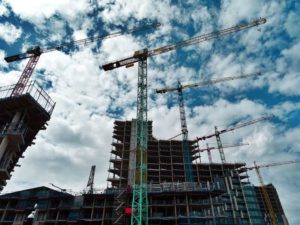
Construction sites are one of the most common environments for remote video monitoring. These locations often store:
- Tools and equipment
- Building materials such as copper and lumber
- Heavy machinery left overnight
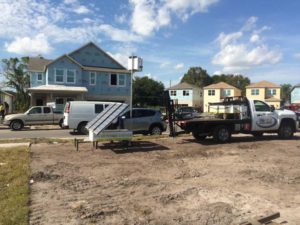
Because job sites may not have power or internet early in a project, many contractors rely on solar-powered mobile surveillance units that can be deployed quickly and moved as the site evolves. Remote video monitoring helps detect activity in construction sites and laydown yards, equipment areas, and entry points, while monitoring agents can deploy deterrents before theft or vandalism occurs.
Auto Dealerships and Vehicle Storage Lots
Dealerships and vehicle storage facilities manage large inventories of high-value assets that are often parked in open lots. Common risks include:
- Vehicle theft
- Catalytic converter theft
- Break-ins and vandalism
AI-enabled cameras help identify unusual activity across large parking areas of an auto dealership, and monitoring agents can respond in real time when movement occurs after hours. Many dealerships also use license plate recognition (LPR) to track vehicles entering and leaving the property, adding another layer of visibility.
Retail Centers and Commercial Properties
Retail locations often include large parking lots and exterior areas that remain accessible after business hours. These environments can experience:
- Loitering or trespassing
- Vehicle break-ins
- Illegal dumping
Remote video monitoring helps protect both the property and the people who visit it. Monitoring agents can respond to suspicious activity in parking areas, helping deter incidents before they affect customers or employees.
Solar Farms and Remote Energy Sites
Solar arrays and energy infrastructure are often located in remote areas with limited access to power or internet connectivity. These sites face risks such as:
- Theft of copper wiring
- Damage to solar panels
- Trespassing across large, open land
Mobile, solar-powered monitoring units are particularly effective in these environments. They allow operators to secure large areas without relying on existing infrastructure.
Because these solar arrays are remote, the ability to detect and deter activity early is critical to preventing damage and downtime.
Vacant Commercial Properties
Vacant buildings can quickly become targets for trespassing, vandalism, and illegal activity if they are not actively protected. Common issues include:
- Unauthorized entry into buildings
- Graffiti and property damage
- Illegal dumping
Remote video monitoring provides a way to actively protect these vacant properties without relying on full-time guards. Monitoring agents can respond when activity occurs, helping deter incidents before they escalate.
Warehouses and Industrial Facilities
Warehouses and industrial sites frequently store valuable inventory, equipment, and materials that must be protected around the clock.
These facilities often have:
- Multiple access points
- Large perimeters
- Limited overnight staffing
Remote video monitoring allows businesses to maintain visibility across the entire property while enabling monitoring agents to respond quickly if unauthorized access occurs.
A Flexible Solution Across Many Industries
While the industries above represent the most common use cases, remote video monitoring is adaptable to many types of properties. Businesses benefit most when they have:
- Large or difficult-to-monitor areas
- Valuable assets stored outdoors
- Locations that are unattended after hours
- A need to deter incidents before they occur
By combining AI-enabled cameras, trained monitoring professionals, and recorded video, remote video monitoring provides a proactive approach to physical security.
Talk to us about how Pro-Vigil can support a wide range of industries, helping businesses detect suspicious activity, respond in real time, and protect their properties with a solution designed for both prevention and documentation.
Frequently Asked Questions
The strongest candidates share a few common traits: valuable assets stored outdoors or in areas difficult to staff continuously, elevated after-hours risk, a large physical footprint that guards cannot cover efficiently, and significant financial exposure if a theft or vandalism incident occurs. If your business checks two or more of these boxes, remote monitoring is likely a strong fit.
No. Remote video monitoring is scalable and available to businesses of all sizes. A small dealership with a single lot benefits from the same monitoring technology as a large construction company with multiple active sites, the number of cameras and coverage areas simply scales to match. Monthly pricing is typically based on the scope of coverage, not business size.
Yes, and this is one of its strongest advantages. A single monitoring center watches all connected properties simultaneously, making it particularly cost-efficient for businesses with multiple locations, property management companies, franchise operators, construction firms with several active sites, or retailers with multiple storefronts.
Construction, auto dealerships, and cannabis facilities typically see the highest ROI because the potential cost of a single prevented theft is substantial. Solar farms and critical infrastructure sites benefit from protection that is otherwise practically impossible to deliver at remote locations. Commercial property managers see strong ROI from protecting vacant properties against the cascading costs of neglect and vandalism.
Yes. Many industries, including cannabis, critical infrastructure, and finance, have regulatory requirements for documented security measures. Remote monitoring generates incident logs, timestamped video records, and documented operator responses that satisfy compliance requirements and provide a clear audit trail for regulatory inspections.