Quick Answer
You can watch your CCTV cameras from anywhere by connecting your IP camera or DVR/NVR to the internet, configuring remote access through the manufacturer’s app, cloud portal, or a secure VPN, and signing in from your phone or computer. For most users, the official app or cloud portal provides the easiest and most convenient way to access live video. For businesses, it’s best to use secure, managed remote access rather than exposing cameras directly to the public internet.
Key Takeaways:
- Remote Access: Learn the different ways to watch CCTV cameras online from anywhere. Explore the advantages of mobile apps, web browsers, cloud platforms, and VPN access to determine which option best suits your surveillance setup.
- Secure Setup: Discover the essential steps and best practices for safe remote viewing. Learn how to protect your system with stronger passwords, firmware updates, and secure access methods.
- Pro-Vigil Portal: See how the Pro-Vigil Customer Portal simplifies remote camera access and monitoring. Find out how it helps you view live feeds, review footage, and manage cameras from virtually any device.
Remember when checking your security cameras meant rushing back to the office because “something looked suspicious”? Thankfully, remote monitoring has made that unnecessary.
Today, most modern IP cameras let you monitor your property from virtually anywhere using a smartphone, web browser, or cloud platform. Whether you’re checking on a single storefront from home or overseeing multiple properties, remote access gives you the flexibility to monitor your cameras whenever and wherever you need. Today, no modern surveillance system feels complete without remote access. Save yourself the sprint to the office every time someone says, “You should probably check the cameras.”
We’ll walk you through the essential steps to watch your CCTV cameras online, from selecting the right access method to protecting your system against security risks.
What You Need Before You Can Watch CCTV Cameras Remotely
Before configuring remote viewing, take a moment to confirm that the basic requirements are met. During customer onboarding, Pro-Vigil frequently encounters systems that support remote viewing but have never been properly configured for secure internet access. Getting these foundational elements right from the start saves a lot of frustration later.
Most remote viewing setups require these basic components:
- An internet-enabled camera, DVR, or NVR: Not all older analog systems support remote viewing without an upgrade or adapter.
- A reliable internet connection: Both at the camera’s location and on the device you’re using to watch.
- Mobile app or browser access: Most modern systems offer both options.
- Valid user credentials: A username and password tied to your system’s account.
- Updated firmware: Outdated firmware is one of the most common vulnerabilities in remote surveillance setups.
After verifying these requirements, you’re all set to access your CCTV cameras remotely.
Pro-Vigil Field Insight: Make Every Camera View Easy to Understand
Remote access is most effective when each camera provides a clear view of the areas that matter most. Pro-Vigil recommends positioning cameras to cover critical assets and entry points, verifying important views in both daylight and nighttime conditions, and labeling cameras by location or function rather than generic device numbers. Descriptive names such as “Northeast Corner – Main Entrance” or “Rear Lot – Equipment Yard” help users and monitoring teams quickly locate the correct camera during an incident.
How to Watch a CCTV Camera from Anywhere Using the Internet
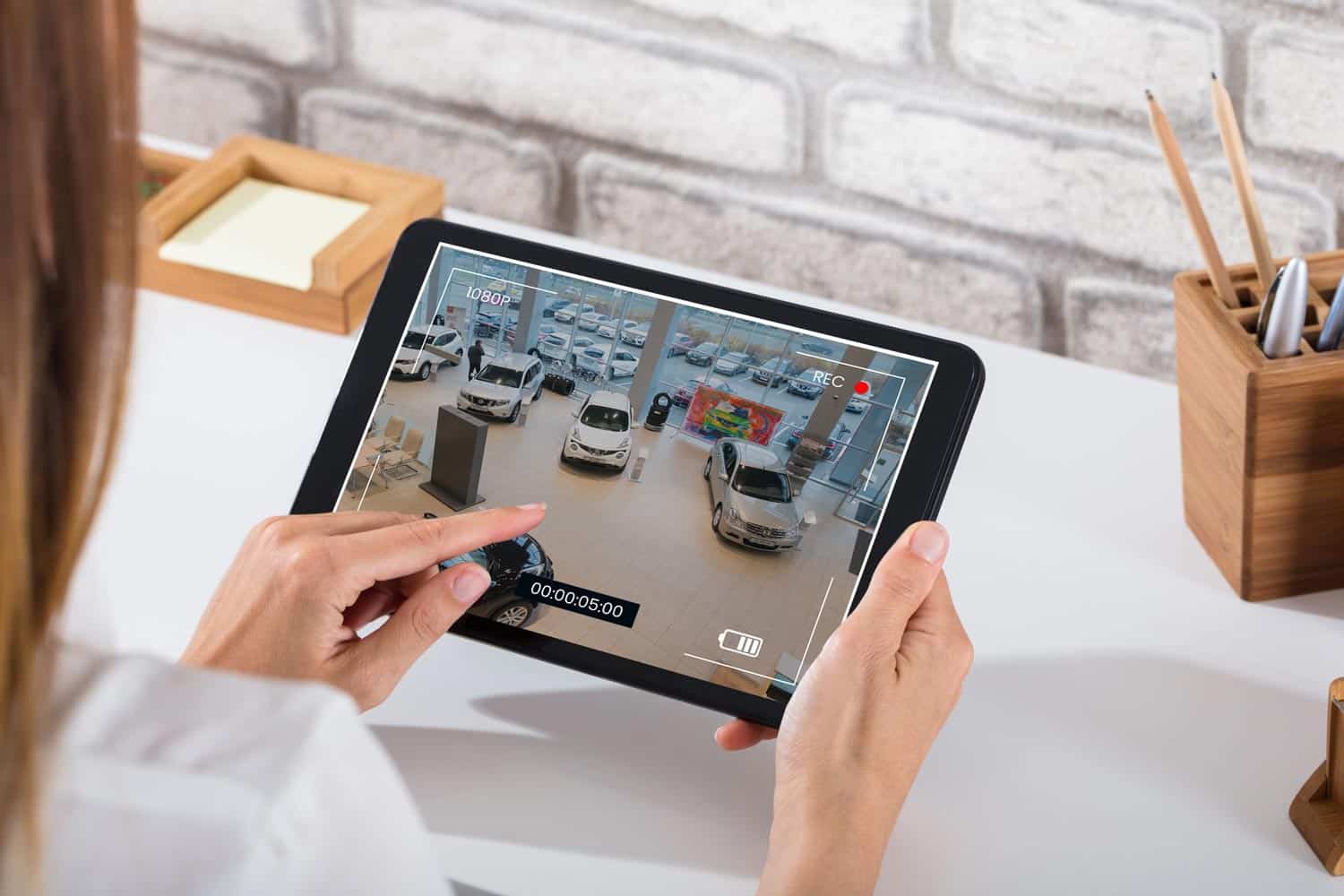
Watching your CCTV cameras remotely only takes a few steps. Follow this process to set up secure remote access and verify that your system works properly from any location.
- Check for remote viewing support: Review the manufacturer’s documentation or contact your security provider to confirm that remote access is available for your camera, DVR, or NVR.
- Put your camera system online: Ensure your camera, DVR, or NVR has a working internet connection through your local network or a supported cellular service.
- Select a remote access method: Most users can access their cameras through the manufacturer’s mobile app or cloud portal. Businesses may prefer a secure VPN or a centrally managed cloud platform.
- Enable remote access and register the device: Sign in to the app or portal and follow the setup instructions to add your camera system. The exact setup process varies by manufacturer and may involve scanning a QR code or providing a serial number, device ID, or activation code.
- Test remote access from outside your local network: Turn off your phone’s Wi-Fi or connect from another location to confirm that you can view your cameras remotely rather than only while connected to the same network.
Once remote access is working, confirm that authorized users can view live video and recordings while restricting access to camera and network settings for unauthorized users.
Pro-Vigil Tip: Test Remote Viewing From Outside Your Own Network
Don’t assume remote viewing is fully set up until you’ve tested it outside your local network. Disconnect your phone from the property’s Wi-Fi and access your cameras using cellular data. This verifies that remote access works from anywhere, not just while you’re connected on-site.
4 Ways to Access CCTV Cameras Remotely
There are four main ways to access live CCTV footage remotely. The best access method varies based on your surveillance system, network environment, and security expectations.
Watch CCTV Cameras Using a Mobile App
Most users choose mobile apps because they provide fast and convenient access to live camera feeds. Whether you’re on Android or iPhone, most camera manufacturers offer a dedicated app that lets you watch live CCTV cameras online directly from your smartphone.
To enable remote viewing, install the camera’s companion app, access your account, and register the device using the identification details included with the camera. If you’re a Pro-Vigil customer, the process is similar, with camera access available through the secure Pro-Vigil Customer Portal. Within minutes, you can watch live CCTV camera feeds from anywhere with an internet connection.
If you’re setting up a new system, check whether your camera’s app supports multi-device management. It makes it much easier to watch live CCTV cameras across several locations.
Watch CCTV Cameras Through a Web Browser
Follow these steps to access and watch your live security camera feeds securely using a desktop web browser:
- Establish Network Connection: Connect your laptop or PC to the same local Wi-Fi network as your cameras, or launch your company’s secure Virtual Private Network client if you are working remotely.
- Locate Network Address: Identify the specific local IP address assigned to your NVR, DVR, or IP camera system (e.g., 192.168.1.100) using your system dashboard or a network scanning utility.
- Navigate to Your Device: Open any modern browser and enter the IP address assigned to your camera or recorder to access its web interface.
- Authenticate Account: Input your unique admin or operator user credentials on the local login screen, along with any required multi-factor authentication (MFA) security codes.
- Launch Live View Grid: Navigate to the main menu dashboard and click on the “Live View,” “Stream,” or “Camera Grid” tab to instantly display your real-time video feeds.
Access CCTV Cameras Using Cloud-Based Platforms
Cloud-based surveillance platforms are becoming the preferred option for businesses managing multiple sites. Instead of relying on a direct connection to your surveillance hardware, cloud-based platforms store your footage securely online and provide access through a centralized portal or mobile app.
The advantages are significant. No need to manage IP addresses, automatic firmware updates, and centralized access for multiple locations.
Many businesses that start with local-only systems eventually move toward cloud-enabled access because of easier remote viewing and simpler user management.
Access CCTV Cameras Using VPN
A Virtual Private Network creates an encrypted tunnel between your viewing device and your surveillance network. It’s widely used in commercial environments because it provides secure access without exposing your cameras directly to the public internet.
Based on Pro-Vigil’s experience helping customers enable remote access, VPN connections are often the preferred choice for businesses that need both security and reliability. While it does require some network configuration, the added layer of protection is worth it, especially for multi-location operations or systems storing sensitive footage.
CCTV Remote Access Methods Compared
Remote Access Method | Best For | Main Advantages |
Mobile App | Homeowners and small businesses | Easy setup, live viewing from smartphones, push notifications |
Web Browser | Users accessing cameras from a desktop or laptop | No mobile app required, full system management |
Cloud-Based Platform | Multi-site businesses and organizations | Access cameras from anywhere, centralized management, automatic updates |
VPN | Businesses with higher security requirements | Encrypted remote access, keeps cameras off the public internet |
How Pro-Vigil Customers Access Live Video
Pro-Vigil customers access their live camera feeds through the Pro-Vigil Customer Portal at portal.pro-vigil.info. The portal works seamlessly across smartphones, laptops, and desktop computers, allowing you to monitor your cameras without switching between different applications.
Here’s how to access live views and recorded footage from each device type.
On Any Device: Accessing Live Camera Views
Regardless of the device being used, the process to watch live CCTV cameras through Pro-Vigil follows the same steps:
- Log in to the Pro-Vigil Customer Portal at portal.pro-vigil.info (You can find this link above as well).
- Click “Cameras” from the main navigation.
- Select “Live Views” to see all connected cameras.
- Click on any individual camera to pull up the live feed.
If you can browse the internet, you can access your cameras. Simply open your favorite web browser, log in to the Pro-Vigil Customer Portal, and start monitoring your sites from virtually any device.
On Mobile (Android and iPhone)
For the best mobile experience, Pro-Vigil recommends using its official mobile app, although the Customer Portal can also be accessed through a mobile web browser. Getting connected takes just a few steps. Open the app after downloading it, enter your login credentials, and access your live camera feeds.
Built with modern mobile flexibility in mind, the native app delivers real-time push notifications for security events, seamless video timeline scrubbing, and fast site arming/disarming controls that standard mobile browsers cannot support.
Learn more about the Pro-Vigil mobile app: Video Surveillance App for iPhone and Android
On a Laptop or PC (Windows and Mac)
For desktop access, the Pro-Vigil Customer Portal functions the same way through any web browser. There are no ActiveX plugins or legacy browser requirements to worry about. Log in, go to the Cameras section, and your live feeds are ready to view. Mac and Windows users both have equal access without any platform-specific workarounds.
How to Review and Download Recorded CCTV Footage
Beyond live views, Pro-Vigil’s portal also lets customers review and download past footage directly:
- Log in to the portal and click on the Camera Dropdown.
- Select “Footage” from the menu.
- From the dropdown, choose a single camera, multiple cameras, or your entire camera network.
- Click the calendar icon to set a start date and time, then click “Set.” Repeat for the end date and time.
- Apply object filters if needed. Options include Person, Vehicle, or Person and Vehicle.
- Click “Search” to load matching clips.
- You can download individual video clips or combine multiple selected clips into one downloadable file.
One important note: combining multiple clips is not the same as continuous footage. Continuous footage is a separate product feature. If that’s something your operation requires, reaching out to Pro-Vigil directly is the best way to confirm whether it’s included in your contract.
Pro-Vigil Tip: Be Ready Before You Need the Footage
Watching live video is important, but accessing recorded footage is just as critical. Before an incident occurs, make sure your team knows how to locate and download recorded video. Pro-Vigil’s portal lets users search by specific cameras and time ranges, and the available download options make it easier to retrieve both continuous recordings and motion-triggered events. Being familiar with the process can save valuable time when footage is needed as evidence.
Common Security Mistakes When Setting Up Remote CCTV Access
Getting remote viewing to work is one thing. Keeping it secure is an entirely different challenge. One of the most common issues encountered when evaluating existing surveillance systems is default camera credentials that were never changed after installation.
Mistakes that create vulnerabilities include:
- Leaving default passwords in place: Change them immediately after setup. Default credentials are publicly listed and among the first things bad actors try.
- Skipping firmware updates: Manufacturers regularly release patches for known vulnerabilities. Running outdated firmware leaves your system exposed.
- Using shared accounts: Every user who needs access should have their own credentials. Shared logins make it impossible to track who accessed the system and when.
- Weak or no two-factor authentication: Adding a second layer of verification significantly reduces the risk of unauthorized access.
- Leaving unnecessary ports open: Port forwarding can enable remote access, but it also opens your system to internet-based attacks if not properly configured.
Many businesses focus on getting remote viewing working quickly but overlook these security controls. Taking an extra hour during setup to address these points can prevent serious problems down the line.
Why Can’t I View My CCTV Cameras Remotely?
If your cameras work on-site but not from another location, the issue is usually related to connectivity, settings, or permissions.
- Camera or recorder is offline: Verify power, network, and internet connectivity.
- Remote access isn’t enabled: Enable the required cloud, app, or remote access service.
- Attempting local-only access: If you’re connecting with a local IP address, off-site viewing won’t work. Use the manufacturer’s app, cloud portal, or a VPN instead.
- Insufficient permissions: Confirm your account has access to the cameras and recordings.
- VPN isn’t connected: Connect to the correct VPN if your organization requires one.
- Firewall or router issue: Recent network or security changes may be blocking remote access.
- Outdated software or firmware: Keep your apps, cameras, and recorder up to date.
- Limited bandwidth: Slow upload speeds can affect remote viewing quality or prevent access.
What Pro-Vigil Recommends for Secure Remote Camera Access
While both VPN access and port forwarding can enable remote viewing, VPN access is generally the stronger choice because it significantly reduces exposure to internet-based attacks. Port forwarding is simpler to configure, but it directly exposes your device to the internet, and that’s a risk most businesses shouldn’t take.
For businesses managing multiple locations, centralized cloud-based access often makes the most sense. It simplifies user management, reduces the need for IT involvement at each site, and gives a consolidated view of all locations from a single dashboard.
A few additional recommendations based on real-world monitoring experience:
- Limit access to sensitive information by implementing role-based access control across your organization.
- Regularly audit which devices are logged into your system.
- Set up motion-triggered alerts rather than relying on passive monitoring.
- Periodically test remote access from an external network to confirm it’s working as expected.
Satish Raj, Chief Technology Officer at Pro-Vigil, notes a broader shift in the industry, stating: “Proactivity is getting better. More organizations are moving from ‘record and store’ to ‘detect and deter.’ What’s getting worse: between rising input costs and tariff uncertainty, some organizations are tempted to ‘save’ by cutting or delaying security investments exactly when their assets are most valuable and attractive to criminals. Those who are still selling static systems with minimal service will find it harder to compete.”
This perspective reinforces why secure, always-on, and intelligently managed surveillance systems are becoming more critical than ever.
Pro-Vigil Field Insight: Make It Easy to Verify Legitimate Activity
Not every person on your property is a security concern. Pro-Vigil recommends documenting who is authorized to be on-site during monitoring hours, including employees, guards, cleaning crews, and delivery services. Maintain up-to-date security contacts with direct phone numbers so monitoring personnel can verify activity quickly and minimize unnecessary alarm responses.
Cloud Storage vs. Local DVR Storage for Online CCTV Viewing
The storage option you select has implications beyond where your footage is saved. It also determines how easily you can access it remotely. Here’s how cloud and local storage differ.
Factor | Cloud Storage | Local DVR/NVR |
Remote Access | Available anywhere, instantly | Requires network configuration |
Security | Encrypted, managed by provider | Depends on local network setup |
Scalability | Easy to add cameras or locations | Limited by hardware capacity |
Maintenance | Handled by provider | Requires on-site management |
Cost | Ongoing subscription | Higher upfront, lower ongoing |
Many businesses initially choose local-only storage for cost reasons but later move toward cloud-enabled access because of easier remote viewing and centralized management. A hybrid approach that combines local storage for reliability with cloud access for remote viewing often provides the right balance.
Can CCTV Work Without Wi-Fi or Internet?
Yes, CCTV cameras can record without Wi-Fi or an active internet connection if they save footage to a local DVR, NVR, or onboard storage. However, remote viewing requires a network connection that links the surveillance system to your viewing device.
Cellular-enabled cameras can provide remote access without traditional Wi-Fi or wired broadband, but they still rely on a cellular internet connection.
If the internet service at your property goes offline, a properly configured local recording system can continue capturing footage as long as the cameras, recorder, network equipment, and power remain operational. During that time, remote viewing and cloud-based features may be unavailable until the connection is restored.
The Future of Watching CCTV Cameras Online
Remote surveillance is evolving quickly. The next generation of systems goes well beyond simply streaming live footage to a phone or browser.
Satish Raj says, “Companies can now do things like turn video surveillance off and on or change the behavior of a surveillance system based on users’ access codes. Remote video monitoring also can be used for service bay monitoring, to prevent employee theft and violation of procedures, as well as point-of-sale monitoring. If you have security cameras in place, you have myriad other opportunities to use them for adjacent use cases beyond security.”
Key trends shaping the future of online CCTV viewing include:
- AI-assisted monitoring: Smart systems that can distinguish between genuine threats and common environmental triggers like moving shadows or passing vehicles. In Pro-Vigil’s experience, AI-assisted filtering can significantly reduce nuisance alerts, making it easier to focus on what actually matters.
- Behavior-based video analytics: Cameras that flag unusual patterns (loitering, perimeter breaches, unauthorized access) without requiring someone to watch the feed continuously.
- Mobile-first access: Interfaces designed primarily for smartphones, with full functionality on smaller screens.
- Smart alerts: Notifications triggered by specific events rather than constant motion, reducing alert fatigue.
- Remote system management: The ability to adjust camera angles, update settings, and manage users remotely without an on-site visit.
When Remote Viewing Isn’t Enough: Why Businesses Choose Pro-Vigil
Knowing how to watch live CCTV cameras online is valuable, but watching cameras yourself has real limits. Many business owners initially plan to monitor their systems independently, only to realize they can’t realistically watch live feeds around the clock while also running day-to-day operations.
Pro-Vigil Insight: Remote Access and Remote Monitoring Are Not the Same Thing
Remote access enables you to view live camera feeds whenever you need them. Professional remote video monitoring provides continuous oversight, with suspicious activity identified, evaluated, and addressed according to established security protocols. The real consideration for businesses isn’t only whether cameras can be viewed remotely, but whether someone is monitoring them when no one is on-site.
Alert fatigue is a genuine problem. When a system generates dozens of notifications per day, it becomes easy to start ignoring them, and that’s exactly when incidents happen. After-hours monitoring is another gap. Based on Pro-Vigil’s experience monitoring commercial properties, most security incidents occur when business owners and managers are unavailable to actively watch camera feeds.
Professional monitoring bridges that gap. A trained monitoring team can evaluate activity in real time, distinguish genuine threats from false alarms, and determine when escalation is necessary, without placing that burden on the business owner.
For businesses managing multiple locations, the challenge compounds. Coordinating access, managing alerts, and responding to incidents across several sites is a full-time job on its own.
Pro-Vigil has been helping businesses address these challenges since 2006. Remote viewing lets you see what’s happening. Pro-Vigil takes it a step further with nearly 20 years of commercial surveillance expertise, a UL-Certified Security Operations Center, a Five Diamond Monitoring Center designation, and a SOC 2 Type II audited platform that provides professional monitoring and real-time response.
Real-World Pro-Vigil Example: Improving Operational Visibility
Pro-Vigil cameras can do more than deter crime. In a Pro-Vigil case study, the American Red Cross Eastern New York Region used remote camera access to monitor snow conditions and verify that roads had been cleared before sending out mobile blood units. The example highlights how remote video can support everyday operations in addition to security.
Learn more: How Pro-Vigil Boosted Security for the American Red Cross – Pro-Vigil Video Surveillance
Remote viewing gives you visibility. Professional monitoring gives you coverage.
Whether you’re enabling remote access for the first time or upgrading your current surveillance setup, combining the right technology with professional monitoring can significantly strengthen your security. Configure your cameras securely, choose the access method that fits your environment, and know when it makes sense to bring in professional support.
Final Takeaway
To watch a CCTV camera from anywhere over the internet, verify that your camera or recorder supports remote access, connect it to the internet, and set up a supported access method, such as the manufacturer’s mobile app, cloud portal, or a secure VPN. After configuring remote access, confirm that you can connect from outside your local network and strengthen security with robust passwords, user access controls, and updated software.
For a single camera, remote viewing is usually simple to set up. However, businesses managing multiple locations or depending on cameras for after-hours security often benefit from centralized access, system health monitoring, role-based user permissions, and professional remote monitoring.
Ready to improve remote visibility and security across your properties? Talk to Pro-Vigil about a commercial video surveillance solution.
Frequently Asked Questions
You can watch live CCTV cameras online by connecting your surveillance system to the internet and accessing it through the manufacturer's mobile app, a web browser, or a secure cloud platform.
- Use your account credentials to access the portal.
- Open the camera you want to view.
- Monitor live footage from virtually anywhere with an internet connection.
To watch a CCTV camera on your mobile, download the camera manufacturer's app and complete the setup process.
Step-by-step process:
- Install the manufacturer's mobile app.
- Access the app with your credentials or complete a quick account setup.
- Add your camera by following the setup instructions.
- Connect the camera to the internet.
- View live footage, play back recordings, and receive alerts from your smartphone wherever you have an internet connection.
You can watch your CCTV cameras online through the Pro-Vigil Customer Portal or the Pro-Vigil mobile app. Simply log in with your account credentials to access live camera feeds, review recorded footage, and monitor your property remotely from anywhere with an internet connection.
You can watch CCTV cameras on a laptop or PC by logging in through the camera manufacturer's web portal or desktop software.
If your system supports browser access, enter the device's IP address or sign in to the provider's cloud portal to view live feeds, playback recordings, and manage camera settings from any internet-connected computer.
You can watch CCTV cameras remotely without Wi-Fi if the system uses an Ethernet or cellular internet connection. The camera system and your viewing device must both be connected to the internet for remote access.
A CCTV system that records to a local DVR or NVR can usually continue recording during an internet outage, provided the cameras, recorder, local network, and power remain operational. However, remote viewing and cloud-based features may be unavailable until the internet connection is restored.
The safest way to view business CCTV cameras remotely is through a secure, provider-managed cloud portal or a properly configured VPN rather than exposing camera interfaces directly to the public internet. For added security, use unique user accounts, strong authentication, up-to-date firmware, and role-based access permissions.
To connect your CCTV camera to the internet, ensure it is an IP camera with network capabilities. Connect it to a WiFi router or Ethernet cable, configure port forwarding (if needed), and set up a cloud-based remote viewing app for secure access.
If you have authorized access, you can view CCTV footage remotely through a security app, web browser, or cloud storage system provided by the surveillance company. Some public cameras also have live feeds accessible online. However, if you do not have access, you cannot view someone else’s CCTV camera online.
To stream CCTV footage online, use a cloud-based surveillance system or an RTSP (Real-Time Streaming Protocol) URL. Some cameras have built-in broadcasting features, while others may require third-party streaming software.
Use a remote viewing app provided by your CCTV manufacturer or service provider. Some cameras also support VPN connections, allowing secure access from anywhere.
Without internet access, you can only view CCTV footage locally via a DVR/NVR connected to a monitor. However, some mobile data-enabled cameras may allow limited remote access.
Yes, but performance may vary. If your CCTV system supports WiFi, you can connect it to a mobile hotspot, though data consumption may be high.
Yes, CCTV cameras with local DVR/NVR storage continue recording even without WiFi. However, remote access and cloud storage features will be unavailable.
Check your router’s device list, access your camera’s settings via its app, or use network scanning tools like Advanced IP Scanner.
Log into your camera’s app or DVR/NVR system, navigate to the playback section, select the date/time, and review recorded footage.
To check CCTV footage, open your camera system's mobile app, web portal, DVR, or NVR interface and log in to your account. Browse to the stored recordings, select the camera and time frame, and review the footage.
If your system supports cloud storage, you can also access recordings remotely through the provider's app or website.
To watch your CCTV camera from anywhere using the internet, your camera system must be connected to the internet and support remote access through a mobile app or web portal.
- Connect your IP camera or DVR/NVR system to your network.
- Install the manufacturer's mobile app or access the web-based viewing portal.
- Sign in to your account and add the camera if required.
- Ensure remote access is enabled and the device is online.
- Use the app or browser to view live footage, receive alerts, and review recordings from any location with an internet connection.
Keep your camera system secure by updating firmware regularly and using strong account protection features.