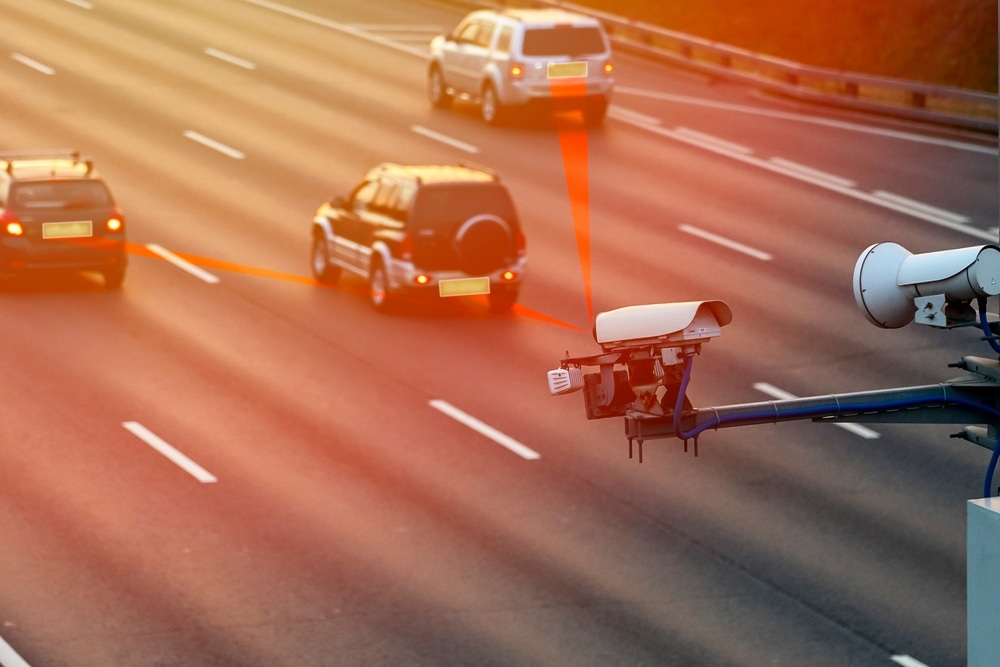
License Plate Recognition (LPR) is a security technology that captures and analyzes license plate data from vehicles entering or exiting a property. It is commonly used in environments such as auto dealerships, parking lots, warehouses, and commercial properties where tracking vehicle activity is important.
Unlike traditional cameras that record general video, LPR systems are designed to capture specific, searchable data tied to vehicles, allowing businesses to quickly locate and review activity based on license plate information.
While LPR provides valuable insight into what is happening on a property, it is most effective when used alongside remote video monitoring, which detects suspicious activity and enables real-time response, to prevent crime.
How License Plate Recognition Works
LPR systems use specialized cameras that are separate from standard surveillance cameras. These cameras are positioned at key entry and exit points to capture license plates as vehicles pass through. The process typically includes:
- Capturing an image of the vehicle’s license plate
- Using software to convert the image into readable text
- Storing plate data along with timestamps and location information
- Making the data searchable within a system or platform
This allows businesses to quickly identify when a specific vehicle entered or exited a property without reviewing hours of video footage.
What LPR Is Used For
LPR is primarily used to provide visibility into vehicle activity across a property. Common use cases include:
- Tracking vehicles entering and leaving a site
- Investigating incidents involving suspicious vehicles
- Identifying patterns of repeated visits or activity
- Supporting law enforcement or internal investigations
Because the data is searchable, LPR allows teams to locate relevant activity quickly, which can be especially useful in large environments such as auto lots or industrial properties.
Searchable Data vs. Traditional Video Review
One of the main advantages of LPR is the ability to search for specific vehicles instead of manually reviewing video footage. With traditional surveillance, locating a specific event may require reviewing hours of recorded video. LPR simplifies this process by allowing users to:
- Search by license plate number
- Filter results by date and time
- Identify when a vehicle entered or exited the property
While remote video monitoring deters crime and provides a high-definition recording of the incidents, LPR further enhances the solution by providing additional insights to the vehicles on site.
Why LPR Should Not Be Used Alone
While LPR is a powerful tool, it is important to understand its limitations. LPR systems:
- Do not prevent crime
- Do not respond to suspicious activity
- Only capture data when vehicles pass specific points
Because of this, LPR should not be used as a standalone security solution. Instead, it should be paired with remote video monitoring.
Remote video monitoring detects suspicious activity, and a monitoring agent responds when something unusual occurs. This allows security teams to intervene in real time using deterrents and escalation when necessary.
When combined, these systems provide:
- Proactive protection (remote video monitoring)
- High definition recording (remote video monitoring)
- Detailed vehicle insights (LPR)
How LPR and Remote Video Monitoring Work Together
When used together, LPR and remote video monitoring create a more complete security strategy. For example:
- Remote video monitoring detects suspicious activity on a property
- A monitoring agent responds to deter the activity or escalate the situation
- LPR captures the license plate of any vehicle involved
- The data can later be searched and reviewed to support an investigation
This combination allows businesses not only to stop incidents in real time, but also to understand exactly what happened afterward.
Where LPR Is Most Commonly Used
LPR is particularly useful in environments where vehicle movement is a key part of operations.
Common industries include:
- Auto dealerships and vehicle storage lots
- Commercial parking lots and retail centers
- Warehouses and distribution facilities
- Gated properties and construction sites
- Controlled access sites
These environments benefit from the ability to track and review vehicle activity quickly and efficiently.
Adding Visibility Without Replacing Protection
License Plate Recognition adds an important layer of visibility to modern security systems, but it is not a replacement for active protection.
By itself, LPR helps businesses understand vehicle activity. When combined with remote video monitoring, it becomes part of a broader strategy that can detect, deter, and document incidents.
Companies such as Pro-Vigil integrate LPR with remote video monitoring, allowing businesses to gain deeper insight into vehicle activity while still benefiting from real-time response and recorded footage that supports investigations.