Top 7 Reasons Security Systems Fail During Emergencies

Here are the seven most common reasons security systems fail during emergencies, and what to do about them.
Top 7 Reasons Security Systems Fail During Emergencies

Quick Summary

Security systems most commonly fail during emergencies due to: power loss, internet dependency, full or failed local storage, outdated firmware, poor camera placement, alarm fatigue, and lack of live monitoring. Most of these failures are preventable with the right infrastructure and a managed monitoring provider.

A security system that works perfectly under normal conditions is one thing, but what you really need is a security system that works, well, when you really need it. Emergencies, like break-ins, power outages, severe weather, and more are exactly the moments most systems need to be prepared – but they aren’t, always. Moreover, the failures are rarely random. The same problems show up again and again.

Here are the seven most common reasons security systems fail during emergencies, and what to do about them.

1. Power Failure With No Backup

This is the most common and most preventable failure on the list. A standard hardwired camera system runs on grid power, which means that anything that cuts the power – a downed line, a tripped breaker, or a deliberate cut to your electrical supply, to name a few – takes everything offline instantly. 

Criminals know this, which means that it’s not uncommon for a power disruption to be the first step of a break-in rather than an accidental byproduct of one.

The fix for this, of course, is backup power. UPS (Uninterruptible Power Supply) batteries handle shorter outages, on-site generators can cover extended ones, and for sites without reliable grid access entirely, solar-powered mobile surveillance units operate entirely independently of the grid.

2. Internet Dependency With No Cellular

Cloud-based and RVM (remote video monitoring) systems need connectivity to function, which creates an obvious vulnerability, since the connection itself can fail.

When your internet goes down during a storm, or you suffer a common failure like a router failure – to say nothing of, again, intentionally cut cable – cameras that solely depend on Wi-Fi stop transmitting. That means no live monitoring, no cloud storage, and no remote access, either for you or for your security team. 

A 4G or 5G cellular failover connection keeps the system running automatically, with no manual intervention required, which is exactly the kind of redundancy worth building in before you need it rather than after.

3. Local Storage That’s Full (or Failed)

A DVR or NVR that nobody has checked recently has a way of revealing its problems at the worst possible moment. High-definition video footage makes it very easy to fill a hard drive up; when it’s full, recording simply stops unless you’ve configured it properly. That means no alert and no warning, just a silent and permanent gap in your footage that you won’t discover until you actually need to refer to it. Hardware fails the same way. The camera looks fine, the system looks fine, and the footage from the night of the incident just doesn’t exist.

Cloud storage with automatic redundancy eliminates this failure mode entirely, though it does require a stable upload connection to work as advertised.

4. Outdated Firmware and Software

This one tends to get deprioritized because it doesn’t feel urgent, which it isn’t… right up until it is. Security camera manufacturers release firmware updates for real reasons, like connectivity bugs, stability improvements, and security patches that close vulnerabilities in the system itself. A camera running outdated firmware is more likely to drop off the network unexpectedly, more susceptible to being accessed remotely by people who shouldn’t have access, and far less likely to play nicely with the other software in your stack.

None of that, of course, is a problem you’ll notice on a quiet Tuesday. It only becomes a problem during a power fluctuation, a network hiccup, or any other system stressor that a properly maintained system would handle without incident, but an outdated one won’t.

The fix is straightforward: keep firmware current, and if you’re working with a managed provider, confirm that firmware updates are part of what they handle on your behalf rather than something that falls back to you.

5. Poor Camera Placement and Blind Spots
Poor Camera Placement and Blind Spots

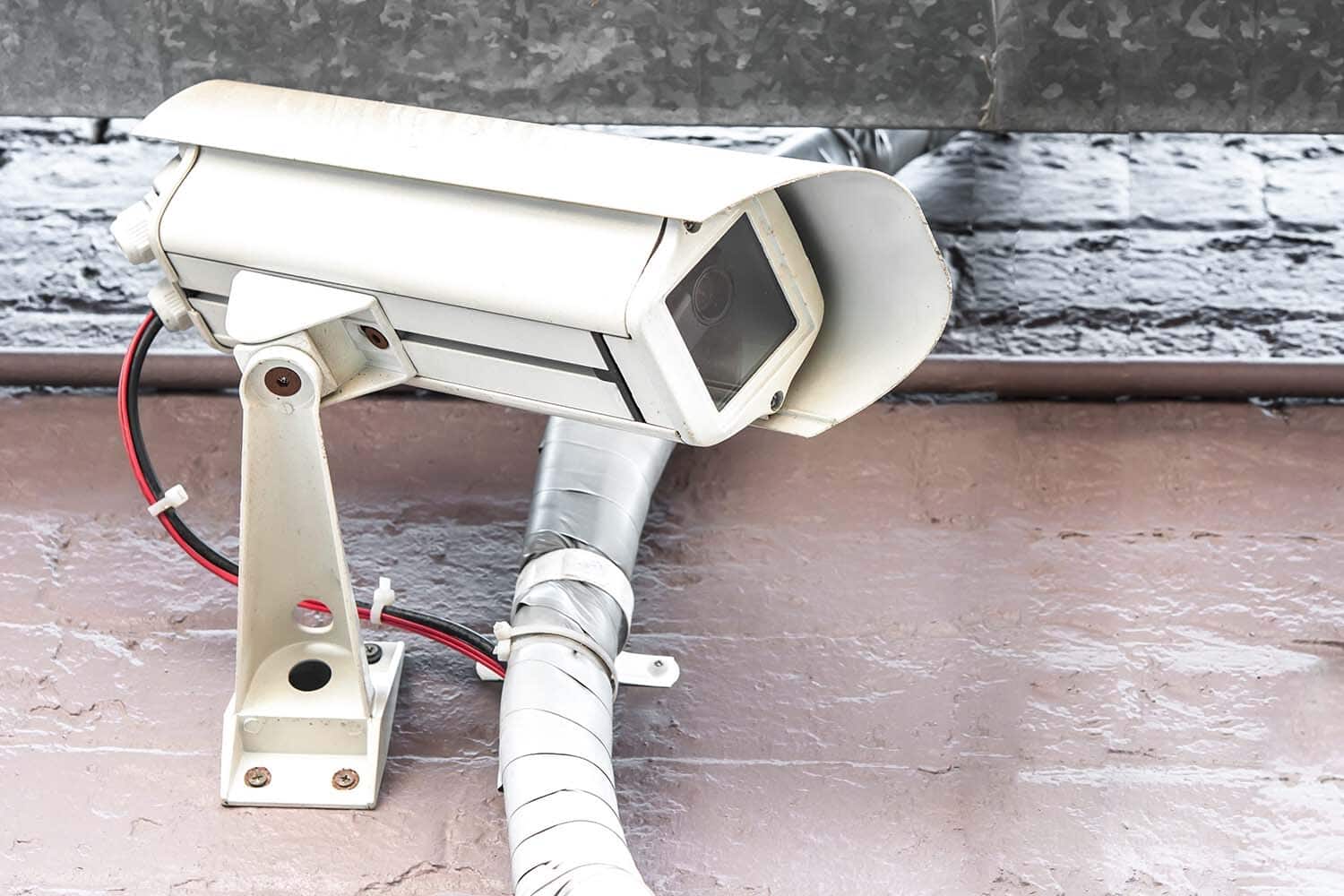
A system can have perfect uptime and still fail because the cameras simply aren’t covering the right areas. Blind spots created by poor initial placement, or by things like site changes on a multi-phase construction project, leave gaps that determined intruders find quickly.

Good camera placement isn’t just about pointing cameras at doors. It means thinking through:
  • Overlapping fields of view so there's no single angle that can be blocked or avoided

  • Coverage of approach routes, rather than just the entry points themselves

  • Lighting conditions at night, since a camera pointed into a light source is effectively useless after dark

  • Site changes over time, like renovations, new structures, or seasonal changes in vegetation, all of which can create new blind spots in a layout that previously had none

    As we mentioned before, this is particularly acute on dynamic sites like construction projects, where the layout shifts between phases and a static camera setup that was effective at the start quickly becomes

    6. Alarm Fatigue

    When a system generates too many false alerts, like a motion sensor tripped by a passing car, a camera that flags operator attention for every paper blown across its field of view on a windy day, the humans responsible for responding to them start tuning them out. This is “alarm fatigue,” and it’s a well-documented problem across security, healthcare, and any other field that relies on alert-based systems. 

    (This one goes back to antiquity. If you’ve ever heard Aesop’s fable “The Boy Who Cried Wolf,” you’ve heard of alarm fatigue in action.)

    The danger is obvious. When a real wolf arrives – in this case, a thief or other intruder – the system triggers an alert like the dozens of irrelevant ones before it, and because of alarm fatigue, it gets deprioritized or missed entirely. A system that cries wolf enough times effectively stops working, not because of any technical failure, but because the people watching it have been conditioned not to trust it.

    AI-powered object classification and behavioral analysis directly address this by filtering false alerts before they ever reach a human operator, ensuring that when an alarm fires, it’s one worth taking seriously.

    In other words, when your system cries wolf, you and your team can be confident that there’s actually a real wolf.

    7. No Live Monitoring

    Recorded footage tells you what happened last night (or last week, or last year) but it doesn’t stop anything, alert anyone, or trigger a response while an incident is still unfolding. For most traditional security setups, footage review is a post-mortem exercise. Pro-Vigil’s remote video monitoring puts trained virtual guards on your cameras in real time, so the response begins in seconds, not the morning after.

    The common thread across all seven of these failures is that none of them are inevitable. Things like power redundancy, cellular failover, cloud storage, current firmware, thoughtful camera placement, AI-filtered alerts, and live human monitoring are all solvable problems. The question is whether they’re solved before an emergency or after one. If you want to get started ensuring your business’ security will be active when you need it, contact Pro-Vigil today.

    FAQs: Security System Failures

    Power failure – and it's also the most preventable. Invest in battery backups, on-site generators, or solar-powered mobile cameras to ensure that your cameras are going to be online and operational when you need them.

    Not on its own, but AI-powered security systems help prevent human responses from failing. AI filtering reduces alarm fatigue, meaning real threats get the attention they deserve. Your security staff can be confident that when the alarm sounds, it’s something worth addressing instead of being a false alarm.

    In recorded footage, a camera captures the events of an incident, but that’s it. You can review the footage to know what happened, and it might be helpful for the police or insurance claims, but it can’t actually undo what was done; what’s stolen is unlikely to be recovered. 

    However, live video monitoring – also called remote video monitoring or virtual guards – means that there is a live human (or AI-assisted human, as we discussed in the alarm fatigue section) who can intervene, flash lights or sound alarms, or dispatch law enforcement. This means that they can stop an incident before it happens. 

    Picture of Jeremy White

    Jeremy White

    Jeremy White founded Pro-Vigil in 2006 and has spent the past two decades pioneering the remote video monitoring and security-as-a-service industries. With deep expertise in AI-powered surveillance, video analytics, and proactive crime deterrence, he has guided Pro-Vigil to becoming UL-Certified and earning the Five Diamonds Designation by The Monitoring Association — among the highest recognitions in the security industry. Connect with Jeremy on LinkedIn.

    Share This Post

    Facebook
    Twitter
    LinkedIn
    Email

    Security | Surveillance | Management | Compliance | Inspection
    © 2020 Pro-Vigil. All Rights Reserved.