These risks compound over time. The question property owners should be asking themselves isn’t “should I invest in security for my property,” it’s “which investment makes the most sense?”
So, let’s look at your options.
Comparing Your Vacant Commercial Property Security Options
When evaluating how to protect a vacant commercial property, there are several options, like traditional alarm-and-camera systems, on-site security guards, or remote video monitoring, which acts like a blend of the two. Each comes with distinct advantages and limitations.
Alarm Systems
Basic intrusion alarms remain popular because of their low upfront cost. A standard commercial alarm system might run $500-2,000 for installation plus $30-100 monthly for monitoring. The problem is what happens after the alarm triggers.
Police response to commercial alarm calls can be as high as 45 minutes in most jurisdictions, and that’s assuming the call gets prioritized. Many departments have reduced their response to unverified alarms due to the high rate of false triggers – some estimates put the false alarm rate as high as 96%. By the time anyone arrives, the damage is done and the intruders are gone.
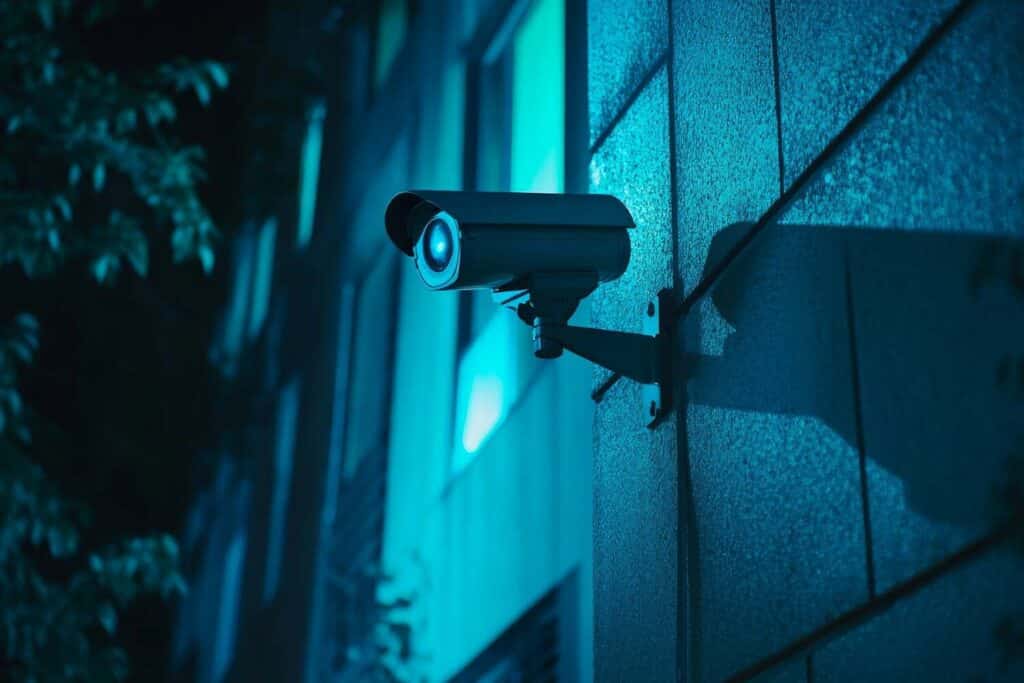
Alarms also do nothing to deter crime before it happens. A determined thief who knows response times are slow may simply accept the noise as background to their work while they work. Similarly, a CCTV security camera system might record the crime, but all that does is give your insurance company or the police data about what happened afterward; there’s no guarantee you’ll ever be made whole.
On-Site Security Guards
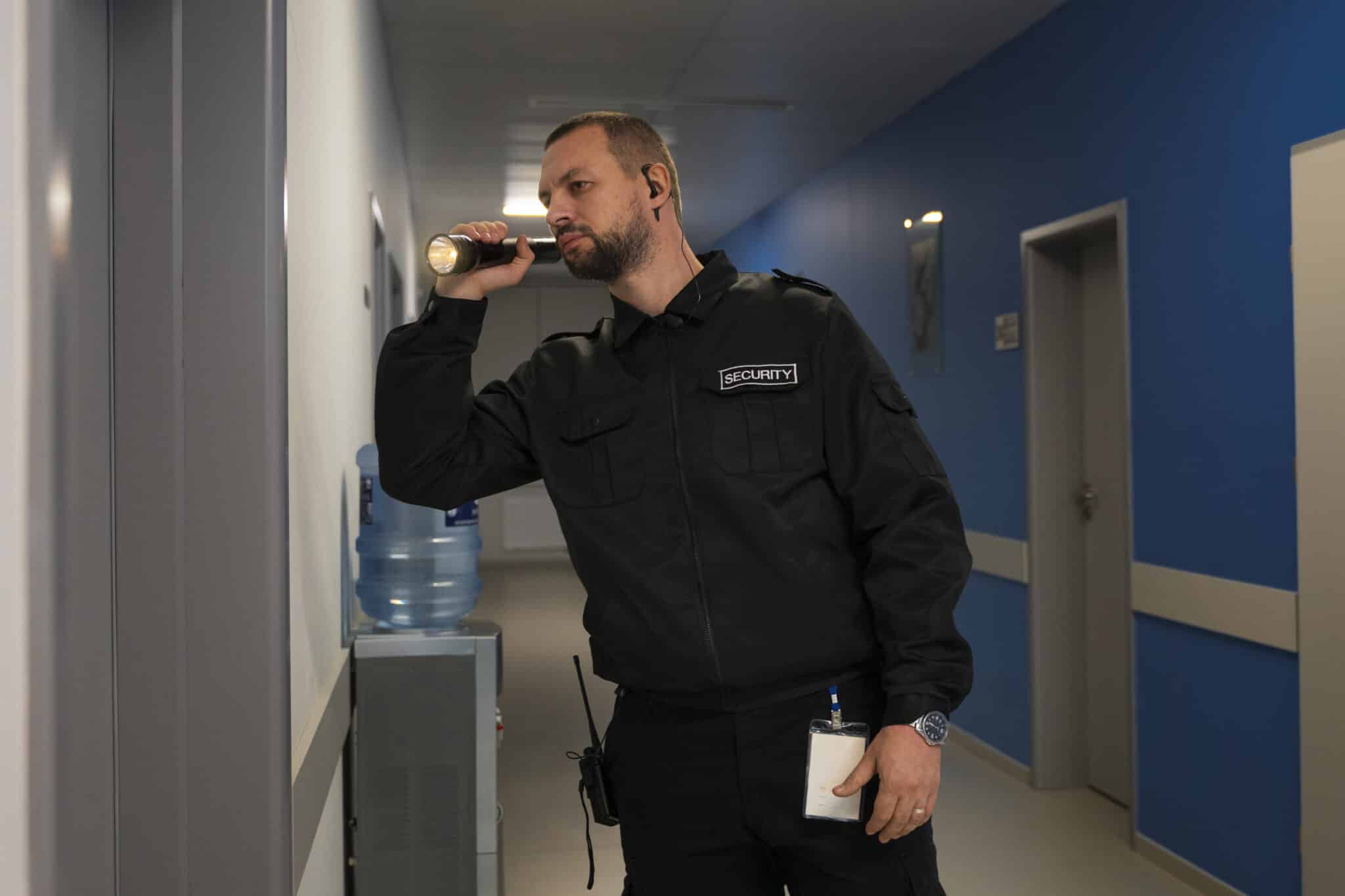
Having a physical presence on your property offers obvious benefits. Guards can confront intruders, call for help immediately, and provide the kind of visible deterrence that makes criminals think twice. For high-value properties or those in particularly rough areas, this approach has real merit.
The cost, however, is substantial. A single overnight guard working 8-hour shifts five nights a week might typically cost your business as much as $5,000 per month – and that leaves weekends and holidays uncovered unless you pay for additional shifts. Obviously, the price only goes up the more guards you need. Not to mention that this is for one guard, who might be a hard worker but who is still just a human being. They can’t be everywhere at once, they need to use the bathroom, and so on.
Even with the best on-site guards, there will be gaps.
The Coverage Gap Problem
All options here are better than nothing, of course, but they all share a fundamental weakness: limited scope. An alarm only tells you someone breached a door or window – while risking false positives from an employee who forgot something and didn’t realize the alarm was on or a curious neighborhood cat. A CCTV camera system can record a crime, but can’t do anything about it. A guard can only physically occupy one location at a time on a large property.
Why Remote Video Monitoring Hits the Sweet Spot
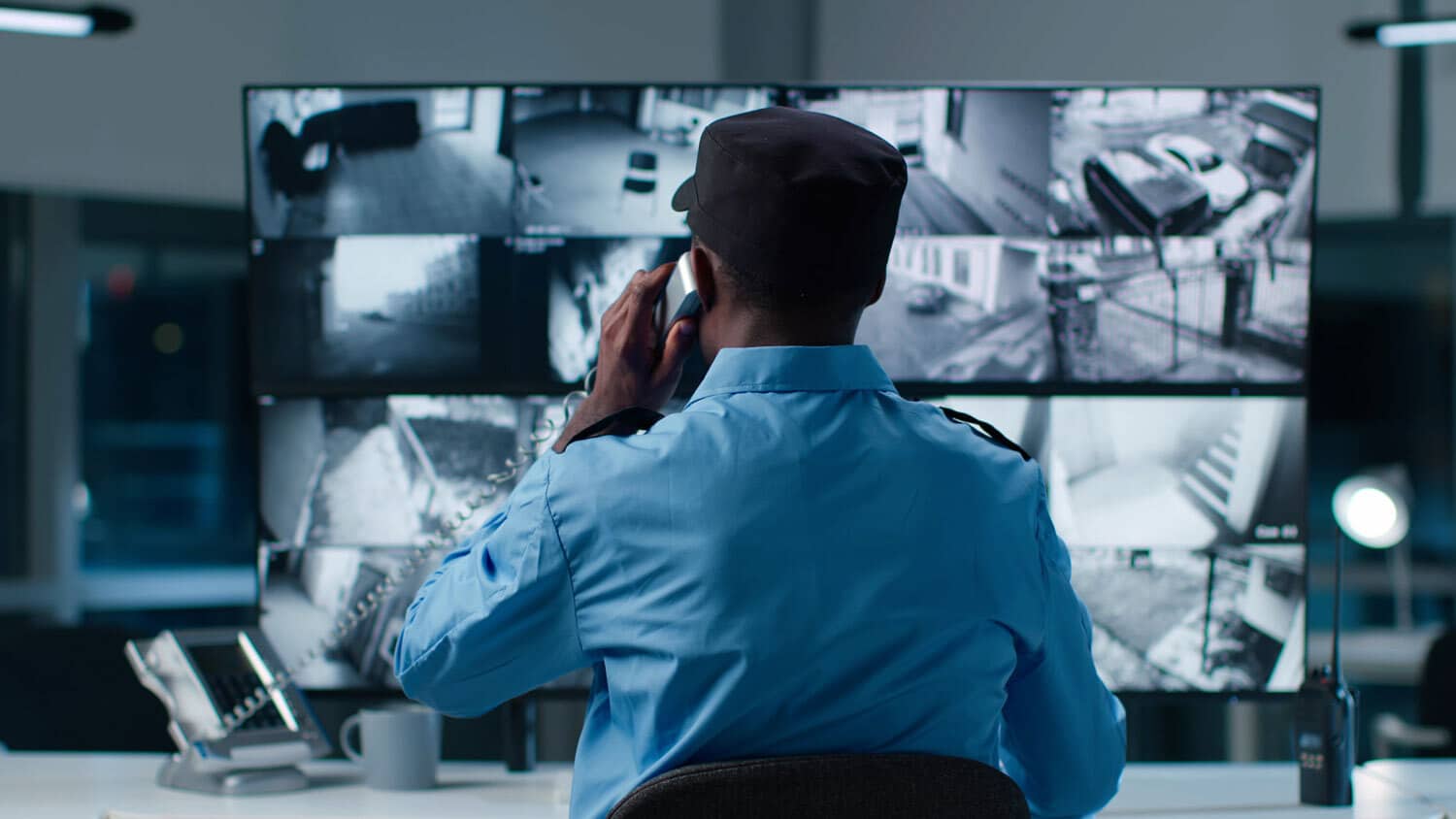
Remote video monitoring (sometimes called “virtual guards”) combines the best elements of both approaches while eliminating their biggest weaknesses.
Here’s how it works: high-definition cameras equipped with analytics software monitor your property continuously. When the system detects motion or other triggers, trained security professionals at a remote monitoring center evaluate the feed in real time. If they spot a genuine threat, they can activate on-site deterrents like loudspeakers and strobe lights, contact the intruder directly through two-way audio, and dispatch police with verified visual confirmation of a crime in progress.
That last point matters more than you might think. Remember that Seattle Police data showing 96% of alarm calls were false? When monitoring centers can tell dispatchers exactly what’s happening on camera, e.g., “two individuals breaking through the east fence, one carrying tools,” police treat it as a priority call rather than another probable false alarm. Virtual guard services also tend to have strong working relationships with local law enforcement agencies, meaning that calls can be prioritized and police can be dispatched within as little as 90 seconds.
The cost comparison is striking. Most businesses find that remote monitoring costs a fraction of what round-the-clock staffing would require. The exact investment depends on property size, camera count, and service level, but the savings over traditional guarding are consistent across nearly every scenario.
Protecting Your Vacant Commercial Property Doesn’t Mean Breaking the Budget
Vacant commercial buildings don’t have to be easy targets. The right security approach balances comprehensive coverage against realistic budget constraints. For most property owners, remote video monitoring delivers that balance better than any alternative.
Pro-Vigil specializes in protecting exactly these kinds of properties: construction sites, parking lots, vacant retail spaces, industrial facilities, and other properties where traditional security falls short. Our virtual guards monitor your property around the clock, intervening the moment trouble appears and ensuring police respond to verified threats rather than false alarms.
Ready to see what tailored protection looks like for your property? Contact Pro-Vigil for a free security assessment.