Quick Answer:
IP cameras use network connections to deliver digital video, while analog CCTV cameras send video through coaxial cables to a DVR. IP systems typically provide better image quality, remote viewing, flexible storage, greater scalability, and advanced analytics. Analog systems are generally less expensive upfront and can meet basic surveillance requirements. For most businesses that need remote monitoring, analytics, and future scalability, IP cameras are usually the stronger long-term option. Analog CCTV may still be a practical choice when a site already has coaxial cabling in place and has basic surveillance needs.
Key Takeaways
- IP cameras transmit digital video over a network and typically provide higher image quality and advanced features.
- Analog CCTV cameras use coaxial cables and a DVR, making them a practical choice for basic surveillance.
- IP systems offer greater flexibility with remote access, storage options, scalability, and analytics.
- Analog systems generally have lower upfront costs and can work well for smaller, simple security setups.
- Network readiness matters. IP camera performance can depend on power, internet, cabling, firewall configuration, cellular connectivity, and portal verification, not just the camera hardware.
- Pro-Vigil field experience helps businesses evaluate these practical deployment factors before choosing a system.
Want more details? Read on!
Today’s digital security cameras are light years ahead of older CCTV analog models. But how do they differ? IP (Internet Protocol) cameras digitally transmit a signal, while analog CCTV (closed-circuit television) cameras send footage over a cable the old-fashioned way. However, these aren’t the only differences between analog vs. IP cameras. There are also a host of advanced features in new, digital, Internet-enabled cameras that older analog CCTV cameras simply lack. These features give business owners new ways to keep an eye on their properties and deter malicious activity. Here’s what you should know about analog CCTV cameras vs. IP cameras.
Understanding Analog Cameras and IP Cameras
Before exploring how analog CCTV and IP cameras differ, it helps to first understand the basics of each system. So, let’s answer the question: What is an analog camera, exactly? What is a digital camera?
What Is an Analog Camera?
“Analog” refers to methods of transmitting data and feedback through physical means, rather than digital ones. If you listen to music through an .mp3 file, you’re using a digital format; vinyl records use an analog format.
For CCTV, an analog camera captures video and sends an electrical video signal through coaxial cable to a DVR, where footage can be converted into a digital format for storage and review. You can monitor an analog CCTV camera in real time, but the system generally relies on wired connections linking the camera, recorder, and display.
How Does an Analog Camera Work?
Analog surveillance cameras use a simple process to capture, transmit, and store video footage:
- Captures video: The camera records visual information from the monitored area.
- Transmits signals: Video is sent as electrical signals through coaxial cables.
- Connects to a DVR: The signals travel directly to a Digital Video Recorder.
- Converts footage: The DVR converts the analog signals into a digital format.
- Stores recordings: Digital footage is saved for playback and review.
While reliable and cost-effective, analog camera CCTV systems generally offer lower image quality and fewer remote access features than modern IP camera systems.
What Is an IP Camera?
As opposed to analog formats, an IP camera records and transmits video as digital data that can be stored on an NVR, cloud platform, SD card, or hybrid storage setup. IP cameras aren’t just digital cameras, though. “IP camera” is short for “Internet Protocol camera,” and it’s called that because it can connect to a network or the internet.
When comparing an analog vs. digital camera, digital IP cameras offer higher image quality, remote access capabilities, and greater storage flexibility.
Since IP cameras store images as data, the image feed can be viewed from just about anywhere with the right internet connection and access permissions. IP cameras don’t always need to be hard-wired; depending on the site design, bandwidth needs, and security requirements, they can connect through Ethernet, Wi-Fi, or cellular-enabled systems.
How Does an IP Camera Work?
IP surveillance cameras use a network-based approach to capture, process, and transmit video data:
- Captures video: The camera records high-resolution footage of the monitored area.
- Processes data: Video is converted into digital data within the camera.
- Uses an IP address: Each camera has a unique IP address for network communication.
- Transmits footage: Video is sent over a local network or the internet.
- Stores recordings: Footage can be saved to a Network Video Recorder (NVR), cloud storage, SD card, or hybrid setup.
- Supports remote access: Users can view live and recorded footage from anywhere with proper access.
- Enables smart features: Motion detection, alerts, analytics, and smart device integration are supported.
IP camera systems provide higher image quality, greater flexibility, and more advanced features than traditional analog surveillance systems.
With a clear understanding of both camera types, let’s dive into the differences between analog and IP cameras.
Analog vs. IP Security Cameras: Side-by-Side Comparison
|
Feature |
IP Camera |
Analog CCTV Camera |
|
Video Quality |
Typically higher resolution, with some models supporting 4K or higher |
Varies by format; modern HD-over-coax systems can improve resolution but are typically less flexible than IP systems |
|
Connectivity |
Ethernet, PoE, Wi-Fi, or cellular-enabled deployment options |
Typically wired through coaxial cable |
|
Remote Access |
Commonly supported through network, app, portal, or cloud access |
More limited and depends on the DVR/system |
|
Storage |
NVR, cloud, SD card, or hybrid storage options |
Typically DVR-based |
|
Smart Features |
Often supports AI analytics, motion detection, alerts, and integrations |
Varies by camera and DVR; typically fewer built-in analytics |
|
Cost |
Typically higher upfront, but often stronger long-term value for complex sites |
Typically lower upfront |
|
Scalability |
Generally easier to expand across sites and locations |
Expansion may depend on DVR channels and cabling |
|
Compatibility |
Supports network and smart security integrations |
Compatible with existing coaxial infrastructure and compatible DVRs |
|
Image Transmission |
Digital video over a network |
Video signal over coaxial cable |
Key Differences Between IP and Analog CCTV Cameras
Image Quality
It’s not just the Internet connectivity that makes the latest generation of security cameras different from older models. Here’s one of the biggest differences in analog vs. IP cameras: picture quality.

Why IP Cameras Typically Provide Higher Image Quality
IP cameras usually provide much better picture quality than older CCTV analog security monitors. We’ve all seen grainy images of criminals in our favorite murder mystery shows. If only fictional businesses switched to high-quality IP cameras, these detectives would have a much easier time solving crimes! The advantage becomes more apparent when capturing fine details, such as facial features, license plates, or fast-moving subjects. IP cameras can preserve more visual information in these situations, while image quality can also vary significantly with analog systems depending on the camera format, lighting, cabling, and recording equipment.
While modern HD-over-coax systems can improve analog video resolution, IP cameras generally provide more flexibility for high-resolution digital video, analytics, remote access, and multi-site management. This is especially important if the object is moving quickly, the environment is dark, or the business needs to search and verify incident footage efficiently.
Why Analog Cameras Have Lower Image Quality
When compared to IP cameras, many analog CCTV systems are more limited by their cabling, recorder, camera format, and signal conversion path. You can add a DVR to record the images you film on a CCTV camera. However, even though the analog signal converts to digital to record to the DVR, the footage itself will often be less flexible for analytics, remote access, and detailed review than a fully digital IP camera system.
Why Higher Image Quality Matters
The difference between analog CCTV and IP cameras becomes especially apparent in situations where image detail matters.
For example, a retail store investigating shoplifting may only see a person’s general appearance on an analog system, while a high-resolution IP camera can capture clearer facial details. Similarly, businesses monitoring parking lots often rely on IP cameras to identify vehicle makes, models, and license plates from a distance.
This ability to capture finer details makes image quality one of the most significant advantages of IP cameras over traditional analog CCTV systems.
Footage quality is a top benefit of IP cameras vs. analog cameras, because seeing and recording an image is the entire point. However, there are pros and cons when comparing analog CCTV vs. IP cameras.
Image Transmission and Storage

When compared to analog cameras, IP cameras transmit video as digital data over a local network, the internet, or a managed remote monitoring connection. An IP security camera digitizes the video by using an encoder with an onboard web server. The camera then uses a Wi-Fi, cellular, or hard-wired Internet signal to transmit data online. This allows authorized users to view images in a web browser, customer portal, or app.
IP camera systems also offer multiple storage options, including:
- NVR storage: Records footage to a Network Video Recorder (NVR) on the local network.
- Cloud storage: Stores video securely in the cloud for remote access and backup.
- SD card storage: Saves footage directly on a memory card installed in the camera.
- Hybrid storage: Combines local and cloud storage for additional redundancy and flexibility.
Prior to the widespread adoption of broadband Internet, analog CCTV was the only option. These cameras still exist today, but they work quite differently from IP cameras. Analog security cameras capture images, then convert the video signal so it can be viewed by a TV monitor or stored on a hard drive.
Installation and Flexibility
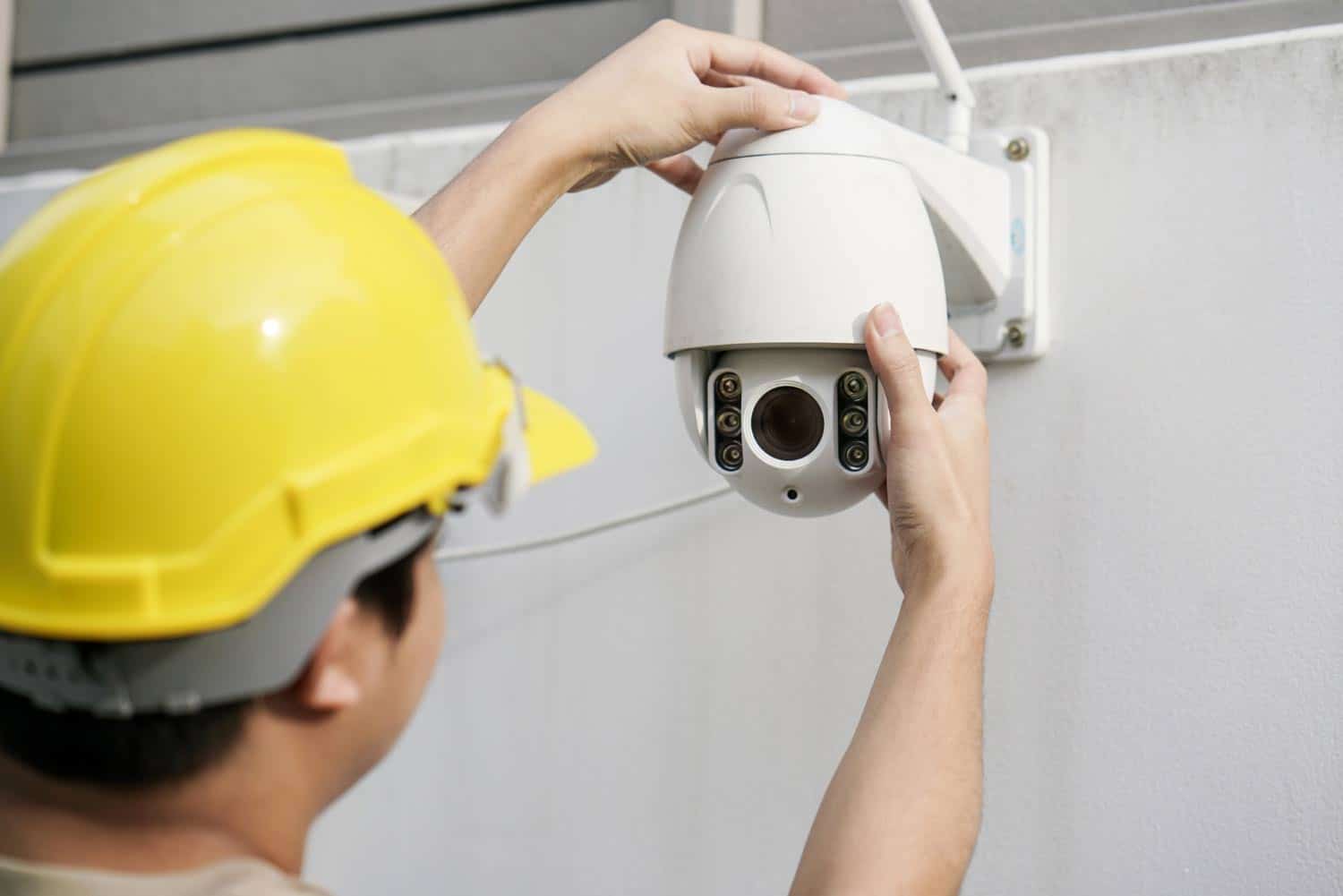
One important consideration when comparing analog vs IP security cameras is installation and flexibility. Analog video surveillance cameras generally require more extensive cabling, including one cable for video transmission and a separate power supply. This makes setup in large or complex environments more challenging and often limits camera placement. In contrast, Internet Protocol CCTV cameras often use Power over Ethernet (PoE), allowing both power and data transmission over a single cable. Alternatively, they can be completely wireless, thanks to things like solar power.
Some cameras can also use solar panels and battery backups for power, making them suitable for locations where access to wired electricity is limited. This provides greater flexibility for camera placement, including remote or hard-to-wire locations. Wireless IP surveillance camera systems add even more options for complex or temporary installations.
This reduces installation time and costs, while offering far greater flexibility in where cameras can be installed, including remote or hard-to-wire locations. Wireless IP surveillance camera systems add even more options for complex or temporary installations.
AI-Powered Surveillance: Why IP Cameras Are Replacing Traditional CCTV
As security technology evolves, many businesses are replacing traditional CCTV systems with AI-powered IP cameras. Unlike analog cameras, IP surveillance systems can analyze video in real time, helping businesses identify threats faster and reduce false alarms.
Key advantages of AI-powered IP cameras include:
- Smart motion detection: Distinguishes people, vehicles, and other objects from routine movement.
- Real-time alerts: Sends instant notifications when suspicious activity is detected.
- Facial recognition capabilities: Helps identify authorized personnel or persons of interest where permitted and appropriate.
- Behavior analysis: Detects unusual activity, loitering, or restricted-area access.
- Faster investigations: Uses searchable footage and event tagging to locate incidents quickly.
- Reduced false alarms: Filters out non-threatening events such as weather, shadows, or animals.
- Remote monitoring: Allows users to review live and recorded footage from anywhere.
These AI-driven capabilities transform surveillance from a passive recording system into a proactive security solution, making IP cameras an increasingly popular choice for modern businesses. The best results come when analytics are configured around actual site risks, such as perimeter intrusion, gate activity, vehicle movement, after-hours access, or high-value asset areas.
Analog CCTV Camera vs. IP Camera: Main Benefits
Analog CCTV Cameras Over IP Cameras

While the picture quality is a strong drawback of analog cameras vs. IP cameras, there are benefits to analog CCTV cameras that include:
- Lower costs: This may make analog cameras a viable option compared to newer IP cameras. For example, say you have a small retail storefront with a tiny footprint to monitor. A CCTV camera may be all you need to protect your business. If you have an office in the back, you could run camera footage to a DVR or a computer hard drive. Just be sure to keep the area locked.
- Compatibility with existing infrastructure: Analog CCTV cameras may be compatible with existing coaxial cabling and compatible DVR systems, which can reduce replacement cost for simple deployments.
IP Security Cameras Over Analog CCTV Cameras
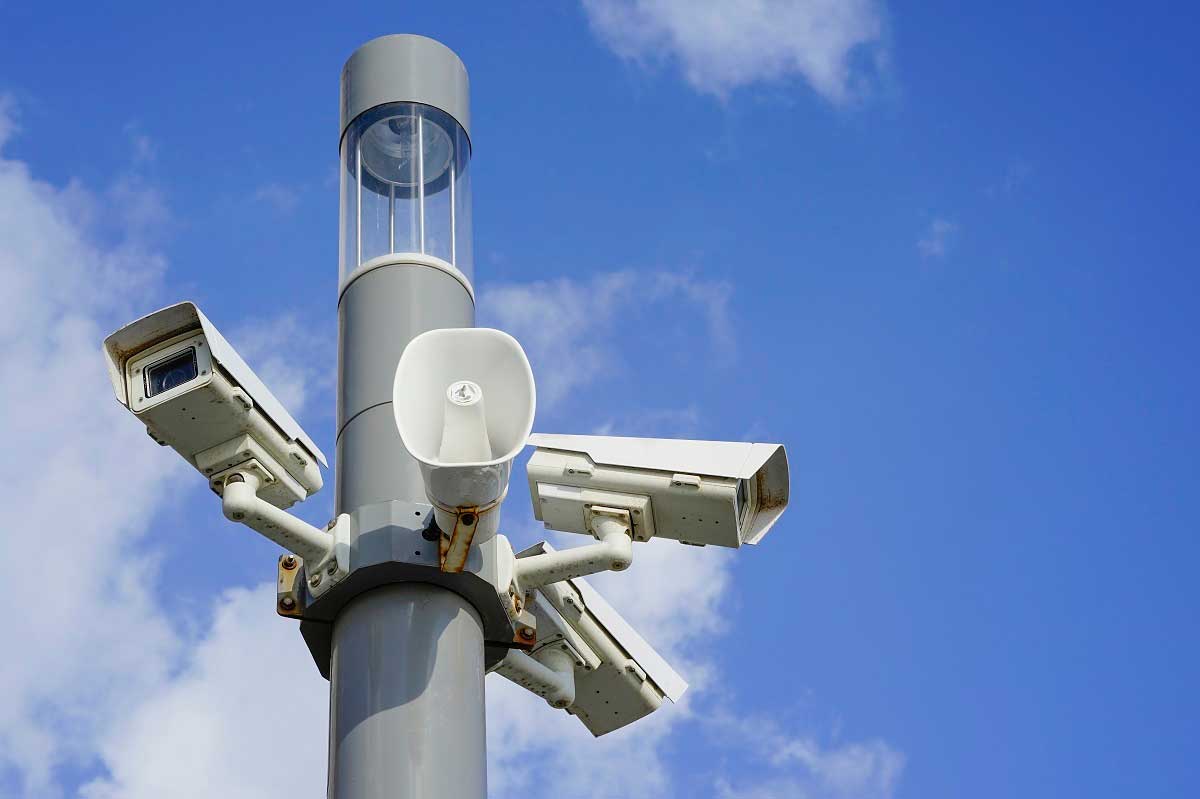
An IP camera vs. analog CCTV camera offers a number of superior security features to protect your business besides the high resolution:
- Wireless or flexible connectivity: They don’t always need hardwiring, since they can connect through Ethernet, Wi-Fi, or cellular-enabled systems depending on the installation. Some CCTVs do also support this, but it is much less common.
- Solar power options: They can be designed with solar panels and battery backup where site conditions support that approach.
- Secure cloud storage: When compared to analog CCTV cameras, IP camera systems are more scalable; you won’t run out of local recorder space as quickly when the system uses cloud or hybrid storage.
- Instant visibility: They let authorized users access video images through a web browser, customer portal, or app on a digital device.
- Easy footage search with tags: They support AI-powered categorization and searchable databases, making the review of camera footage less time-consuming.
- Advanced analytics: They support video analytics tools that can flag specific events and show you the footage, such as motion detection or camera tampering.
- HD footage: As mentioned earlier, IP cameras can capture crisp footage, even if the subject is moving quickly.
- Audio and visual deterrence: These cameras can play a loud recording or alarm when suspicious motion is detected. Well-configured analytics can also help reduce nuisance triggers from weather, shadows, animals, or debris.
- Smart features: If a trespasser crosses a certain geographic threshold, the camera can zoom in to capture the footage while alerting security that there is a problem. Pan-tilt-zoom cameras are available if you want to control where your cameras are pointing through a tool like Pro-Vigil’s Mobile App. The cameras will return to normal when you are done viewing.
The world around us comes with a range of potential risks. Video security tools give you a way to help mitigate risk while letting you rest a little easier at night.
Deployment Readiness Checklist for IP Camera Systems
Before choosing between analog CCTV and IP cameras, businesses should ask a few practical deployment questions. These questions help connect the camera decision to real-world reliability and monitoring performance.
- Is reliable power available at the camera, network room, pole, or mobile unit location?
- How will the system connect: through Ethernet, PoE, Wi-Fi, cellular, or multiple connectivity methods?
- Does the customer network require firewall changes or IP whitelisting?
- Who manages routers, switches, NAS storage, and other network equipment?
- How will the team verify that live views are working after installation or troubleshooting?
- Who should support contact if power, network, or connectivity issues continue?
IP Camera vs. Analog CCTV Camera: Advantages and Limitations

Both IP and analog CCTV cameras can provide effective video surveillance, but each has advantages depending on the property, budget, existing infrastructure, and security requirements. When comparing IP camera vs. analog camera systems, consider factors such as image quality, connectivity, storage, scalability, available security features, and operational readiness.
Analog CCTV advantages:
- Lower upfront cost: Analog cameras and compatible DVR systems can be more affordable for basic surveillance needs.
- Existing infrastructure: Businesses with coaxial cabling may be able to upgrade or replace cameras without completely redesigning their cabling.
- Simple setup: Traditional analog systems use a familiar camera-to-DVR configuration that can work well for smaller installations.
- Basic surveillance: Analog cameras can be suitable for businesses that primarily need reliable video monitoring without extensive analytics or network-based features.
IP camera advantages:
- Higher image quality: IP cameras typically provide greater resolution and image detail, depending on the model and configuration.
- Flexible connectivity: IP cameras offer multiple deployment options, from Ethernet and PoE to Wi-Fi and cellular networks.
- Advanced analytics: Many IP cameras support features such as motion detection, person and vehicle detection, license plate recognition, and other video analytics.
- Remote monitoring: Network connectivity makes it easier to access live and recorded footage remotely.
- Flexible storage: IP systems can use NVRs, cloud storage, SD cards, or combinations of these options.
- Scalability: Adding cameras to an IP system can be more flexible, particularly for businesses expanding their surveillance coverage or connecting multiple locations.
The main limitation of analog systems is that advanced features, remote access, and expansion may require additional equipment or infrastructure. When considering IP camera vs analog CCTV camera, it is important to evaluate connectivity, features, image quality, and long-term system requirements. IP systems offer more capabilities and flexibility, but they can involve higher initial costs and may require appropriate network infrastructure and configuration.
IP Camera vs. Analog CCTV Camera: Which Is Right for Your Business?
In summary, the analog vs IP security cameras debate comes down to your business needs, budget, existing infrastructure, and long-term security strategy. If you need simple, cost-effective surveillance for a small area, analog video surveillance cameras may suffice. But if you’re looking for high-definition video, smart analytics, easy scalability, and remote monitoring, an IP surveillance camera system will provide a stronger foundation for modern security.
|
Choose Analog CCTV If |
Choose IP Cameras If |
|
You have a small or basic surveillance requirement |
You need advanced surveillance capabilities |
|
You already have compatible coaxial cabling |
You are installing a new system |
|
Initial equipment cost is a major consideration |
You need remote access |
|
Advanced analytics are not required |
You need AI-powered analytics |
|
Your system does not need significant expansion |
You expect to add cameras or locations |
|
Your site does not need remote monitoring or customer portal access |
You want centralized monitoring and easier multi-site visibility |
Which Is Better for Your Business: Analog CCTV Camera vs. IP Camera?
Both analog CCTV and IP cameras offer distinct advantages and disadvantages. If you’re buying a camera solely for a smaller location and price is a major issue, the analog CCTV camera won’t break your bank. However, in most business environments that require remote visibility, analytics, scalability, or centralized monitoring, an IP camera system will provide more advanced security and a stronger long-term foundation. This is especially true if you have a larger business, since more hidden egresses create vulnerabilities and increase risk. In these cases, an IP security camera is often the best tool to protect your assets.
Pro-Vigil works with businesses to design, deploy, monitor, and support security systems that help protect assets across fixed sites, temporary projects, and remote locations. Whether your goal is to deter employee theft, reduce after-hours trespassing, or improve incident visibility, Pro-Vigil’s intelligent surveillance tools can help match the right camera technology to your site conditions and risk profile. Contact us to discuss your options.
FAQs