Quick Answer:
Securing a multi-phase construction site requires a security plan that evolves with the build. Reassess perimeters, camera positions, and access points at every phase transition. Use redeployable wireless cameras and remote video monitoring to maintain coverage as the site layout changes.
Construction sites are among the most security-intensive environments a business can manage, and multi-phase projects are the hardest of all. The amount of complexity can feel staggering: Equipment arrives and leaves, fencing shifts and is replaced, and access points open and close as the build progresses. What was a secured perimeter last month may be a wide-open gap today – and savvy criminals know how to spot the difference.
Equipment theft, material theft, and vandalism cost the construction industry billions of dollars annually in the United States alone. But straightforward theft isn’t the only risk, either. Trespassing, copper stripping, arson, and liability from unauthorized entry – including injuries to people who have no business being on site – all compound the exposure for contractors and project owners alike.
What makes multi-phase projects uniquely difficult is that the threat landscape doesn’t stay still. A single-phase build has one layout to secure, and while we won’t pretend that’s trivial, it can be done more or less all at once at the start of the project.
A multi-phase project, however, requires security that can adapt as the site evolves – sometimes rapidly. Perimeter fencing that made sense during groundwork may leave blind spots once vertical construction begins. Trailers, equipment staging areas, and material storage all shift between phases, creating new vulnerabilities that a static security plan simply can’t account for.
Why Traditional Approaches to Construction Site Security Can Struggle
Most construction site security plans are designed around a fixed layout. A fence goes up, cameras get positioned, and perhaps a guard or two is scheduled for overnight shifts. The plan stays largely the same until the project wraps. That approach works tolerably well for smaller, single-phase builds.
For multi-phase projects, however, it isn’t quite as simple.
As the footprint of a site changes, so do the entry points, sightlines, lighting coverage, and the location of the assets most worth protecting. A security setup that isn’t reviewed and adjusted at each phase transition is almost guaranteed to develop gaps.
Building a Phase-Aware Construction Security Plan
The solution isn’t a better static plan, which will run into the same problems. Rather, it’s a plan built to change. Every phase transition should trigger a formal security review, treating the updated site layout the way you’d treat a brand new project. That means walking the site, reassessing risk, and adjusting physical and technological measures before work on the new phase begins, not when it’s already under way.
Map Your Vulnerabilities at Each Phase
Start with a site walk at the close of each phase. Document where the perimeter stands, where materials are staged, where equipment is parked overnight, and where lighting has gaps. Pay particular attention to:
-
New or temporary access points opened for contractors, deliveries, or equipment movement
-
Sections of fencing that have been removed or relocated to accommodate the evolving footprint
-
Areas where completed work creates new attractive targets, like installed copper plumbing, HVAC units, or electrical components that weren't present in earlier phases
-
Blind spots created by new structures that block camera sightlines established earlier in the project
This shouldn’t be a one-and-done exercise. This should be a discipline that gets built into your project management cadence alongside scheduling and budget reviews.
Assign a Security Point of Contact
In his famous Hitchhiker’s Guide to the Galaxy novels, author Douglas Adams suggested that the one thing more powerful than a cloaking field was a “Somebody Else’s Problem” field – and all of his humor and wit aside, it’s very true that in a crowd where responsibility isn’t clearly assigned, even otherwise hard workers will assume that somebody else is in charge of a given task.
So, it becomes vitally important to ensure that someone is responsible for a given point of security – and that everyone knows it. Multi-phase projects typically involve multiple contractors, subcontractors, and rotating crews, and someone needs to own security continuity across all of them.
A dedicated security point of contact, whether that’s a site superintendent, project manager, or third-party security coordinator, ensures that changes to the site layout are communicated quickly and that countermeasures are updated accordingly. Without clear ownership, security gaps tend to go unnoticed until something goes wrong.
Keep Subcontractors in the Loop
Subcontractors are often the weakest link in construction site security. This isn’t through negligence, but simply because they’re not always briefed on site protocols. A framing crew that props a gate open for convenience, or a plumber who parks blocking a camera, can inadvertently compromise an otherwise solid security setup.
Video Surveillance Technology for Construction Sites That Never Stay the Same
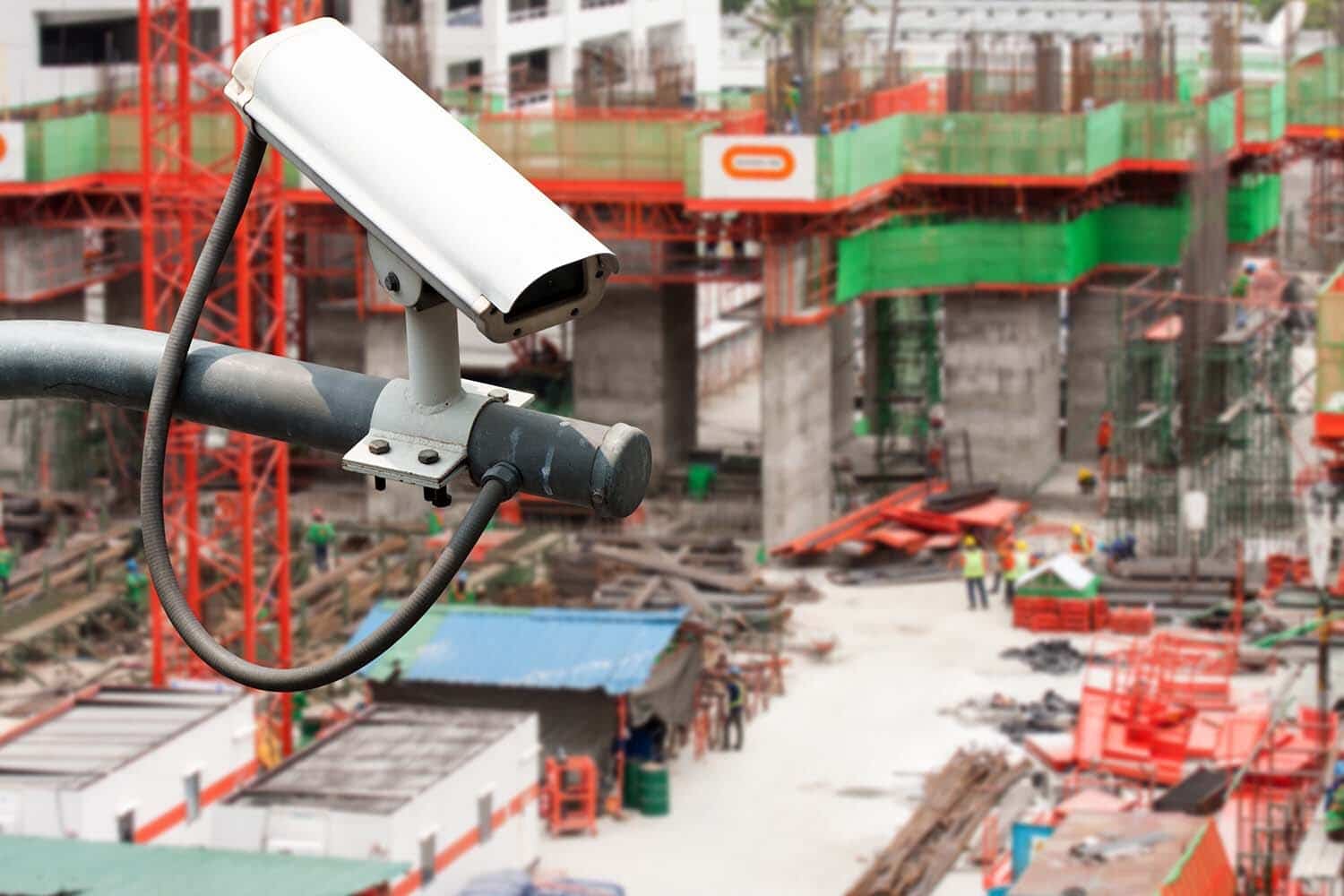
Fixed camera systems struggle on multi-phase sites. By the time a camera is professionally mounted, cabled, and optimized for a specific sightline, the site layout may already be shifting. That’s why the most effective surveillance setups for phased construction rely on flexible, redeployable technology.
Wireless and Solar-Powered Camera Units
Trailer-mounted and solar-powered mobile cameras can be repositioned as the site evolves, with no trenching, no rewiring, no waiting on an installer. They’re increasingly capable too, offering HD night vision, motion detection, and real-time alerts on par with hardwired systems. Mobility is a lifesaver for phased projects, since you can easily move them as necessary with very little difficulty.
Remote Video Monitoring Services
Hardware alone isn’t enough. As we’ve covered in our guide to construction site security best practices, recorded footage reviewed after the fact tells you what happened, but it doesn’t stop it. Remote video monitoring pairs your camera infrastructure with trained security professionals watching in real time. When something moves on site in the early morning hours, an operator is already responding. That means live alarm activation, direct communication with trespassers via on-site speakers, and immediate law enforcement notification.
For multi-phase builds where the site is in constant flux, remote monitoring adapts as easily as the cameras themselves.
If you’re looking to get great, flexible security for your multi-phase construction setup, contact Pro-Vigil today.
Phased Construction Site Security FAQs
Yes. Every phase changes the equation, with new sightlines, shifted access points, relocated materials, and structures that didn't exist before. A security plan that made sense during groundwork may have three new blind spots by the time steel goes up. Build the reassessment into your project management cadence so it happens automatically, not reactively.
Treating security as a one-time setup, for the reasons we discussed above.
Modern solar-powered and trailer-mounted units offer HD night vision, motion-triggered alerts, and real-time remote monitoring on par with hardwired systems. The technology has caught up. An even bigger advantage is mobility, since when your site layout changes, your cameras can change with it, no rewiring required.
Someone specific – that's the short answer. Whether it's a site superintendent, project manager, or a third-party coordinator, security gaps on multi-phase sites almost always trace back to unclear ownership, especially when multiple subcontractor crews are rotating through.