Quick Answer
A battery-powered security camera can generally run for three months to a year per charge, depending on factors such as motion events, recording settings, video quality, environmental conditions, and camera design. Features like motion-activated recording, solar charging, and battery health monitoring can significantly extend runtime and help prevent unexpected downtime.
Key Takeaways:
- Battery life varies by usage and environment, with high-traffic areas, continuous recording, and extreme temperatures reducing runtime.
- Motion detection, optimized settings, and optional solar panels can significantly extend battery life and reduce maintenance.
- Professional camera health monitoring helps detect low batteries and system issues before they create gaps in your security coverage.
Most battery-powered security cameras last three months to a year on a single charge, depending on how much motion they’re recording and where they’re installed. That tends to be enough, especially because wireless cameras have other obvious advantages, too; for instance, they’re less expensive to install, especially when you need to avoid running wire over a long distance.
These cameras are powered by a battery. But how long do these battery-operated surveillance cameras last? You certainly don’t want your cameras to shut down unexpectedly due to running out of power. This could leave your business vulnerable to criminal mischief.
Are there any power-saving measures that will help the batteries last longer? We have some pro tips to help you maximize the life of your battery-operated surveillance cameras.
Average Camera Battery Life by Type
The answer to the question “how long do camera batteries last” varies quite a bit by camera type and where it’s installed. Whether you’re shopping for a wireless CCTV camera with battery power or a camera with long battery life for a remote gate, here’s the typical range by category:
|
Camera Type |
Typical Battery Life |
|
Indoor Camera |
6-12 months |
|
Outdoor Camera |
3-6 months |
|
Outdoor Camera (High-Traffic Area) |
1-3 months |
|
Solar Camera |
Continuous with sunlight |
|
LTE Camera |
2-6 months |
The Basics of Battery Operated Security Cameras
The rise of battery operated security cameras has transformed modern business and home security. Whether you’re using a battery powered wireless security camera for your office, a battery operated outdoor surveillance camera for your property perimeter, or a battery operated Wi-Fi camera at an off-grid location, these devices offer unmatched flexibility and convenience. With no need for hardwired power, you can easily mount these “surveillance camera with battery” setups wherever you need coverage most, even in remote corners or outdoor environments where outlets simply don’t exist.
Why Would You Choose a Battery-Powered Camera Over a Wired Unit?
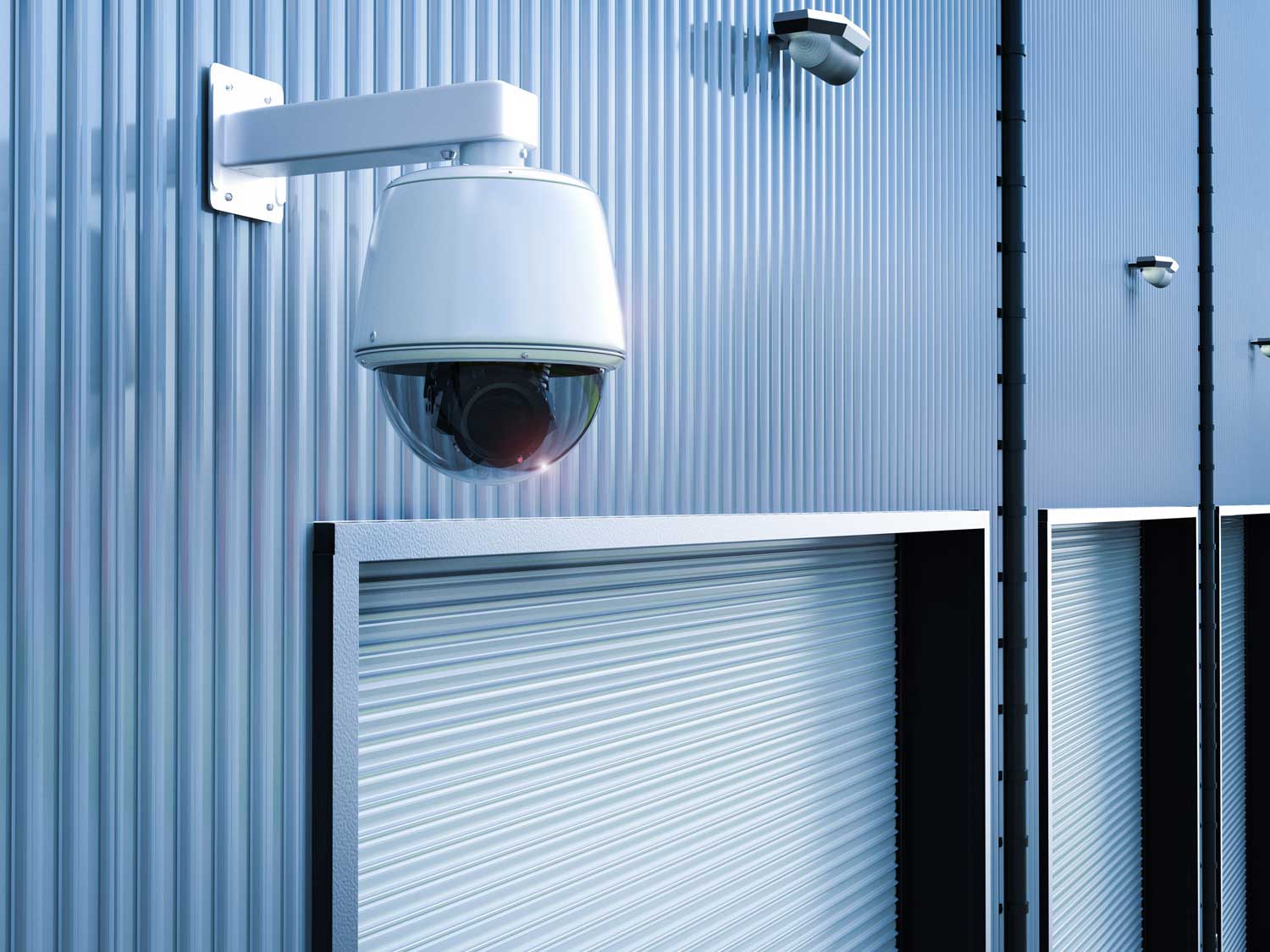
The answer to this question is simple: cost and convenience. Battery-operated surveillance cameras allow for flexible placement. You can literally place these cameras anywhere. They don’t need access to an electrical outlet. There are no cables to run. You simply recharge them when the battery is low, similar to a home security system. With that said, commercial batteries are much more powerful than a home unit.
How Long Does the Battery on a Business Security Camera Last?
The answer depends on usage. Some battery-operated surveillance cameras can last months or even years. Generally, these cameras are powered by lithium-ion cells, which become more efficient every year.
But, how long does a camera battery last in practical terms? For most outdoor camera battery operated models, you can expect between three months and up to a year of use per charge, depending on factors like camera resolution, the frequency of motion-triggered events, temperature, and whether the camera is recording continuously or only when triggered. Some battery operated wireless security camera systems even allow for quick-swap battery packs to minimize downtime. For a high-traffic area, battery life will be shorter, but with proper configuration, modern units are designed to maximize efficiency.
Over time, however, even the best battery-powered surveillance camera can die out. That’s why we highly recommend a service to monitor the health of your battery-operated surveillance camera.
Supplement Your Battery-Powered Surveillance Camera with Health Monitoring

If you have battery-operated surveillance cameras, it’s important to frequently check these security tools. Monitoring the health of your security cameras is a service that companies like Pro-Vigil offer. The goal is to ensure 100% operation at all times.
Surveillance cameras are designed for prevention. They’re like a fire alarm; you don’t need them until the day you do. When and if that day happens, the last thing you want is to find that the equipment you trusted didn’t function. Battery-powered surveillance cameras or even wired units should be constantly monitored to ensure they are always there when you need them. The last thing you want is to walk into your business and find that your camera battery died over the weekend—right before a break-in occurred.
Factors That Impact Battery Life in Battery Operated Wireless Security Camera Systems
Understanding what affects battery life helps you plan your surveillance strategy. Key factors include:
- Camera Usage: Motion-activated recording vs. continuous recording has a massive impact on battery drain.
- Video Quality: Higher resolution and frame rates use more power.
- Night Vision: Using infrared LEDs for night surveillance consumes additional battery.
- Environmental Conditions: Extreme cold or heat can reduce battery performance in outdoor wireless security camera battery operated systems.
- Wi-Fi Connectivity: If a battery operated Wi-Fi camera is in a low-signal area, it will use more power maintaining connection.
Some models, such as battery operated outdoor surveillance cameras designed for rugged environments, are engineered to withstand harsh weather and optimize power consumption, extending longevity.
Motion Detection
Most battery cameras use a PIR (passive infrared) sensor to detect motion, and its sensitivity setting has an outsized effect on battery life. A sensor set too sensitively will trigger on passing cars, blowing branches, or a neighbor’s dog, draining the battery on events that don’t matter. Narrowing the camera’s activity zone to just the driveway or entryway, and setting a recording schedule that only arms motion detection during off-hours, can cut unnecessary triggers dramatically without sacrificing real coverage.
Video Resolution & Recording Length
Recording in 4K captures far more detail than 1080p, but it also processes and transmits significantly more data, which means significantly more battery drain per event. A camera set to record 4K continuously can burn through a charge in days rather than months. For most business applications, 1080p strikes a workable balance between image quality and runtime, reserving 4K for high-value areas like a cash register or safe.
Night Vision Usage
Infrared LEDs that power night vision draw meaningfully more current than daytime recording, since the camera is actively illuminating the scene in addition to capturing it. A camera covering a dimly lit loading dock overnight will drain faster than the same unit in a well-lit lobby during the day, even with identical motion activity.
Wi-Fi Signal Strength
A wireless WiFi camera battery powered setup has to work harder — and use more power — just to keep footage transmitting reliably over a weak connection. This is especially common with an outdoor camera wireless battery powered installation placed at the edge of a router’s range, behind thick walls, or far from an access point; these will drain noticeably faster than one with a strong signal, even before accounting for recording activity.
Temperature Impact
Lithium-ion batteries lose efficiency in extreme cold, which is why an outdoor camera that lasts six months in summer might need recharging every two or three in winter. Extreme heat has the opposite but related problem — it accelerates battery degradation over time, shortening the unit’s overall lifespan even if daily runtime looks normal.
Battery Types
Most modern security cameras use rechargeable lithium-ion cells, which hold a charge more efficiently and degrade more slowly than older nickel-based batteries. Some outdoor and LTE cameras use higher-capacity lithium iron phosphate (LiFePO4) cells specifically because they perform better in temperature extremes and tolerate more charge cycles before wearing out.
What Makes Your Battery-Operated Surveillance Cameras Last Longer?
To extend the life of your battery, we recommend motion-activated cameras. These units turn on the recording feature when they detect motion. They can even connect wirelessly through the cell network. As the camera records the activity, it pings your security team’s phone with video footage. Or, if your cameras are monitored by a 24/7 service like Pro-Vigil, we can triage the risk as it happens. Motion activation is a smart way to save the life of your battery. But it’s the extra features that transmit data to the cloud that really help these cameras pay for themselves. Motion detection can:
- Flag you if there’s a potential intruder.
- Alert you if trespassers enter restricted areas.
- Trigger lights and audible alerts to scare off intruders.
But remember, all of these functions power off of motion, saving your battery until you need it.
This may not always be appropriate though. What if you need the camera to stay on all the time, but the location is inaccessible to a power main? That’s when you should consider a solar-powered camera.
How to Extend Camera Battery Life
Whether you’re running a battery powered wireless internet camera on an office perimeter or a simple wireless camera with a battery in a stockroom, a few maintenance habits keep batteries performing longer beyond motion activation alone:
- Keep firmware updated: manufacturers regularly ship power-efficiency improvements alongside security patches.
- Clean the lens and any solar panel regularly: dirt and debris force the camera to work harder in low light and reduce solar charging efficiency.
- Adjust motion sensitivity and activity zones seasonally: blowing leaves or snow can trigger false events that drain the battery unnecessarily.
- Fully cycle the battery occasionally: let it drain completely rather than topping it off constantly, which helps maintain lithium-ion accuracy over time.
- Check battery health readings: check via your monitoring platform rather than waiting for the camera to go offline.
Benefits of Solar Power to Supplement Your Battery-Powered Surveillance Cameras
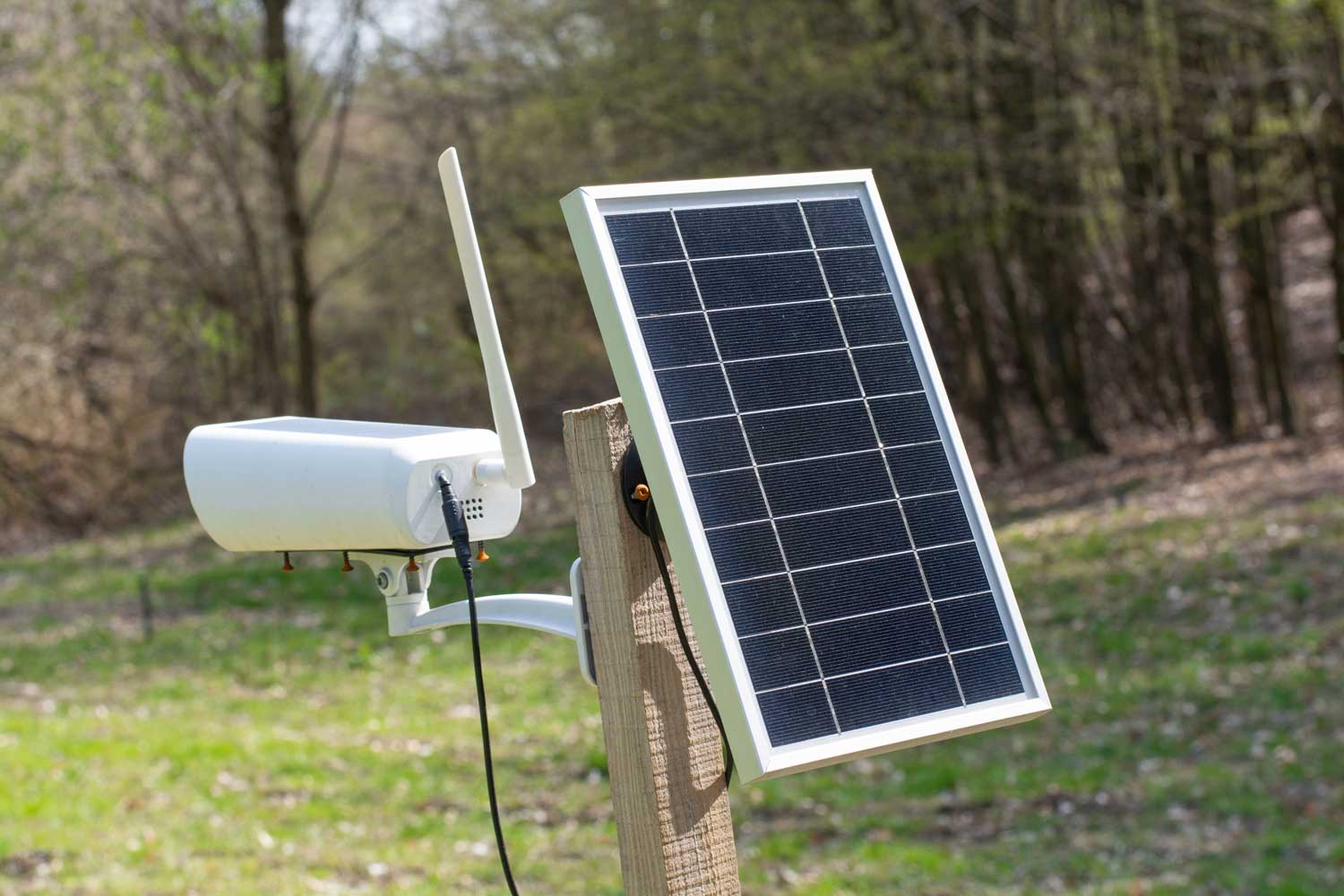
If you’re worried about how long your battery-powered surveillance camera lasts, add solar power to the unit. Solar security cameras use the power of the sun to keep the video surveillance going. Extra power is stored in the battery to extend the life of the unit. These cameras can function even on a cloudy day.
Allowing nature to power your cameras in places where you don’t have access to electricity is a great workaround. Great security companies, like Pro-Vigil, will install these high-tech systems as part of a full business security architecture. We’ve found them to be highly effective in even the most rural or rugged conditions.
The benefits of adding solar to your battery operated surveillance cameras include:
- Extending the life of your batteries.
- Requiring no cabling or power grid to operate.
- Installation in the most remote locations.
- Easy installation with no cabling costs.
- Green and environmentally friendly.
- 24/7 camera monitoring—long after the sun goes down.
- Scalable and affordable.
- Monitoring by an external vendor like Pro-Vigil.