
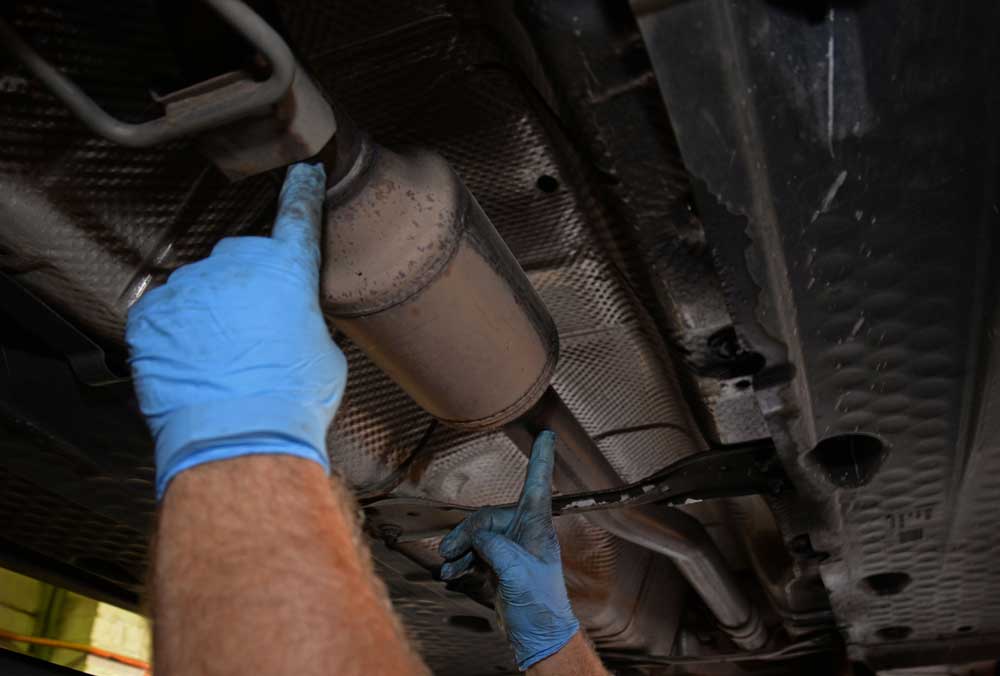
Catalytic converter theft has become a major problem for vehicle dealerships across the United States. More than 27,000 catalytic converters were stolen in 2023, and thieves can often remove one in two minutes or less using basic tools.
Because dealerships typically store dozens or even hundreds of vehicles outdoors overnight, a single theft incident can quickly turn into a large financial loss.
Dealerships can reduce catalytic converter theft by combining strong lighting, controlled lot access, and remote video monitoring that detects suspicious activity and deploys deterrents such as loud sirens when suspicious activity occurs. And if the criminal doesn’t leave, the monitoring team escalates to authorities.
Why Catalytic Converter Theft Happens So Quickly
Catalytic converters contain valuable metals that can be sold to recycling centers, which makes them attractive targets for thieves. In many cases, theft can happen extremely quickly.
- Catalytic converters can be removed in two minutes or less with basic tools
- Scrap recyclers may pay up to $200 per converter
- Large parking lots provide easy access to multiple vehicles
Even a short window of opportunity can allow thieves to remove several converters before anyone notices.
Catalytic Converter Theft Remains a Major Problem
Although theft trends have fluctuated in recent years, the overall problem remains significant.
- 27,609 catalytic converters were stolen in 2023
- That number was up dramatically from 1,298 thefts reported in 2019
- In one case, thieves stole 34 catalytic converters from a single Austin, Texas dealership in 2022
Because dealership lots may contain dozens or even hundreds of vehicles, the financial impact of a single overnight theft can escalate quickly.
Common Security Measures Dealerships Use
Dealerships often use several protective measures to reduce risk. Typical security strategies include:
- Bright lighting across parking areas
- Perimeter fencing or controlled vehicle access points
- CCTV cameras that record activity across the lot
- Alarm systems or motion sensors
These measures can improve visibility and discourage opportunistic crime. However, many of these tools are passive security measures, meaning they record activity rather than actively stopping it.
Why CCTV Cameras Alone May Not Stop Converter Theft
CCTV cameras can record activity across dealership lots, including:
- Parking rows
- Service bays
- Vehicle staging areas
- Entrances and exits
However, traditional CCTV cameras record incidents rather than respond when suspicious activity occurs. If thieves arrive overnight and no one is reviewing footage in real time, the theft may not be discovered until employees return the next morning.
At that point, the recorded footage may help investigators understand what happened, but it does not prevent the loss.
How Remote Video Monitoring Helps Stop Catalytic Converter Theft
Remote video monitoring adds an active response layer to traditional camera systems.
AI-enabled cameras detect unusual activity such as individuals moving between parked vehicles or approaching a dealership lot after hours. When suspicious activity occurs, the system alerts a security operations center where trained professionals immediately evaluate the situation.
Security teams can deploy deterrents in real time, including:
- Loud sirens or audio deterrents
- Flashing lights or security alarms
- Escalation to local law enforcement when necessary
Because individuals realize someone is actively watching and responding, many leave the property immediately; if not our team escalates to the local authorities. At the same time, the remote video monitoring system records and stores high-definition footage, which can assist investigations if an incident occurs.
A Layered Approach to Protecting Dealership Lots
The most effective dealership security strategies combine several protective layers. A typical security plan may include:
- Physical barriers such as fencing or controlled lot access
- Lighting to improve visibility across parking areas
- Remote video monitoring that detects suspicious activity and alerts a monitoring agent
- That person deploys audio deterrents to scare the criminals away and alerts authorities if they don’t leave
- The footage is recorded to a local device and/or the cloud for on-demand retrieval to help assist investigations
This layered approach to security helps dealerships and property owners both prevent theft and document incidents if they occur.
Protecting Catalytic Converters on Vehicles After Hours
Vehicle dealerships often store large numbers of vehicles outside normal business hours, which makes overnight protection critical. Remote video monitoring combines intelligent cameras, artificial intelligence, and trained monitoring professionals who can detect suspicious activity and intervene when necessary.
Companies such as Pro-Vigil specialize in remote video monitoring for parking lots, auto dealerships, and collision centers, helping organizations deter catalytic converter theft while still capturing footage that can assist investigations.
Businesses looking to reduce after-hours theft can implement remote video monitoring as part of a proactive dealership security strategy.