Quick Answer & Key Takeaways
Copper theft is climbing sharply in 2026, driven by record copper prices, a 50% tariff on imported copper, and explosive demand from AI data center construction. Recent incidents show copper theft now touches nearly every stage of the supply chain. Businesses that store, install, or transport copper can reduce their risk with layered security, including remote video monitoring and rapid deterrence, rather than fencing and lighting alone.
- Data center copper demand alone is projected to reach about 475,000 metric tons in 2026, since AI facilities can require several times more copper than a conventional data center.
- In June 2026, Cook County, Illinois investigators recovered $1.3 million in stolen freight near Chicago, including $300,000 in copper wire and $1 million in data center infrastructure equipment.
- While data centers get the headlines, construction sites, utilities, telecom networks, warehouses, vacant properties, and scrap yards are all common targets for copper wire theft.
- Nationwide, metal theft from recycling centers and scrap yards is estimated to cost businesses close to $1 billion a year.
- Based on an average $10,000 per incident, Pro-Vigil’s 2025 data suggests it prevented an estimated $58.9 million in theft losses from construction sites in 2025
Why Is Copper Theft Spiking in 2026?
Copper theft tends to track copper prices, and 2026 has seen some of the highest prices on record: COMEX futures reached about $6.58 per pound and LME prices topped $13,842 per metric ton, levels not seen since the early 1970s (adjusted for inflation).
So, why are copper prices surging? There are several converging at once: heavy Chinese buying, a softer U.S. dollar, tightening global supply, and a 50% tariff on imported copper that took effect in mid-2025 and pushed domestic prices higher still.
So, why are copper prices surging? There are several converging at once: heavy Chinese buying, a softer U.S. dollar, and tightening global supply. On top of that, a 50% U.S. tariff on specified semi-finished copper products and copper-intensive derivative products took effect August 1, 2025, adding another factor to the copper market’s cost dynamics.
Demand for copper – as with demand for other materials – is also surging due to the skyrocketing investment in artificial intelligence. AI data centers require significantly more copper than a typical facility, largely for high-density power distribution and cooling, and analysts estimate data center copper demand could reach approximately 475,000 metric tons in 2026, up sharply from the year before. That kind of hyperscaling demand raises the resale value of every reel of wire sitting on a job site or in a yard.
“Unpredictable tariffs and material costs mean the financial stakes of theft and vandalism are significantly higher than they were just a few years ago.” — Satish Raj, Chief Technology Officer at Pro-Vigil
Why Is Copper Such a Common Theft Target?
Price explains why copper theft is rising. It doesn’t explain why people steal copper wire instead of something else. A few traits make copper unusually easy to steal and sell:
- It turns into cash quickly. Scrap yards buy copper by weight, and once wire is stripped or chopped, it’s very hard to trace back to the site it came from.
- It’s often left in the open. Reels of wire, coils of pipe, and exposed grounding usually sit outdoors on job sites, in yards, and on utility infrastructure.
- It doesn’t take much to remove. Bolt cutters and a pickup truck are often enough, and thieves can be gone in minutes.
- It’s everywhere. Copper is in nearly every building, vehicle charger, HVAC unit, streetlight, and power system, so the list of targets is long.
A $1.3 Million Recovery Should Be a Supply Chain Wake-Up Call
In June 2026, investigators with the Cook County, Illinois Sheriff’s Office recovered two stolen trailers at a truck yard outside Chicago, containing more than $1.3 million in cargo. One, reported stolen out of Alabama, held roughly $300,000 in copper wire. The other, reported stolen out of Florida, carried about $1 million in infrastructure equipment bound for a data center build.
According to FreightWaves, the same individual is believed to have delivered both trailers, and the investigation, including where the freight was ultimately headed, remains open.
If this case demonstrates one thing, let it be this: Copper theft isn’t limited to what happens after materials arrive on-site. High-value freight tied to a fast-moving data center build is a target the moment it leaves the manufacturer.
Pro-Vigil Tip:
Staging areas, laydown yards, and delivery zones deserve the same surveillance as the finished site. In our experience, unmonitored drop zones are often where the most valuable, least-secured materials sit, sometimes for days before they’re installed.
Data Centers Are a High-Profile Copper Theft Target
A data center build can spend months as an active construction site, with pallets of copper wire, conduit, and grounding material staged outdoors before installation, and large sites are difficult to fence completely. Finished data centers carry plenty of copper too, in grounding systems, backup power, and the cabling that supports cooling and power distribution. An active data center is typically better secured than open construction lots are, but it carries the added risk of downtime from a theft-related outage, which can cost far more than the material itself.
Industries Most Exposed to Copper Theft
Data centers are a visible example of a much wider trend. Construction theft overall is estimated to cost up to $1 billion a year, and the same dynamics play out wherever copper is stored, installed, or left exposed:
|
Industry |
Common copper targets |
|
Construction |
Wire, conduit, and piping |
|
Data centers |
Power distribution, grounding, and cabling |
|
Utilities |
Grounding wire and conductor cable |
|
Telecom |
Copper communication cables |
|
Manufacturing |
Electrical components |
|
Warehouses |
Stored wire, cable, and components |
|
Vacant properties |
Wiring and plumbing |
|
Solar and energy |
Wiring and electrical infrastructure |
|
Scrap and recycling |
Copper inventory |
What Copper Theft Really Costs Businesses
The price tag on copper theft goes well beyond the value of the stolen material. Repairing torn conduit, cut cable, and disturbed grounding often costs more than the copper’s resale value, and the indirect costs can be bigger still.
Direct Costs
- Stolen copper: The costs of replacing the wire, pipe, or cable itself; since prices are higher today than they may have been when the copper was originally purchased, and since rush fees may be necessary, this can add up over time
- Labor: The cost of operating crews to pull damaged runs and reinstall them
- Repairs: The costs of fixing cut conduits, damaged panels, and anything broken during the theft
Indirect Costs
- Project delays: Electrical work has to be redone before other trades can move forward
- Downtime: Operating facilities can lose power, connectivity, or production
- Reinspection: Replaced electrical work may need to be inspected again
- Insurance: This includes claims, deductibles, and the potential for higher premiums
- Lost productivity: Crews sit idle or get pulled off scheduled work
- Safety and infrastructure consequences: Live wires, dark streets, and service outages can all be hazardous to employees and passersby alike
Those consequences can reach well beyond a single job site. Telecommunications carrier AT&T reported roughly $76 million in repair costs in 2025 tied to copper wire theft. Copper theft in Los Angeles is another example: theft and vandalism have grown to about 40% of the city’s streetlight service requests, and LA has spent more than $100 million on that damage since 2020.
Pro-Vigil’s own 2025 data shows an estimated 5,890 potential crimes prevented at construction sites; at an average cost of $10,000 per construction site theft, this means that sites protected by Pro-Vigil avoided an estimated $58.9 million in losses that year alone
Case Study: D.R. Horton
D.R. Horton, the largest homebuilder in the U.S., saw material theft costs climb as copper and lumber prices rose; a single theft that once cost about $2,500 began costing closer to $10,000. After moving from roaming security guards to Pro-Vigil’s mobile surveillance units, the company reported a significant decline in theft across its most affected communities.
“We strategically placed mobile units in the most theft-prone communities we work in and have absolutely noticed a decline in incidents.” — Joe Walston, Purchasing Manager, D.R. Horton
Pro-Vigil Tip:
Materials theft usually isn’t as opportunistic as people expect. Thieves who target copper tend to case a site first, testing whether anyone actually responds to a triggered alarm. Sites with a track record of fast response tend to see far fewer repeat attempts.
How to Protect Your Site from Copper Theft
- Inventory and stage materials deliberately. Keep high-value copper out of sight from public roads and unload only what’s needed for near-term work.
- Lock up loose stock. Store wire reels and fittings in locked containers when they’re not in use.
- Install promptly, then close up. Copper that’s installed is harder to take than copper sitting on a pallet. Once wire is in the walls, though, secure the building as soon as you can, since that’s another common window for theft.
- Light and monitor storage and laydown areas, not just entrances and perimeters, since that’s typically where materials sit longest.
- Screen and maintain your perimeter. Privacy screening on fencing keeps passersby from seeing what’s worth stealing. Walk the fence line regularly and repair gaps quickly.
- Control access. Limit who holds gate keys and codes, log every delivery and pickup, and lock gates at the end of every shift.
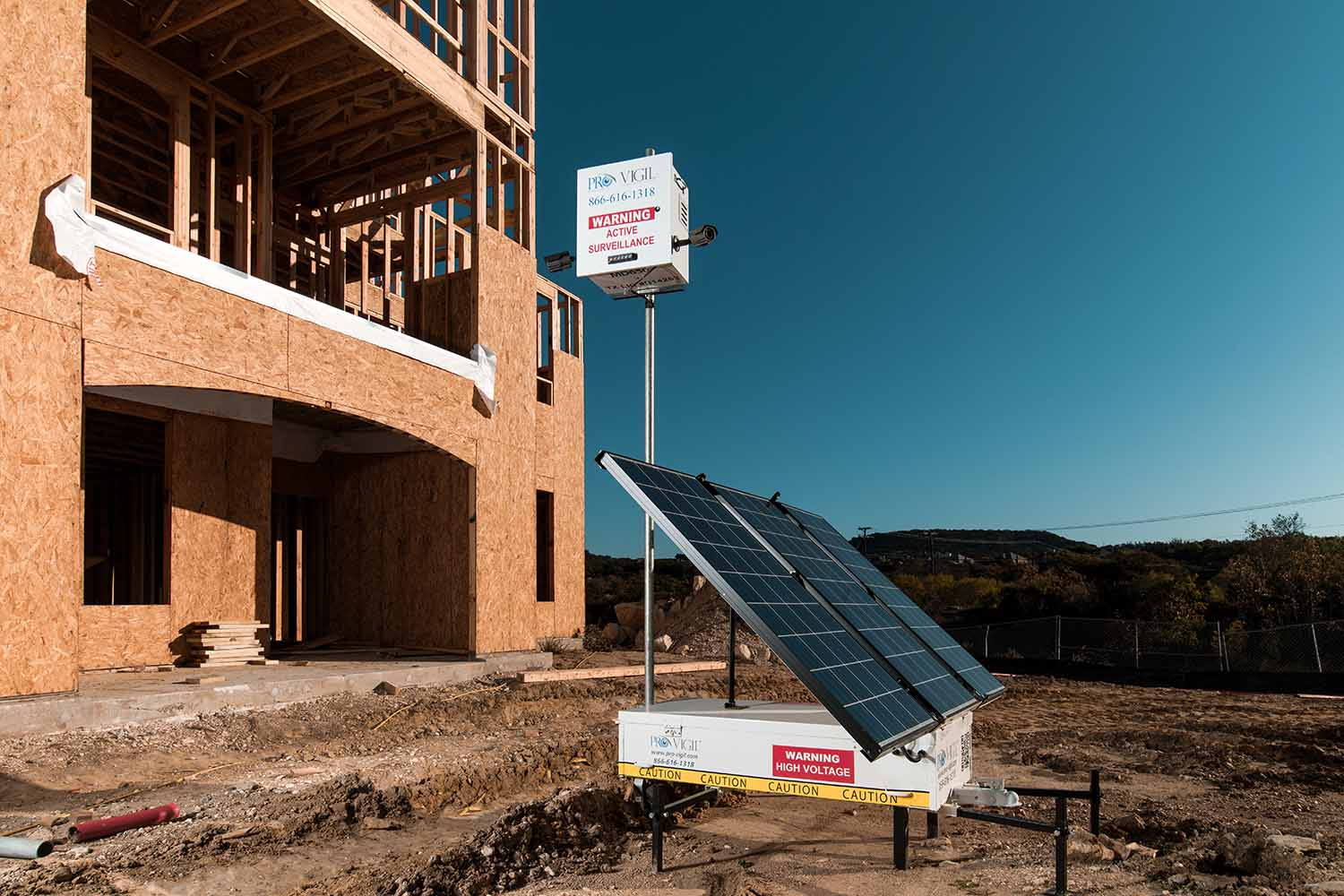
- Post warning signs. Signs noting the site is under live video monitoring, plus electrical hazard warnings near live wiring, are a simple, low-cost copper wire theft deterrent.
- Add remote video monitoring with live verification, so after-hours activity triggers an actual response, rather than just “well, I guess we caught the thieves on camera” the next morning.
- Use audio and visual deterrents to interrupt theft in progress, before material leaves the site.
- Coordinate with local scrap and recycling yards on suspicious sell activity, since stolen copper is typically fenced quickly.
- Move camera coverage with the project, rather than leaving it fixed on an area that’s already finished.
Pro-Vigil Tip:
Theft risk shifts as a job progresses. Share upcoming project milestones with your security provider so camera coverage can move with the work. A three-phase process – Assessment → Relocation → Redeployment – helps your cameras always be relevant to where the vulnerable materials are located, rather than staying fixed on an area that’s already finished.
How to Choose a Copper Theft Protection Strategy
The right mix of copper theft protection depends on your site, your materials, and how long they sit exposed. These questions can help shape your plan:
|
Question |
Why it matters |
|
How much copper is on-site, and for how long? |
The longer materials sit exposed, the more you need continuous monitoring rather than a lock alone |
|
Is the site staffed after hours? |
Unstaffed sites need someone watching remotely who can respond in real time |
|
Where do materials sit before installation? |
Staging and laydown areas need their own camera coverage, not just the entrance |
|
Will the vulnerable areas shift as work progresses? |
Mobile units can relocate with the work, while fixed cameras stay put |
Secure Your Business Against Copper Theft (and More) With Pro-Vigil
Copper theft is surging due to data center construction and the AI boom, but fundamentally, it is not a niche problem tied to a single industry. It’s a byproduct of a metal that has become significantly more valuable, and significantly more contested, in 2026.
Data centers, whether under construction or fully operational, are one of the more visible examples of that pressure, but the same dynamics play out at construction sites, utilities, warehouses, and scrap yards across the country.
Pro-Vigil can help businesses evaluate where copper and other high-value materials are most exposed on their sites and determine what combination of monitoring, deterrence, and response makes sense for their risk.
How Pro-Vigil Approaches Copper and Materials Theft Prevention
Pro-Vigil combines AI-powered video analytics with live human monitoring to catch suspicious activity before material leaves a site. Our remote video monitoring service is designed to interrupt theft while it’s happening, not just document it afterward.
In 2025 alone, that approach helped prevent 27,923 crimes across Pro-Vigil-monitored sites.
Data Center Copper Theft: FAQs
Mostly because copper is worth more than it’s been in decades. Record prices, tariffs on copper products, and surging demand from data centers and electrification all raise what thieves can get for it at the scrap yard.
Copper is one of the few stolen materials that can become cash the same day, with very little that ties it back to where it came from.
Any business that keeps copper outdoors or leaves sites empty overnight are vulnerable. That especially includes construction, utilities, telecom, solar, and vacant properties – but is by no means limited to them.
Yes, and construction site copper theft tends to peak at two points: right after wire is delivered and before it’s installed, and after electrical rough-in, when wire is in the walls but the building can’t be locked up yet. Watch for thieves especially during these windows.
Yes. Builds expose staged wire and conduit, and operating facilities depend on copper grounding and power infrastructure. As the Cook County case shows, equipment bound for a data center can also be stolen before it ever arrives.
Yes. Loaded trailers are high-value, mobile, and often parked unattended. To lower the risk:
- Avoid leaving loaded trailers in unsecured yards overnight
- Use GPS tracking on high-value shipments
- Schedule deliveries for when your crew is on site to receive them
- Monitor delivery and drop zones on camera
Start with the site steps above, then add a few habits that make recovery and prosecution easier:
- Photograph inventory and record reel or lot numbers when materials arrive
- Mark copper with paint or etching so it’s harder to sell
- Know your state’s scrap metal reporting rules and build a relationship with local yards
- Review your insurance coverage for materials on site before you need it
Yes. A live operator speaking through an on-site speaker – calling out what someone is wearing and where they’re standing – is a strong copper wire theft deterrent, because it tells the intruder a person is watching them right now. If they stay, the operator can dispatch police with a verified description.
- Laydown yards and material staging areas
- Conex boxes and storage containers
- Electrical rooms, temporary power, and panels
- Generators and HVAC units
- Delivery gates and entry points
- Save any video footage and photograph the damage before repairs begin.
- File a police report.
- Alert nearby scrap and recycling yards with a description of what was taken.
- Notify your insurer.
- Review where the thieves got in, and adjust lighting, staging, or camera coverage to prevent a repeat.
A layered approach is best. Secure storage, lighting, fencing, and access control all slow thieves down, while remote video monitoring adds someone who can respond while they’re still on site. No single measure can cover every gap on its own, so use a mixture.
- Visible deterrents: lighting, fencing with privacy screening, and signs noting the site is under live monitoring
- Active deterrents: live audio warnings and flashing lights triggered by a monitoring team when someone enters the site