Key Takeaways
- Visible and hidden cameras serve different purposes; effective DIY security systems use both
- Architectural features, elevation, and natural cover are the most practical concealment methods for commercial properties
- Hiding surveillance camera wires is as important as hiding the camera itself
- Camera placement should be designed around actual threat patterns, not convenience
- A professional site assessment catches placement mistakes before they become vulnerabilities – and virtual guards can make the need to hide security cameras obsolete.
There’s a long-running debate in security circles about whether cameras should be visible or hidden. Before we get into the meat of this post, let’s ask the question: Do you actually want to be hiding your security cameras, or not?
Why Do You Need to Hide a Security Camera?
The thinking in the visible vs. discreet security cameras tends to go thusly. On the one hand, visible cameras deter potential miscreants – a conspicuous dome camera above an entrance sends a clear message that the property is monitored, after all. For most applications, that deterrence effect is exactly what you want.
But deterrence only works on people who care. A determined intruder will scope out visible cameras and work around them; someone casing a property for a return visit is specifically looking for the coverage gaps they can exploit.
The reason why you would want to hide a security camera, therefore, is to make the determined intruder think they’ve spotted all of the cameras – when, in reality, they haven’t.
The answer, for most serious security setups, isn’t to use either visible or hidden cameras, but rather to use both. Visible cameras establish a deterrent presence, while strategically concealed cameras cover the angles a would-be intruder thinks they’ve identified as blind spots.
(This is, of course, from a commercial perspective, which is Pro-Vigil’s area of expertise. From an individual perspective, a hidden security camera works to catch behavior of those who believe they are being unseen, e.g., to find out which one of your neighbors keeps letting their dog use your lawn as its toilet.)
Understanding how to hide surveillance cameras effectively is less about secrecy for its own sake and more about building a system without obvious weak points. Over the 20 years we’ve been designing security layouts across construction sites, car dealerships, scrap yards, and industrial facilities, we’ve learned firsthand how placement decisions can make or break an otherwise solid setup.
In other words, where to place surveillance cameras matters just as much as which cameras you’re using.
Here are nine considerations for how to hide your security cameras.
9 Ways How to Hide a Surveillance Camera
1. Use Architectural Features
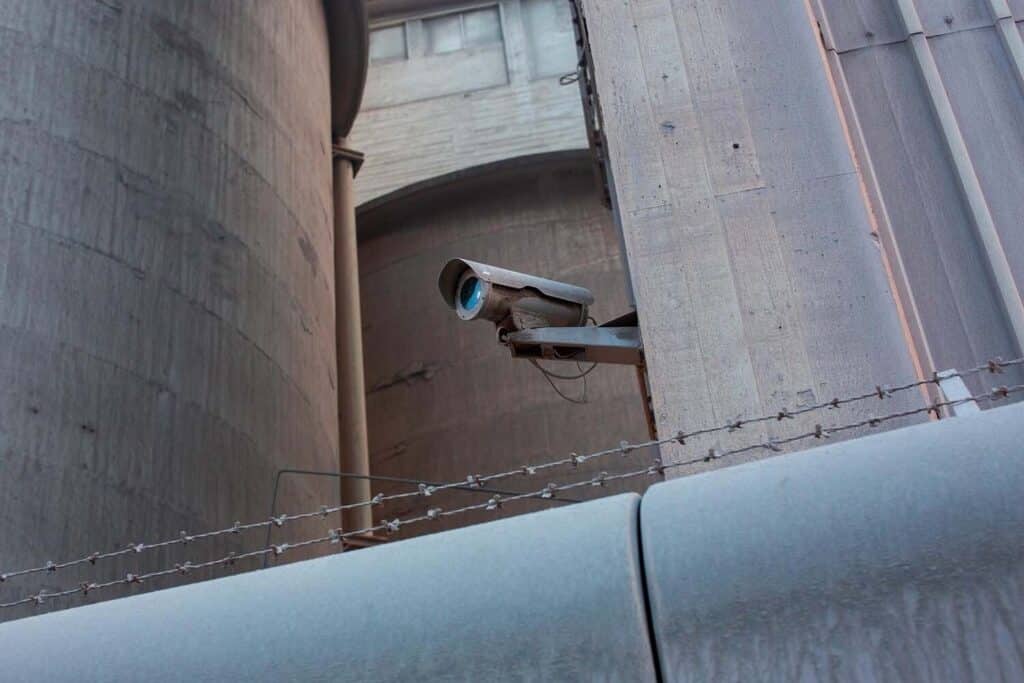
Soffits, eaves, fascia boards, and structural overhangs are natural mounting points that most people never think to look at. Cameras mounted here sit flush against the building, benefit from overhead cover that protects against weather, and sit well above casual sight lines. For commercial properties with significant roofline structure, this is often the single most effective placement strategy. The cameras are in plain sight, technically, but almost nobody looks up.
2. Match Housing Color to Surroundings
A black camera mounted against a white wall announces itself. The fix is simple: select camera housings that match the surface they’re mounted on, or paint them to match. Most camera housings can be painted without affecting performance. It won’t fool a close inspection, but it dramatically reduces casual detectability – which is usually sufficient.
3. Mount Cameras Inside or Behind Concealment Objects
Purpose-built concealment housings, like fake rocks, artificial plants, or birdhouse enclosures, are widely available and surprisingly convincing at a distance. For outdoor perimeter coverage, a realistic-looking rock with a weatherproof camera inside is genuinely difficult to detect unless someone is specifically looking for it. The main limitation is field of view; concealment objects need a natural-facing direction that aligns with what you actually need to monitor, so placement requires more planning than a standard mount.
Another limitation here is that you need to pick the right concealment object. People might question what a birdhouse is doing in a construction site, after all!
4. Elevate Cameras Above Eye Level
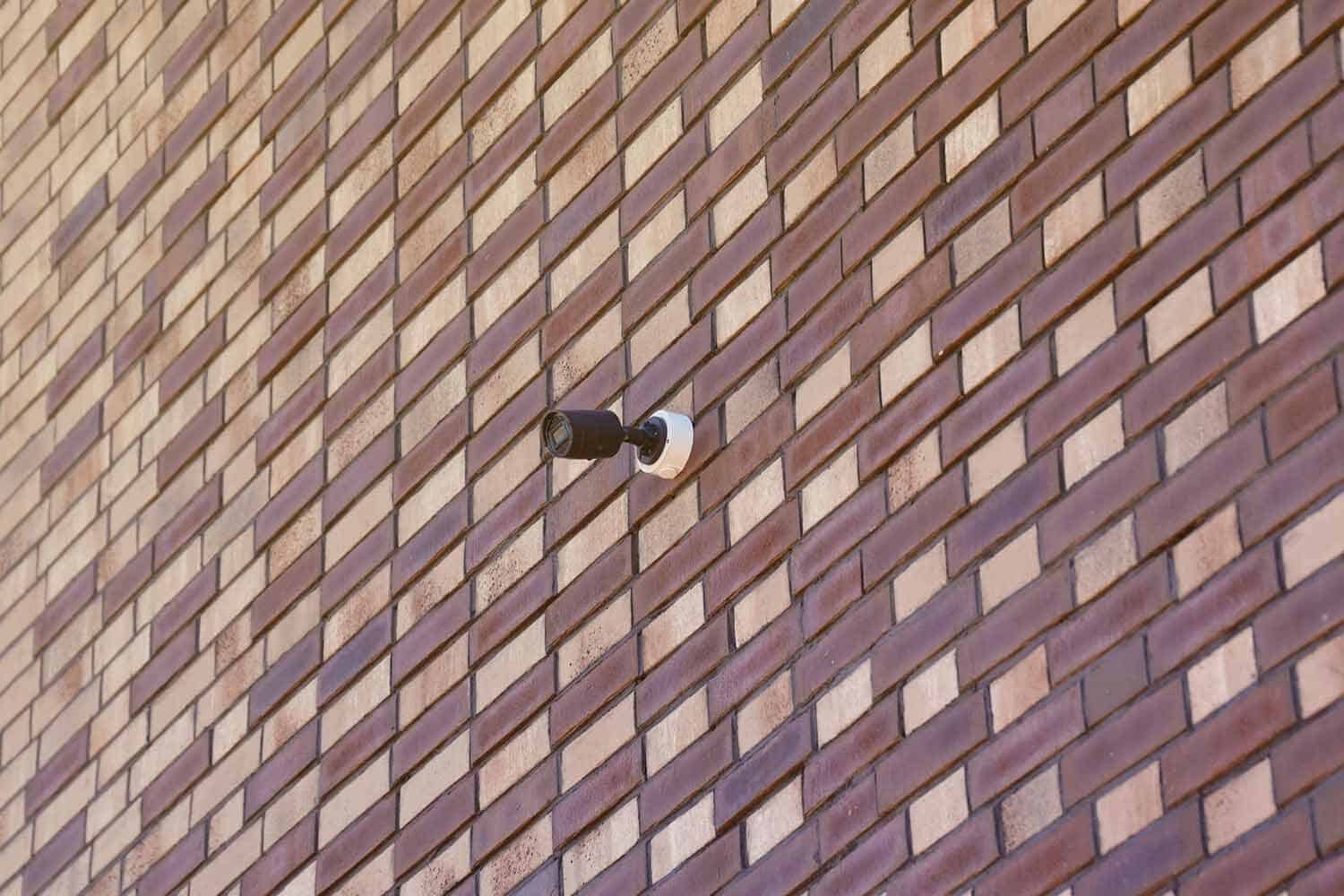
This one is less about concealment and more about psychology – and it’s something that we touched on back in point #1. People scanning for cameras tend to look around head height, looking at places like doorframes, walls, or obvious mounting brackets. Cameras positioned eight, ten, or twelve feet up – or even higher – that are recessed into a ceiling corner or mounted near the roofline simply don’t register the same way.
Elevation also makes cameras significantly harder to tamper with, spray-paint, or physically redirect, which is something we see attempted with some regularity on high-risk properties. A camera someone can’t reach is a camera that keeps working.
5. Use Small Form Factor Cameras
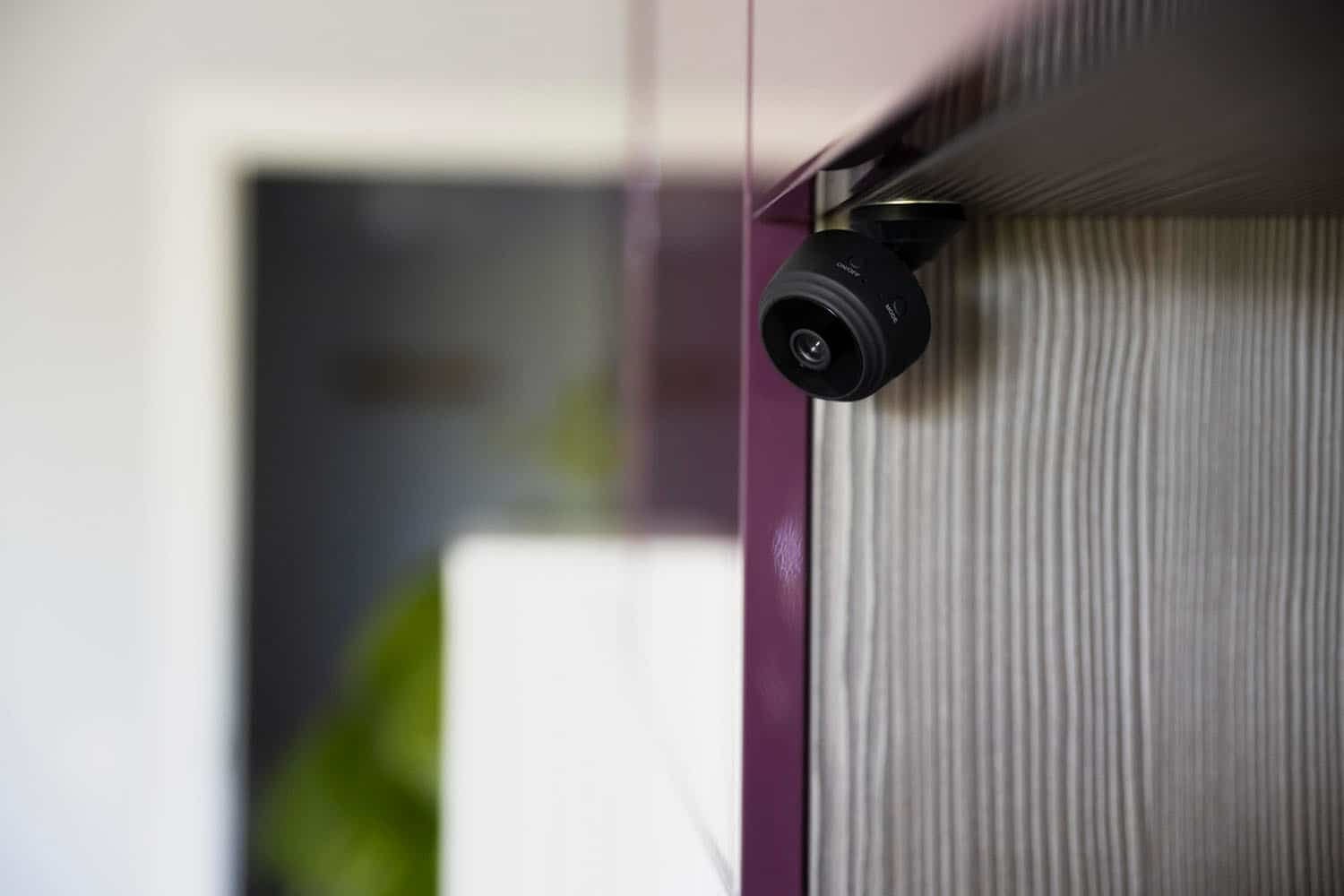
Miniature and pinhole cameras are inherently harder to spot than standard dome or bullet housings. This isn’t because they’re hidden, exactly, but because they don’t look like cameras to the casual eye. A pinhole lens embedded in a wall fixture, a vent cover, or a small enclosure blends into the environment in a way that a conventional housing simply can’t.
A few things worth knowing before going this route:
- Resolution trade-offs are real. Smaller sensors often mean lower image quality, particularly in low light
- Field of view is narrower. Pinhole cameras typically cover less area than standard lenses
- They work best as supplements. Rather than using them as primary cameras, they work best when paired with visible deterrent cameras.
6. Integrate Cameras Into Everyday Fixtures
Cameras built into or mounted alongside lighting fixtures, smoke detectors, or other ceiling hardware are among the hardest to identify because they’re hiding in plain sight as something else entirely. A camera integrated into a floodlight housing, for instance, serves double duty; the light itself is expected to be there, and the camera lens reads as part of the fixture assembly to anyone who isn’t specifically looking for it.
This approach works particularly well for interior coverage of lobbies, warehouses, and retail floors, where a standard dome camera would be immediately obvious.
7. How to Hide Surveillance Camera Wires
Visible wiring is one of the most common ways cameras get identified and traced, since a cable running down a wall or across a ceiling is a direct advertisement that a camera is nearby. Hiding surveillance camera wires properly is nearly as important as hiding the camera itself.
Depending on your setup, the best options are:
- In-wall routing. This is the cleanest solution; cables run inside the wall entirely, with no visible external trace
- Surface conduit or cable raceways. Painted to match the wall, these cover wiring neatly without requiring full in-wall installation
- Overhead cable trays. These are common in warehouses and industrial facilities where ceiling infrastructure is already present
- Wireless cameras. These eliminate the wiring problem entirely, at the cost of battery management or PoE dependency
For permanent installations, in-wall routing is worth the extra installation effort. For temporary or redeployable setups, wireless is the practical answer.
8. How to Hide a Surveillance Camera Outside Using Natural Cover
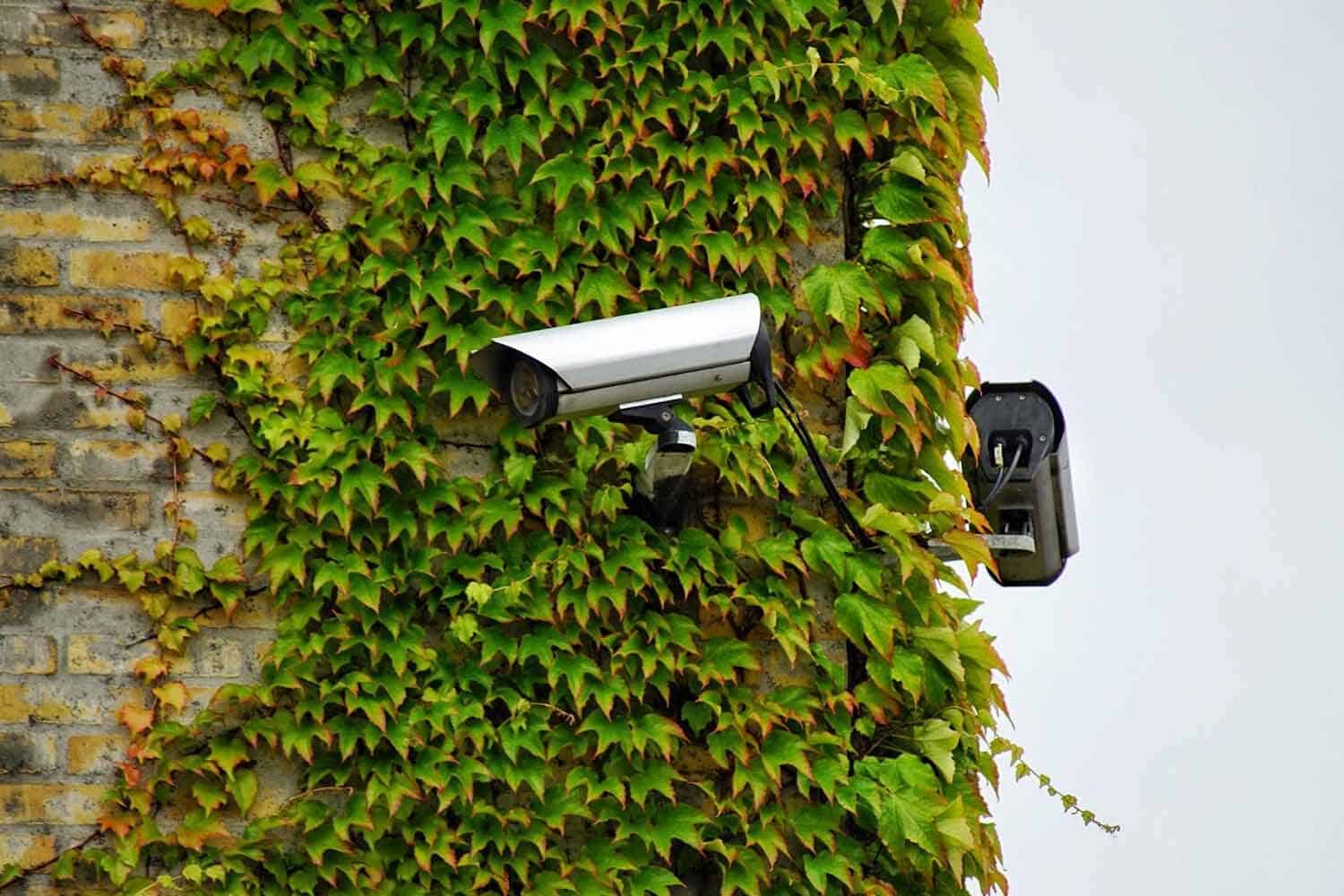
Remember how we advised you to use concealment objects as an easy method to hide surveillance cameras? Well, if you have natural concealment objects on your property, you can use those instead.
Landscaping is an underused tool in outdoor camera placement. A camera mounted on a fence post is obvious; the same camera nestled inside a dense shrub or positioned behind a natural gap in hedging is not. Trees with substantial canopy can conceal cameras pointed downward at driveways or parking areas, and natural rock formations or retaining walls offer mounting points that read as part of the landscape.
The main consideration is maintenance. Vegetation grows, after all, and a camera that has clean sightlines in spring may be obstructed by summer. Any camera using natural cover needs a quarterly check to confirm the view hasn’t closed in.
9. Position Cameras Relative to Lighting
This is less of a “how to hide your camera” tip and more of a “what to keep in mind while hiding your camera” tip. A camera pointed toward a bright light source, like a floodlight, the rising sun, a streetlight, is effectively blinded. This is one of the more common unintentional placement mistakes we see property owners making when assessing sites, and it’s entirely avoidable. Where to place surveillance cameras in relation to ambient light is a detail that separates a well-designed system from one that looks complete on paper but underperforms in practice.
The goal is to have light sources illuminating the scene being monitored, not the camera lens itself. For after-hours coverage specifically, positioning cameras to benefit from existing perimeter lighting, rather than fighting against it, dramatically improves night footage quality without any additional hardware.
Common Mistakes for Hiding Security Cameras
We’d like to reassure you that it’s okay if you don’t get your DIY security setup done on the first pass, but the reality is that you might not find out until after you’ve had an incident – only to find out that your footage isn’t usable. Here are some common issues to avoid:
- Placing cameras behind vegetation. As we mentioned, the problem with vegetation is that it grows. Your cleverly concealed camera may soon be effectively within a jungle. Fake/plastic plants get around this, but are easier to spot. Make sure you’re regularly trimming any plants in front of your cameras.
- Leaving wires visible. What is that wire doing running to that conspicuously placed plastic rock? This is a dead giveaway for any experienced crook.
- Not considering lighting. As we mentioned in point #9, a night-vision camera that’s too close to a light source might as well be blind. Don’t hide your cameras beneath, inside, or pointed at light sources.
- Not using outdoor-ready cameras. The camera’s IP (Ingress Protection) rating will inform you what it’s prepared to stand up to. You can’t just use an indoor-only camera and stick it outside, exposed to the elements.
Confused About How to Hide Your Security Cameras? Call Pro-Vigil!
Hidden cameras and visible cameras aren’t necessarily competing strategies; rather, they’re complementary ones. Visible cameras deter opportunistic miscreants; concealed cameras catch the determined ones. A well-designed system uses both deliberately, with placement decisions made around actual threat patterns rather than convenience or habit.
Do you know what another great way to catch determined trespassers and wrongdoers is? Having a professional remote video monitoring solution that keeps your property safe. You don’t need to build a crafty web of well-hidden cameras when the cameras that you do have are watched by trained professionals who can alert authorities and sound alarms whenever an intruder is detected.
At Pro-Vigil, camera placement strategy is part of every site assessment we do. Before a single camera goes up, we map coverage zones, identify blind spots, and design a layout built around how your specific property gets targeted. Get in touch to see what that looks like for your site.
FAQs: Hiding Surveillance Cameras