Quick Answer
Outdoor security lighting helps, to be sure. It improves visibility, discourages easily discouraged crooks, and gives your cameras something to record. However, it also has limits – the research on crime reduction is shakier than most buying guides let on, and a poorly aimed floodlight can cause problems of its own. It should be treated as one layer in a security plan, not the whole plan.
Key Takeaways
- Security lighting that shines all night is often thought to be a cheap way to secure a property and deter trespassers.
- The research on lighting and crime is split down the middle. A federal review from the Office of Justice Programs found roughly half of major U.S. lighting studies showed a real drop in crime; the other half showed nothing of significance.
- Glare from an overly bright, unshielded fixture can reduce visibility rather than improve it, by washing out the very camera footage lighting is supposed to help.
- Lighting’s most well-documented failure mode isn’t “it doesn’t work.” Rather, it’s displacement – crime just moves to whichever corner of the property is still dark.
Should great outdoor lighting be your property’s first line of defense? Well, there are upsides – but they’re not as ironclad as you might think. In this blog, we’ll look at the pros and cons of using good lighting to secure your property.
Outdoor Security Lighting: The Pros
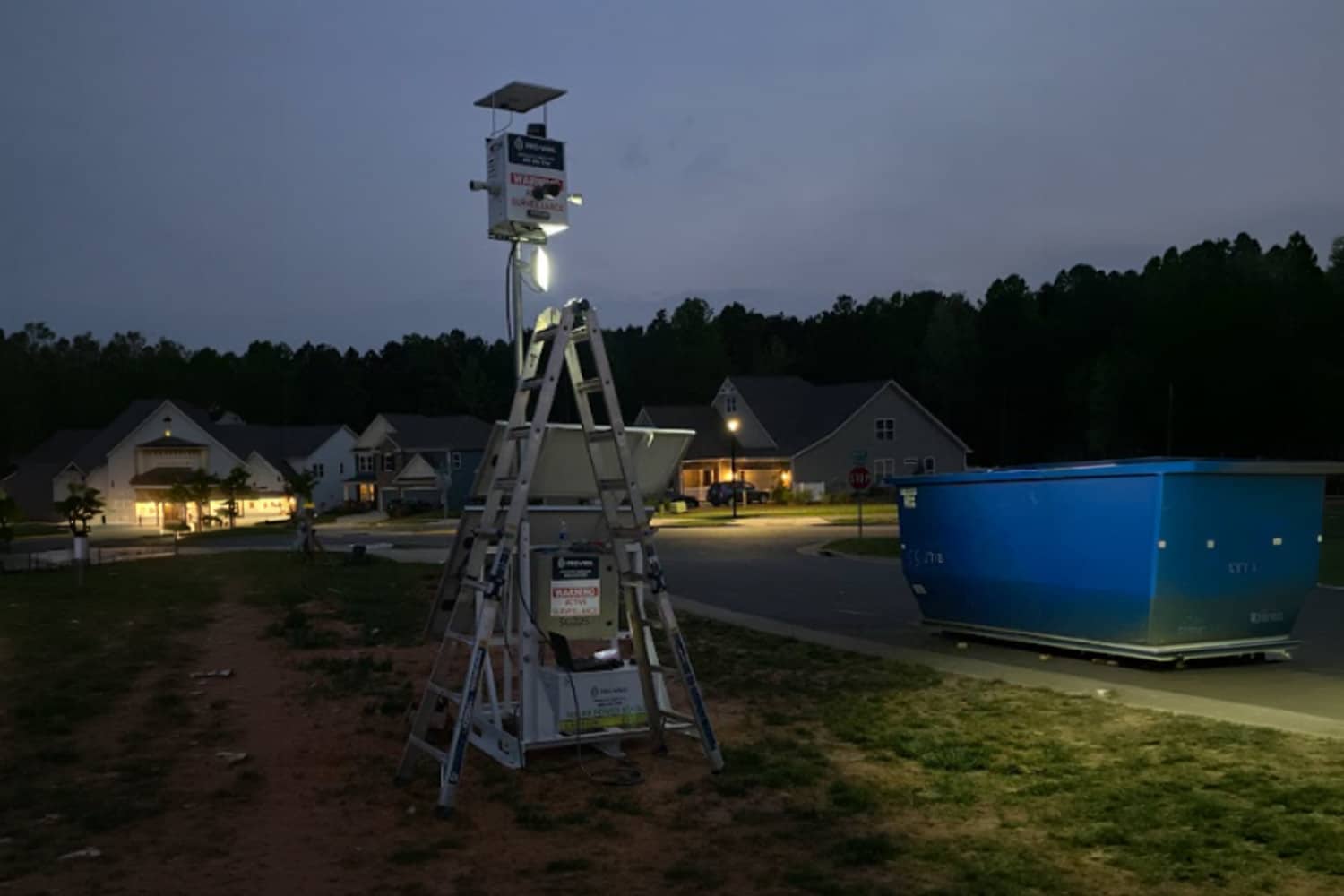
A good chunk of lighting’s reputation as a security tool is warranted:
- Lighting takes away the cover of darkness. Nobody casing a property for an easy target wants to be seen doing it.
- Lighting is a general safety upgrade. An employee walking to their car at 11 at night benefits from good visibility, whether or not it scares off a single criminal.
- It gives your cameras something to work with. Footage of a shadow is footage of nothing, so good lighting empowers cameras and turns low-light scenarios into well-lit ones.
- It’s cheap, and it’s fast. LED fixtures are inexpensive to run, can be turned on instantly, and don’t need a full security infrastructure to make them work.
“If a camera can’t see, it’s useless. All the AI and analytics capabilities in the world can’t compensate for an obscured picture.” – Satish Raj, Chief Technology Officer at Pro-Vigil
Outdoor Security Lighting: The Cons
We’ve talked about how lighting helps; so where does it fall short?
- The research is a mixed bag. A well-known Office of Justice Programs systematic review of U.S. and U.K. lighting studies found that while improved lighting reduced crime in some evaluations, it did nothing measurable in others.
- Glare can work against you. Bright, unshielded lighting constricts the eye’s pupils and makes it harder to adjust to surrounding shadow. An onsite security guard standing in a bright space will find it difficult to see anyone in the darkness beyond, and it can blow out a camera’s exposure if not shielded – the opposite of the visibility it’s supposed to provide.
- It can’t investigate. Compared to a full security system, a light can’t tell you what happened on your property in the dead of night or who might have done it, in the event that it fails as a deterrent and an incident occurs.
- It relocates the problem more often than it solves it. If you have one corner of a lot lit up and the other three dark, you might just be relocating crime instead of deterring it.
Static vs. Triggered Outdoor Security Lighting
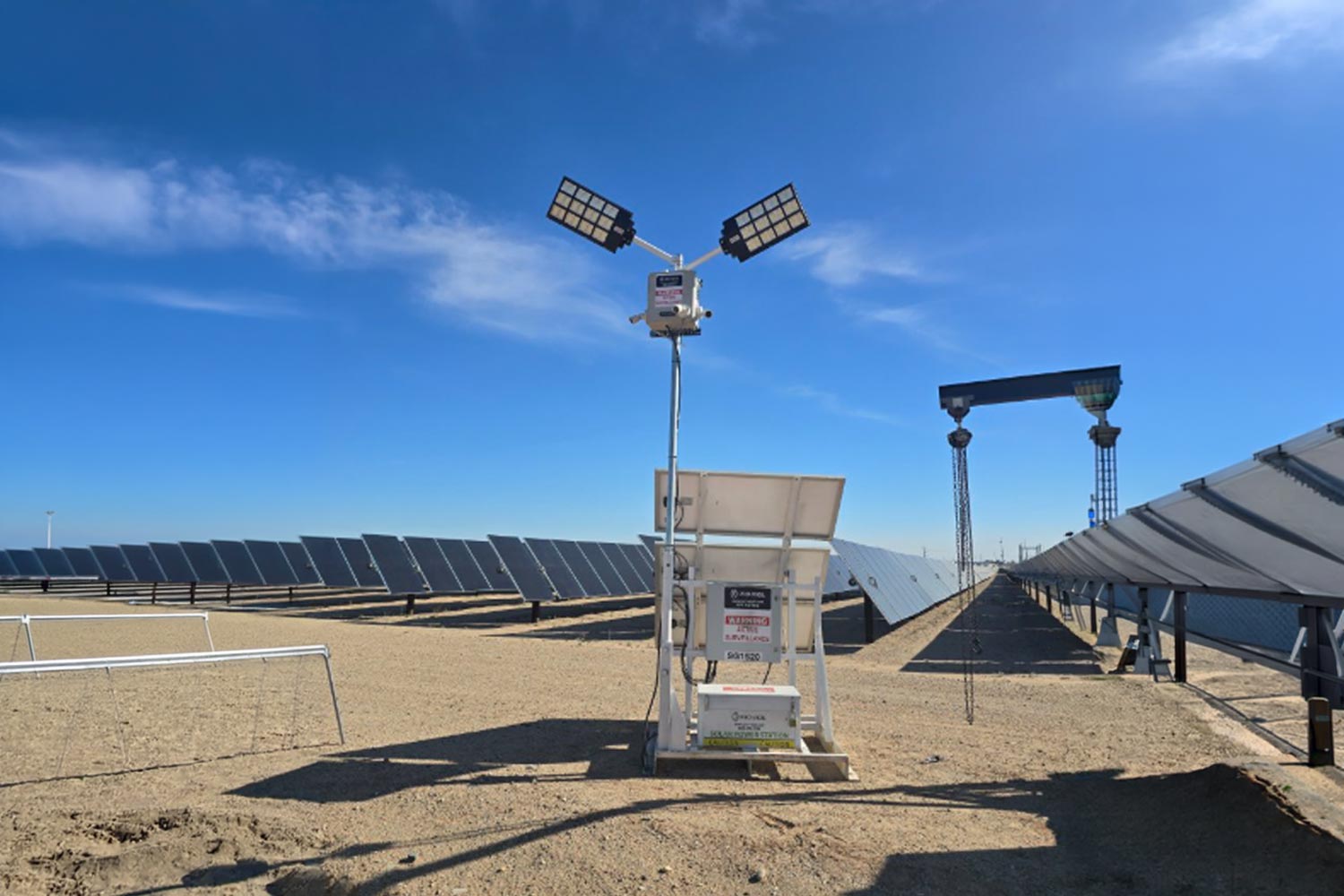
For security purposes, should your lighting be on all the time, or should it be motion-activated and only turn on when someone’s on the property?
Static Outdoor Lighting
This lighting either comes on when it’s dark, or is turned on by an employee and left on all night. There’s no thinking, no nuance, and thieves can see its glow all night long. This is the simplest and cheapest option, but it’s also the most easily bypassed.
Triggered Outdoor Lighting
This kind of light can catch people by surprise. It’s triggered by detected motion, meaning that your bulb lifespan is preserved – and you might scare off a trespasser who didn’t expect to suddenly be exposed.
Monitored Deterrent Lighting
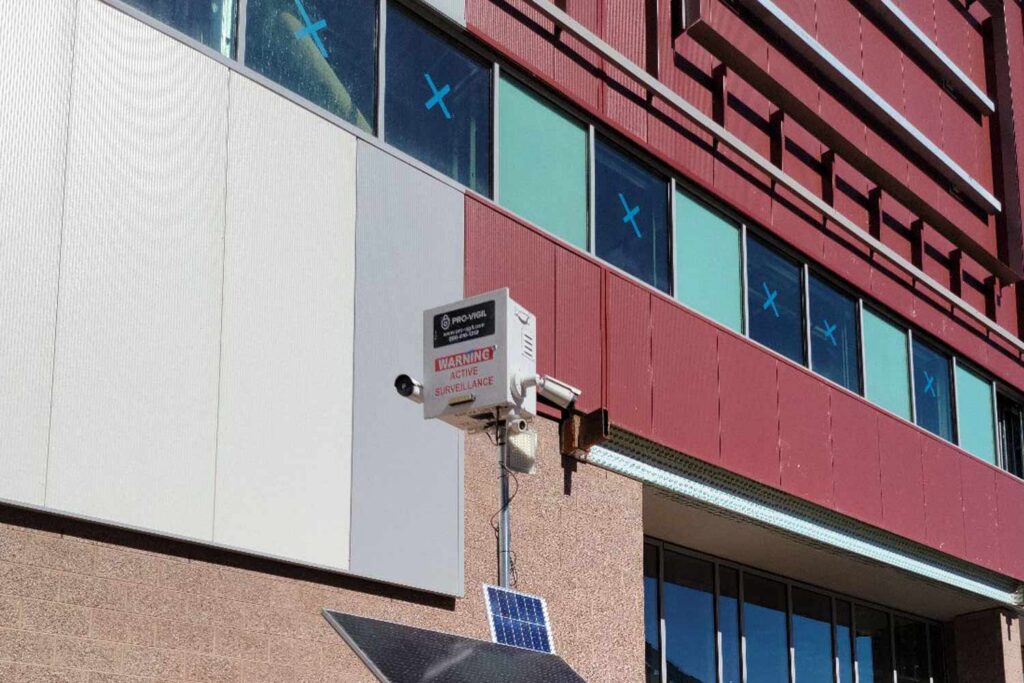
What if you had triggered lighting that didn’t just deter thieves via suddenly making an area bright, but with other alarms as well? Pro-Vigil’s audio and visual deterrents do just that. Bright, flashing lights and auditory warnings only activate once a security monitor confirms there’s an actual unwanted presence on your property.
How to Get Outdoor Security Lighting Right
- Spread the coverage. A single blinding floodlight creates glare and pitch-black shadows just past its reach; rather than having one aggressively lit fixture, consider spreading less-potent ones around your property.
- Pair motion-activated lighting with a baseline light. This ensures your property isn’t completely dark between triggers.
- Point lights to help your security. If camera footage looks washed out, the culprit is often a fixture aimed at the lens. Don’t forget that on-site guards have similar limits; are you pointing the floodlights in their eyes, or at what they’re supposed to be watching?
- Light the area outside the perimeter, too. If the site is well-lit and the area beyond the fence pitch-dark, cameras and guards alike will struggle to detect an intruder before they’re inside the perimeter. Where possible, you should be lighting at least several feet beyond any fencing. (You shouldn’t, however, be shining bright lights onto a neighboring residential property.)
- Don’t let lighting be the whole plan. If an incident happens on a well-lit property, lights won’t help you solve what happened. You need security cameras for that.
Light Up Your Property the Right Way With Pro-Vigil
Outdoor lighting is a reasonable first move for a business’ security efforts, but it shouldn’t be a finish line. The businesses that get the most out of their outdoor security lighting treat it as a single layer of their security, alongside cameras and real monitoring. Pro-Vigil can help evaluate whether your current lighting is helping your security goals, or quietly working against it – and we can add some of the best remote video monitoring on top of it in the process. Contact us today to start protecting your property.
Outdoor Security Lighting: FAQs