Quick Answer & Key Takeaways
Copper theft is climbing sharply in 2026, driven by record copper prices, a 50% tariff on imported copper, and explosive demand from AI data center construction. Recent incidents show copper theft now touches nearly every stage of the supply chain. Businesses that store, install, or transport copper can reduce their risk with layered security, including remote video monitoring and rapid deterrence, rather than fencing and lighting alone.
- Data center copper demand alone is projected to reach about 475,000 metric tons in 2026, since AI facilities can require several times more copper than a conventional data center.
- In June 2026, Cook County, Illinois investigators recovered $1.3 million in stolen freight near Chicago, including $300,000 in copper wire and $1 million in data center infrastructure equipment.
- Both data centers under construction and fully operating facilities are targets: job sites expose staged wire and conduit, while finished facilities rely on exposed grounding, backup power, and cooling infrastructure.
- Nationwide, metal theft from recycling centers and scrap yards is estimated to cost businesses close to $1 billion a year.
- Pro-Vigil prevented an estimated $58.9 million in theft losses from construction sites in 2025 alone at $10,000 per incident on average.
Why Is Copper Theft Spiking in 2026?
Copper theft tends to track copper prices, and 2026 has seen some of the highest prices on record: COMEX futures reached about $6.58 per pound and LME prices topped $13,842 per metric ton, levels not seen since the early 1970s (adjusted for inflation).
So, why are copper prices surging? There are several converging at once: heavy Chinese buying, a softer U.S. dollar, tightening global supply, and a 50% tariff on imported copper that took effect in mid-2025 and pushed domestic prices higher still.
Demand for copper – as with demand for other materials – is also surging due to the skyrocketing investment in artificial intelligence. AI data centers require significantly more copper than a typical facility, largely for high-density power distribution and cooling, and analysts estimate data center copper demand could reach approximately 475,000 metric tons in 2026, up sharply from the year before. That kind of hyperscaling demand raises the resale value of every reel of wire sitting on a job site or in a yard.
“Unpredictable tariffs and material costs mean the financial stakes of theft and vandalism are significantly higher than they were just a few years ago.” — Satish Raj, Chief Technology Officer at Pro-Vigil
A $1.3 Million Recovery Should Be a Supply Chain Wake-Up Call
In June 2026, investigators with the Cook County, Illinois Sheriff’s Office recovered two stolen trailers at a truck yard outside Chicago, containing more than $1.3 million in cargo. One, reported stolen out of Alabama, held roughly $300,000 in copper wire. The other, reported stolen out of Florida, carried about $1 million in infrastructure equipment bound for a data center build.
According to FreightWaves, the same individual is believed to have delivered both trailers, and the investigation, including where the freight was ultimately headed, remains open.
If this case demonstrates one thing, let it be this: Copper theft isn’t limited to what happens after materials arrive on-site. High-value freight tied to a fast-moving data center build is a target the moment it leaves the manufacturer.
Pro-Vigil Tip:
Staging areas, laydown yards, and delivery zones deserve the same surveillance as the finished site. In our experience, unmonitored drop zones are often where the most valuable, least-secured materials sit, sometimes for days before they’re installed.
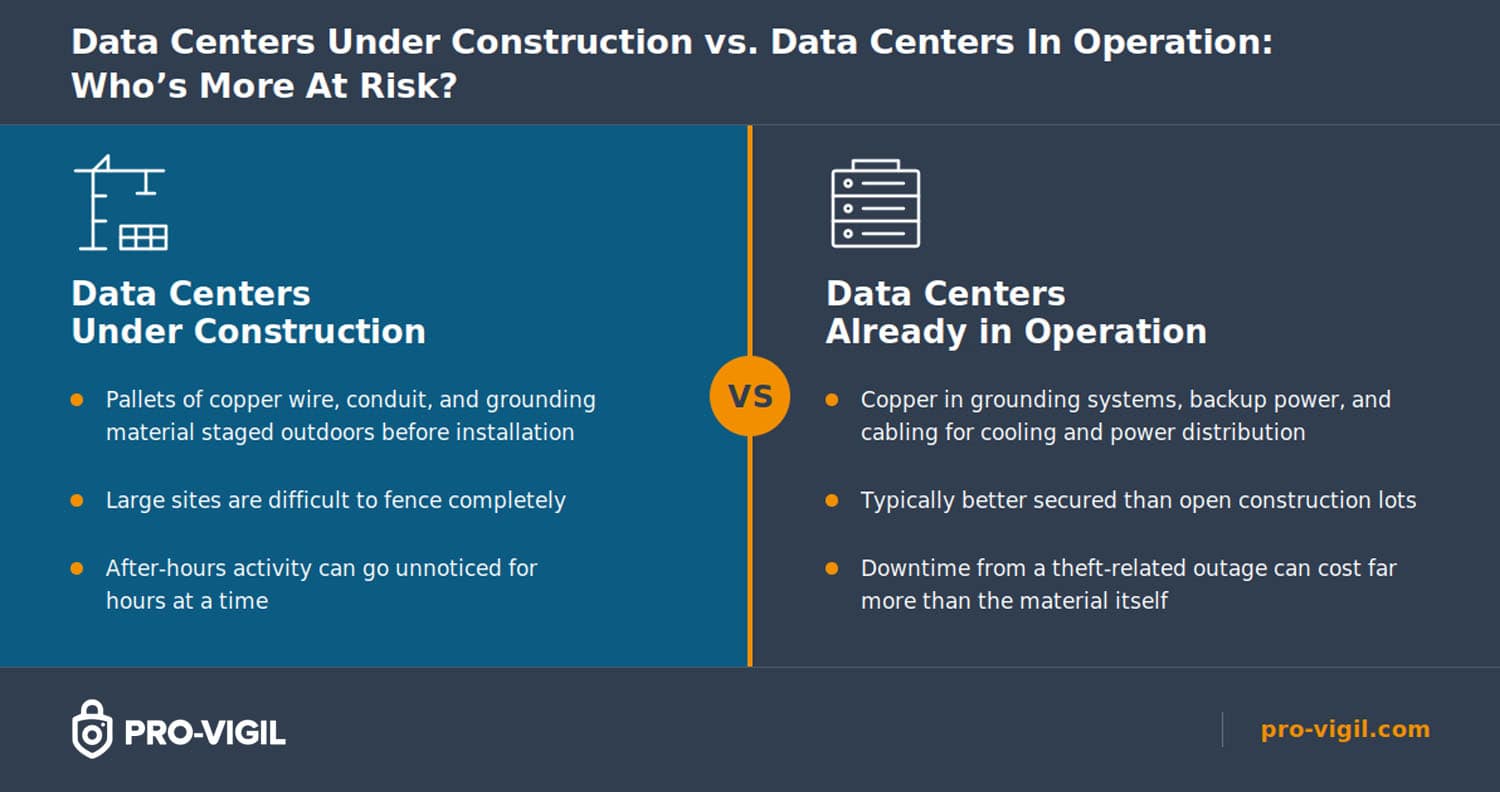
Data Centers Under Construction vs. Data Centers In Operation: Who’s More At Risk?
Data Centers Under Construction
A data center build can spend months as an active construction site, with pallets of copper wire, conduit, and grounding material staged outdoors before installation. Large sites are difficult to fence completely, and after-hours activity can go unnoticed for hours at a time.
Data Centers Already in Operation
Finished data centers carry plenty of copper too, in grounding systems, backup power, and the cabling that supports cooling and power distribution. Critical infrastructure sites like these are typically better secured than open construction lots, but downtime from a theft-related outage can cost far more than the material itself.
What Copper Theft Really Costs Businesses
Data centers are a visible example of a much wider trend. The construction industry faces losses of up to $1 billion annually, with copper theft accounting for a significant share. Utilities and substations lose grounding material and conductor cable the same way, and much of what’s stolen eventually passes through scrap and recycling yards.
The price tag on copper theft, of course, goes beyond the value of the stolen material itself, since repairing torn conduit, cut cable, and disturbed grounding often costs more than the copper’s resale value. Outside construction, the damage can be larger still: telecommunications carrier AT&T reported roughly $76 million in repair costs in 2025 tied to copper wire theft.
Pro-Vigil’s own 2025 data shows an estimated 5,890 potential crimes prevented at construction sites, and at an average cost of $10,000 per construction site theft, Pro-Vigil-protected sites avoided an estimated $58.9 million in losses last year alone
Case Study: D.R. Horton
D.R. Horton, the largest homebuilder in the U.S., saw material theft costs climb as copper and lumber prices rose; a single theft that once cost about $2,500 began costing closer to $10,000. After moving from roaming security guards to Pro-Vigil’s mobile surveillance units, the company reported a significant decline in theft across its most affected communities.
“We strategically placed mobile units in the most theft-prone communities we work in and have absolutely noticed a decline in incidents.” — Joe Walston, Purchasing Manager, D.R. Horton
Pro-Vigil Tip:
Materials theft usually isn’t as opportunistic as people expect. Thieves who target copper tend to case a site first, testing whether anyone actually responds to a triggered alarm. Sites with a track record of fast response tend to see far fewer repeat attempts.
How to Protect Your Site from Copper Theft
- Inventory and stage materials deliberately. Keep high-value copper out of sight from public roads and unload only what’s needed for near-term work.
- Light and monitor storage and laydown areas, not just entrances and perimeters, since that’s typically where materials sit longest.
- Add remote video monitoring with live verification, so after-hours activity triggers an actual response, rather than just “well, I guess we caught the thieves on camera” the next morning.
- Use audio and visual deterrents to interrupt theft in progress, before material leaves the site.
- Coordinate with local scrap and recycling yards on suspicious sell activity, since stolen copper is typically fenced quickly.
- Move camera coverage with the project, rather than leaving it fixed on an area that’s already finished.
Pro-Vigil Tip:
Theft risk shifts as a job progresses. Share upcoming project milestones with your security provider so camera coverage can move with the work. A three-phase process – Assessment → Relocation → Redeployment – helps your cameras always be relevant to where the vulnerable materials are located, rather than staying fixed on an area that’s already finished.
Secure Your Business Against Copper Theft (and More) With Pro-Vigil
Copper theft is surging due to data center construction and the AI boom, but fundamentally, it is not a niche problem tied to a single industry. It’s a byproduct of a metal that has become significantly more valuable, and significantly more contested, in 2026.
Data centers, whether under construction or fully operational, are one of the more visible examples of that pressure, but the same dynamics play out at construction sites, utilities, warehouses, and scrap yards across the country.
Pro-Vigil can help businesses evaluate where copper and other high-value materials are most exposed on their sites and determine what combination of monitoring, deterrence, and response makes sense for their risk.
How Pro-Vigil Approaches Copper and Materials Theft Prevention
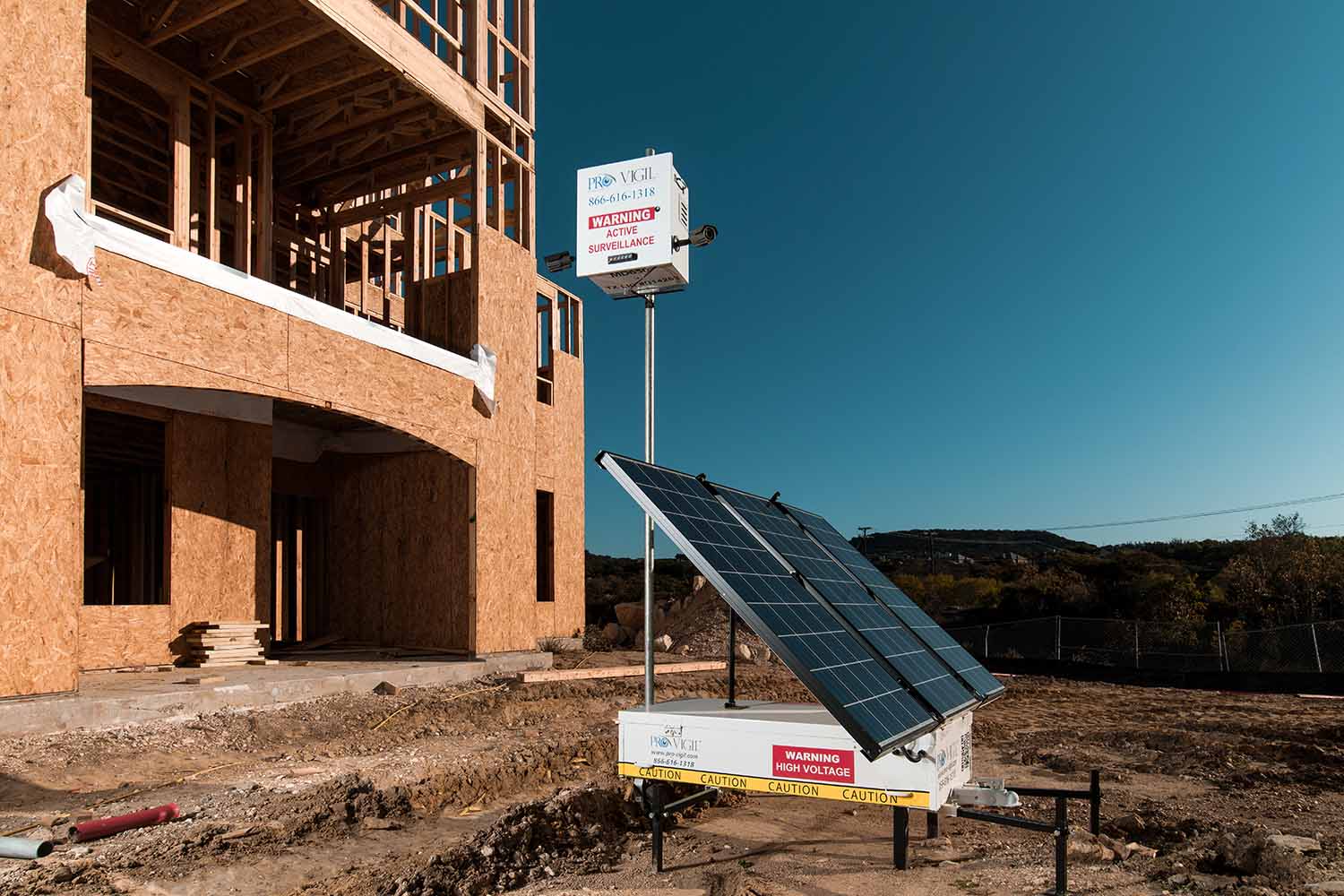
Pro-Vigil combines AI-powered video analytics with live human monitoring to catch suspicious activity before material leaves a site. Our remote video monitoring service is designed to interrupt theft while it’s happening, not just document it afterward.
In 2025 alone, that approach helped prevent 27,923 crimes across Pro-Vigil-monitored sites, with a 97% overall crime deterrence rate.
Data Center Copper Theft: FAQs

Copper prices hit record highs in early 2026, driven by a number of simultaneous factors like AI data center demand, EV manufacturing, grid modernization, and a 50% tariff on imported copper. All of these raise copper's value on the market, which in turn raises its resale value to thieves.
Yes. Data centers under construction store copper wire and conduit before installation, and operating facilities rely on copper for grounding, backup power, and cooling, making both stages a target.
Businesses can protect against copper and other materials theft using a combination of monitored storage areas, remote video monitoring with live verification, audio and visual deterrents, and layered security.
When paired with live monitoring, yes: real-time alerts and audio warnings can interrupt theft in progress rather than only capturing footage after the fact. Virtual guards are also capable of monitoring the entirety of a large data center construction project remotely, rather than needing a robust on-site security guard presence to patrol everywhere at once.