
Quick Answer & Key Takeaways
AI video monitoring reduces false alarms by classifying what triggers motion detection (i.e., distinguishing people from animals, vehicles, and environmental movement) before alerts ever reach a human operator. Combined with camera masking, which excludes predictable non-threat zones from detection entirely, AI-capable systems dramatically reduce nuisance dispatches, alarm fatigue, and the false alarm fees that many municipalities charge businesses directly.
- False alarms carry real financial costs, since many jurisdictions charge businesses directly for unnecessary law enforcement responses
- Repeated false alarms may cause law enforcement to deprioritize your address, slowing response times when it actually matters
- Many false alarms are caused by basic motion detection lacking contextual awareness, so that animals, weather, or passing traffic are all treated the same way as a genuine threat
- AI object classification filters non-threats before they ever reach a human operator, dramatically reducing alarm fatigue
- The strongest false alarm reduction combines AI triage with trained virtual guards
False alarms are one of those problems that seem minor for a business until they aren’t. A motion alert gets triggered in the dead of the night, dispatching an operator to investigate; they find a raccoon in a trash can. That happens again, and again, and much like the proverbial boy who cried “wolf!” you suddenly have a law enforcement agency that’s stopped treating your address as a priority. Arguably worse, you have a monitoring team that’s now conditioned to expect nothing, and, potentially, a stack of false alarm fees that nobody budgeted for.
This is what experts call “alarm fatigue” and it is surprisingly common. The good news is that modern surveillance systems have methods designed to address and minimize it using AI. AI-powered video monitoring doesn’t exist for the purpose of eliminating human judgment, but by ensuring that said human judgment is only applied to situations that actually warrant it.
The Real Cost of False Alarms for Businesses
We touched on this in the opening paragraph, but let’s talk about false alarm fees.
In many jurisdictions across the United States, law enforcement agencies charge businesses directly for false alarm responses; these fees may vary by location, but if you’re in an area that charges them at all, they’ll add up quickly for any site generating regular alerts. As we discuss in the Pro-Vigil false alarm protocol, these charges are typically levied when responding officers find no evidence of criminal activity, and most jurisdictions impose strict time limits for disputing them. One or two incidents might be manageable; a pattern of false alarms is going to wind up costing you.
A less obvious – but no less serious – cost is one of relationships. Police departments track repeat false alarm addresses, and a business that has cried wolf enough times will find its calls deprioritized, leading to slower response times (if they come at all – why would they waste their time on yet another false alarm?) for your business. In a genuine emergency, that delay matters enormously.
But not all of the cost has to do with law enforcement. After all, operator attention is finite. Every false alert that reaches a human screen is attention pulled away from something that might actually be real. Across a long overnight shift, across dozens of cameras, that cumulative drain is exhausting and significant; even the most experienced virtual guard will find their attention flagging if it happens enough.
This is exactly the kind of inefficiency that a well-designed AI security system eliminates at the source.
Why Traditional Security Systems Generate So Many False Alarms
The root cause of many false security alarms is simple: basic motion detection has no contextual awareness whatsoever. It detects movement, and that’s it. The sensor doesn’t care if it’s picked up a trespasser cutting through a fence or a plastic bag drifting across the parking lot; both trigger an alert, both land on an operator’s screen, and both demand the same attention response.
In practice, depending on the technology used for motion tracking, the vast majority of motion alerts on any given night fall into a handful of entirely non-threatening categories:
- Animals: Visitors like raccoons, deer, stray cats, and birds are responsible for a disproportionate share of overnight alerts on commercial properties
- Environmental movement: Wind-blown debris, shifting shadows, tree branches moving into frame on a windy night
- Passing traffic: Headlight sweeps from vehicles on adjacent roads that briefly illuminate a monitored area
- High-traffic zone: Areas with legitimate, predictable activity that a system with no contextual awareness treats as a continuous stream of potential threats
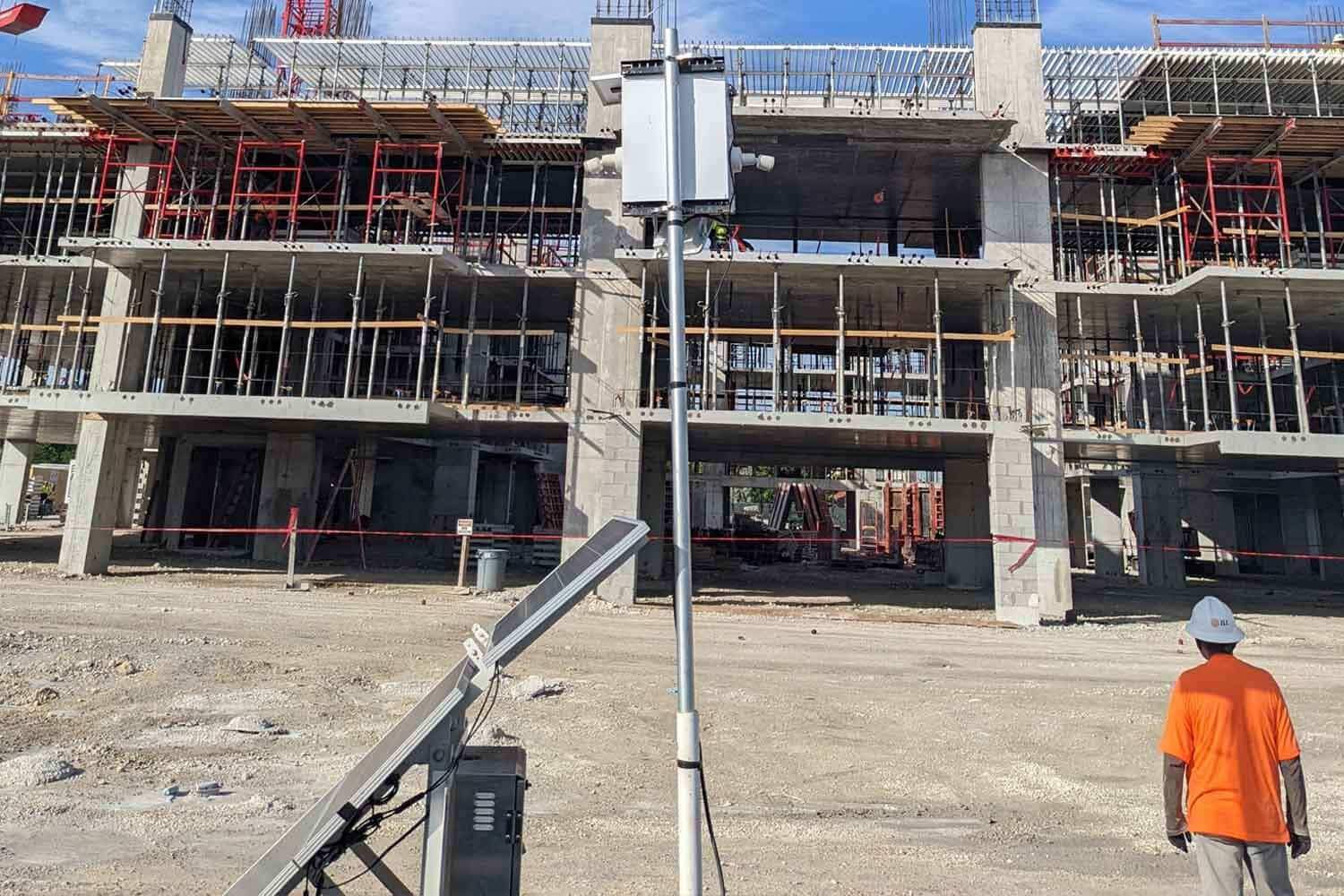
The problem compounds on larger properties with more cameras, since every additional feed is another source of environmental noise. A construction site with twenty cameras in an area with regular foot traffic nearby can generate hundreds of motion alerts overnight. Most of them will be meaningless, but all of them will require attention from your team.
How AI Object Classification Fixes the False Alarm Problem
The fundamental upgrade AI brings to video monitoring is context. Rather than simply detecting movement, an AI-capable system identifies what is moving and uses that classification to decide whether the event is worth a human’s attention.
For instance, Pro-Vigil’s Pro-Safe platform processes over 80 million motion clips per month across our monitored sites. That would be an exorbitant amount of clips for even the most seasoned team of virtual guards to assess. However, the overwhelming majority of those clips never reach an observer’s screen – not because they’re being ignored, but because the system has already accurately identified them as non-threats. A deer in a parking lot gets filtered out; a person moving along a perimeter fence at midnight does not.
Making sure that every alert must be assessed and responded to by a human operator is what creates alarm fatigue in the first place. AI object classification doesn’t replace human judgment – by reducing monotony, fatigue, and false reports, it ensures that when a virtual guard is asked to make a call, the situation genuinely warrants one.
Camera Masking Helps Define What Gets Monitored
Camera masking is the practice of defining specific zones within a camera’s field of view that should be excluded from its detection and analysis. For instance, if a camera covering your warehouse’s entrance has a busy road visible in the background where cars regularly drive past at 3 a.m., you don’t want every passing vehicle to trigger an alert.
Setting up your camera masking is an important step when working with advanced modern security cameras, and it’s one that regularly needs to be tended to. Consider seasonal foliage growth – a bare branch wasn’t in the frame when you installed your cameras in winter, but come summer, a full leaf canopy is just enough to slide into view and cause alerts. Make sure to remove your masking settings any time you add or move a camera, or if conditions on the site change in any notable way.
Preventing False Alarms With Humans and AI Together
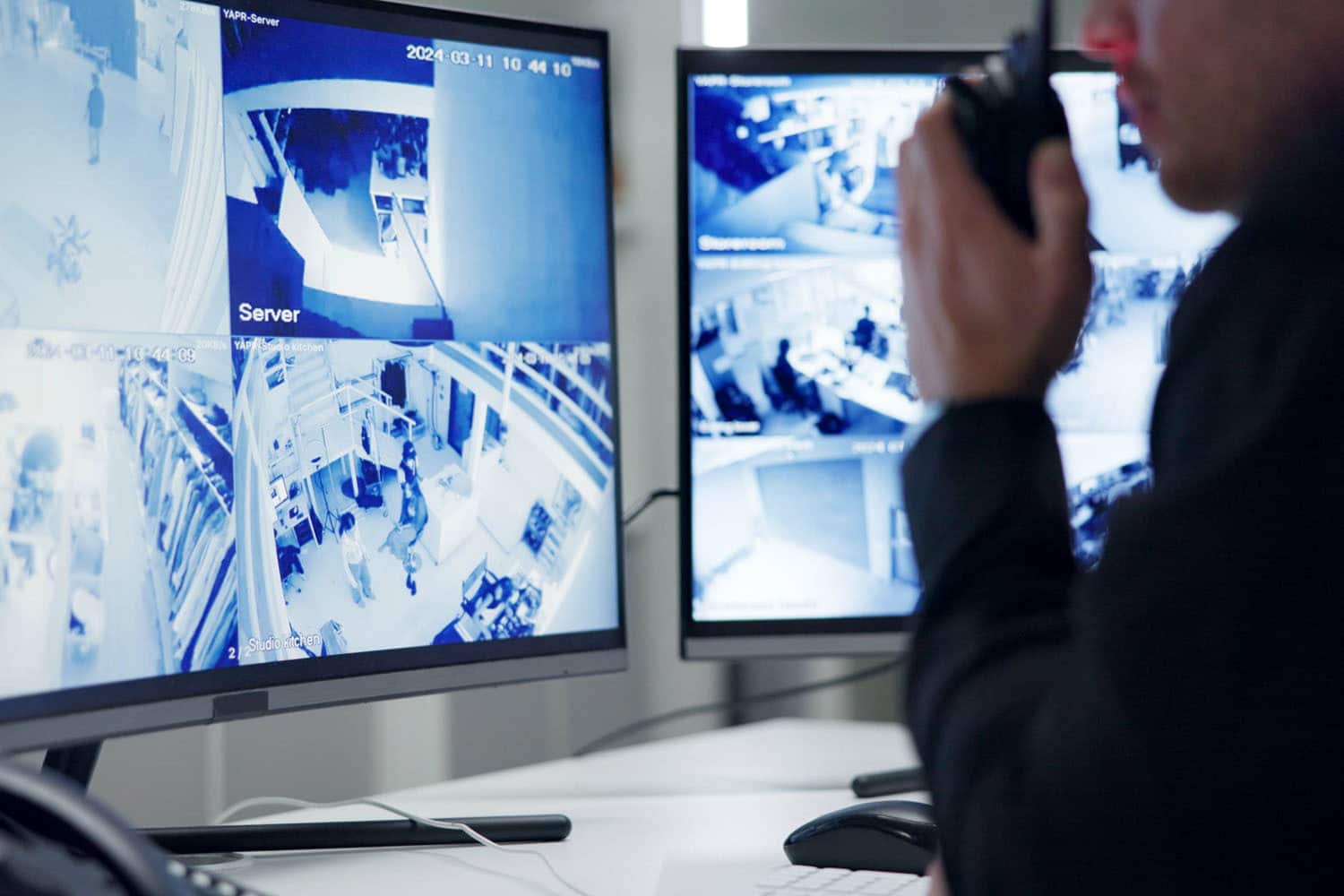
None of what we’ve talked about eliminates the need for trained human operators for your remote video surveillance system. All of this is simply about ensuring that when an alert reaches a virtual guard, it’s already been filtered through multiple layers of intelligent triage – so that the guard knows this is something really worth checking out. There’s no moment of “I can probably finish this cup of coffee first, it was a cat the last six times.”
At Pro-Vigil, our operators work alongside AI systems that have done the classification work before anything reaches a human screen. Our AI backbone is what allows our virtual guards to react within moments – they can have law enforcement dispatched in as little as 23 seconds.
When you pair all of these together, you get a faster, more reliable response chain with fewer false dispatches, more confident operator decisions, and a verified, video-backed reason for the call to law enforcement. If you want an AI-backed system that minimizes false alarms for security businesses, talk to Pro-Vigil today.
AI and False Alarms: FAQs