Quick Summary
AI improves remote video monitoring by automatically classifying objects, detecting suspicious behavior, and filtering false alarms before they reach a human operator. The result is faster threat identification, fewer wasted responses, and a system that gets smarter over time.
Remote video monitoring has always had one fundamental constraint: human attention.
A trained operator watching live camera feeds is far more effective than recorded footage that gets reviewed the morning after, but they’re ultimately still human. Their attention drifts; multiple simultaneous events are hard to track. And across dozens of cameras covering a large commercial site, even the most experienced operator can miss things.
Artificial intelligence doesn’t replace the human element that makes RVM so good at protecting properties. What it does is make the operator dramatically more effective by filtering noise, flagging what actually matters, and ensuring that when a virtual guard’s attention gets directed somewhere, it’s directed somewhere that warrants it.
The practical implications are significant. A motion alert at 2 a.m. might be a trespasser cutting through a fence. It might also be a raccoon. A person standing near a gate could be waiting for a rideshare by an easily identifiable landmark, or they could be casing the property. Traditionally, every one of these scenarios required an operator to manually evaluate each alert as it came in, and this could be a time-consuming, cognitively demanding process that becomes harder to sustain across a long overnight shift.
AI-capable security changes that calculus entirely. By the time an alert reaches a human screen, the system has already done much of the interpretive work. What was once a flood of motion triggers becomes a curated set of genuine potential threats that needs real attention, all prioritized, classified, and ready for a human decision.
What AI Actually Does in a Remote Monitoring System
Modern AI-enhanced monitoring goes well beyond basic motion detection. These systems apply machine learning to live security camera video streams continuously, building an understanding of what’s normal on a given site, and surfacing what isn’t.
Object Classification
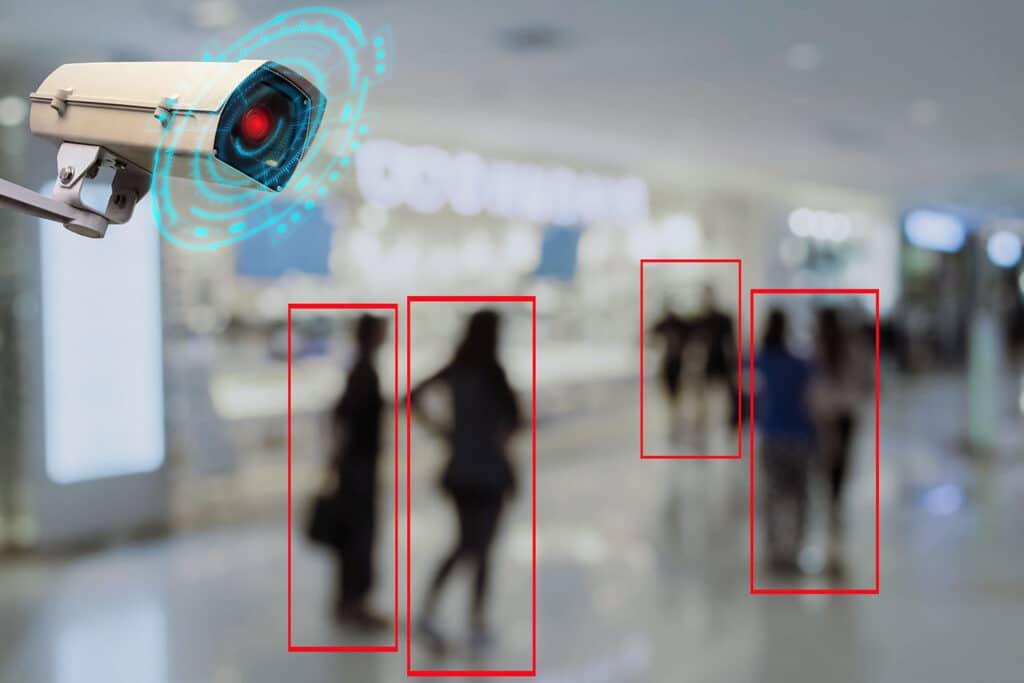
The most immediate upgrade AI brings is the ability to distinguish between objects in frame. An AI-enhanced security system can do more than just tell “something moved”; it can tell what moved, and whether it’s worth a human’s attention.
A well-trained system can reliably differentiate between:
-
People: individuals, groups, crowd density changes
-
Vehicles: cars, trucks, motorcycles, and, in more advanced deployments, specific vehicle types
-
Animals: the raccoons, deer, and neighborhood cats responsible for a significant percentage of false alarms on any given night
-
Environmental triggers: blowing debris, shifting shadows, rain interference, or headlight sweeps from passing traffic
This alone has a dramatic effect on operator workload. False alarms are one of the most persistent problems in traditional remote monitoring – and, if left unchecked, can actually result in fines or local law enforcement deprioritizing your calls, “Boy Who Cried Wolf”-style.
AI-powered systems consistently achieve faster incident detection and response compared to conventional approaches, largely because operators aren’t wading through dozens of irrelevant alerts to find the one that matters.
Behavioral Analysis
Object classification tells you what is on screen. Behavioral analysis, though, tells you what it’s doing – and whether that behavior fits the context.
This is where AI-enabled systems can get genuinely sophisticated. These systems are trained to recognize abnormal patterns such as loitering, tailgating, and unusual movement, and to evaluate them against the specific environment they’re monitoring. A person walking purposefully through a parking lot at 11 at night reads like “worker who stayed late to close up going to her car” rather than a would-be thief; a system can differentiate this between someone slowly looking into every parked car – or even someone who has been slowly moving around a perimeter fence for twenty minutes.
Common behavioral flags include:
-
Loitering: presence in a defined zone beyond a set time threshold
-
Perimeter breaches: crossing or approaching a boundary line
-
Tailgating: following an authorized entry too closely through a secured access point
-
Abandoned objects: items left stationary in areas where they don't belong
-
Unusual crowd formation: sudden gatherings in locations that don't typically see foot traffic
It’s important to note that none of these automatically trigger an alarm. Rather, they trigger a human review, so that a trained expert operator can make the call on if this is a genuine threat or the remnants of a bachelor party slowly staggering home from the bar.
License Plate Recognition
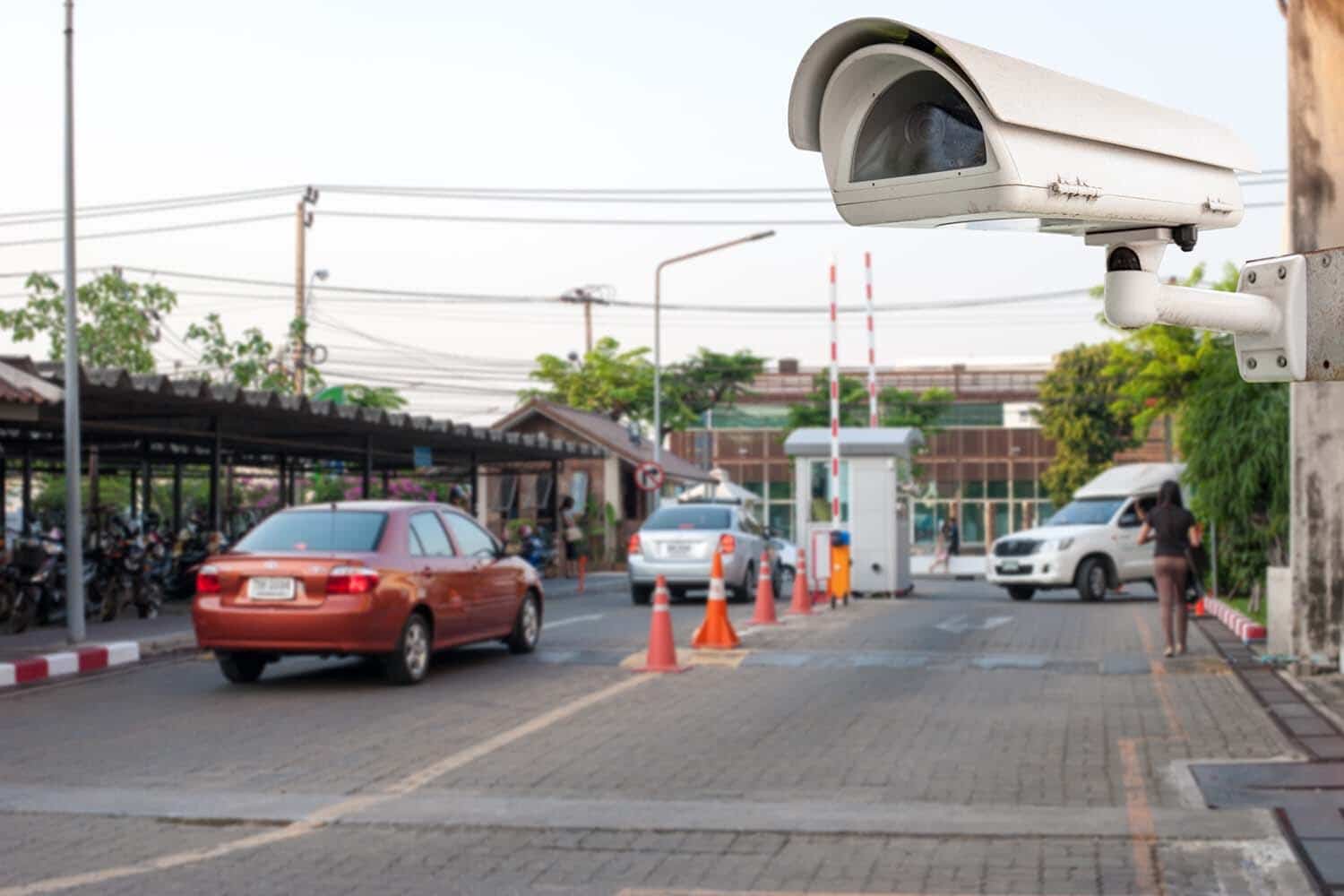
Most commercial sites see a predictable rotation of vehicles, like regular contractors, delivery drivers, or fleet vehicles that show up on schedule. AI-powered license plate recognition (LPR) turns that pattern into a security asset.
Every vehicle entering or leaving a monitored site gets logged automatically, with a timestamp. Known plates get cleared; unknown ones get flagged. And if a plate has been associated with a prior incident, or cross-referenced against a law enforcement database, the system can surface that information before the vehicle has even pulled through the gate.
For construction sites, scrap yards, and industrial facilities, this is particularly valuable. Unauthorized dumping, materials theft, and organized equipment theft all tend to involve vehicles, and LPR creates a timestamped record of every one that shows up.
Site-Specific Learning
This is an underappreciated capability, and arguably the one that separates genuinely intelligent monitoring from a smarter motion detector.
A newly deployed system doesn’t know your site – but, over time, it learns it. AI monitoring systems can build an understanding of normal activity, like worker arrivals, delivery patterns, and regular traffic, and use that baseline to identify what falls outside it. A truck that arrives every Tuesday at 7 in the morning is unremarkable. The same truck showing up at midnight on a Sunday is not.
This contextual awareness compounds in value the longer a system is in place. Seasonal patterns, shift changes, recurring vendor activity, and much more all get factored into what the system treats as normal. The system gets better at finding the signal in the middle of the noise.
Why AI-Powered RVM Matters for Response Time
Speed is everything in security. A threat identified thirty seconds after it begins is a fundamentally different situation than one identified three minutes later. AI-powered systems can identify and respond to security incidents an average of four times faster than traditional approaches, not because the cameras are better – or because the humans are better – but because the triage layer between the camera and the human has been dramatically accelerated.
When a real threat is identified quickly, the response chain is short: An operator issues a live audio warning; an on-site alarm is triggered; law enforcement gets called; the relevant footage is already being saved to the cloud and recorded.
In short, the window a criminal has to operate narrows to almost nothing.
That’s the real value of AI-enhanced remote monitoring – rather than any single capability in isolation, it’s the way they stack. Object classification reduces noise, behavioral analysis identifies what warrants attention, and site-specific learning sharpens both over time. Ultimately, faster triage means human operators spend their attention where it counts, responding to genuine threats rather than chasing false alarms down dead ends.
At Pro-Vigil, AI-capable systems are at the core of how we monitor client sites. Our operators are actively working alongside intelligent systems that surface threats in real time, so that when something does happen, the response is immediate.
Want to learn how AI-capable systems can defend your property? Contact Pro-Vigil today.
FAQs: AI and Remote Video Monitoring

No – and it shouldn't. In all modern AI-capable security setups, AI handles classification and triage, but humans make judgment calls, issue warnings, and contact law enforcement. The technology makes operators faster and more effective, rather than making them redundant.
By distinguishing between objects and behaviors, not just using simple motion detection. Things like animals, weather, or passing headlights all get filtered out by a well-trained system before they ever reach an operator.
Yes. Site-specific learning means the longer AI monitors a location, the better its baseline understanding of normal activity – and the sharper its ability to flag what falls outside it.
Loitering, perimeter breaches, tailgating, abandoned objects, and unusual crowd formation are among the most common. More advanced deployments layer in vehicle classification and license plate recognition on top of behavioral analysis.