Quick Summary
Video Surveillance as a Service (VSaaS) is cloud-based security delivered on a subscription model. Instead of maintaining on-site servers and DVRs, a provider manages your cameras, storage, software, and monitoring remotely, making it scalable, accessible from anywhere, and easier to operate.
If you’ve been researching commercial security solutions lately, you’re likely to have encountered the term VSaaS, but you’re perhaps equally likely to have moved on without stopping to figure out what it actually means. That’s completely reasonable; security technology has no shortage of acronyms, and not all of them are worth your time.
This one, however, is.
Video Surveillance as a Service is exactly what the acronym sounds like: It’s video surveillance delivered as a managed, cloud-based service rather than a traditional on-premises hardware installation. Instead of buying servers, maintaining DVRs, and managing your own footage storage infrastructure, a VSaaS provider handles all of it, from the cameras and cloud storage to the software, monitoring, and maintenance, usually on a subscription basis.
For businesses that want serious security without a serious IT headache, it’s a fundamentally different way of thinking about the problem.
How VSaaS Works
Traditional security camera systems are built around on-site infrastructure. Your hardwired camera captures footage, which gets recorded to a DVR or NVR sitting in a back office somewhere. That footage is accessed through a dedicated terminal (or, alternatively, available to watch on your work computer) and must be reviewed manually when something goes wrong.
The hardware is yours to buy, yours to maintain, and yours to replace when it fails. If the hard drive fills up and you didn’t set it to overwrite, footage stops being recorded. If an error happens that knocks your cameras offline, you might not find out for days.
The convenience of VSaaS is how it flips that model entirely. Things that were formerly your problem now become the responsibility of the professionals.
With VSaaS, your cameras connect to the internet and push footage to the cloud in real time, rather than to a local storage device. The software that manages your system (including access controls, alert settings, footage search, user permissions, and more) lives in the cloud too, accessible from any web-enabled device. There’s no server room for you to maintain, no DVR to babysit, nor any single point of failure that takes your entire system offline if something goes wrong.
The subscription model matters here too. Rather than a large upfront capital expenditure on hardware and installation, VSaaS – like most “as a service” offerings – is typically structured as an ongoing operational cost. For businesses managing tight budgets or multiple sites, that predictability has real value.
What’s Included in a VSaaS Solution?
This varies by provider, but a well-built VSaaS offering generally covers:
-
Cloud storage: Footage is stored offsite, automatically, with configurable retention periods
-
Remote access: View live or recorded footage from any device, anywhere, at any time
-
Automatic software updates: The system stays current without anyone on your team having to actively manage it
-
Camera health monitoring: The provider tracks whether your cameras are online and functioning, flagging issues before they become blind spots
-
Scalability: Adding cameras or new locations doesn't require a full hardware overhaul, just an update to your plan and the provider handles the rest
-
AI-powered analytics: Things like object classification, behavioral flagging, license plate recognition, and more are all delivered through the cloud rather than on-site processing hardware
Most providers will offer IP camera hosting as a common type of VSaaS in action. With IP camera hosting, the provider’s cameras connect through the cloud, the footage they record is accessible from any device, and there’s no need for on-site servers or DVRs. The burden of installing, updating, and maintaining infrastructure shifts entirely to the provider.
VSaaS vs. Traditional CCTV
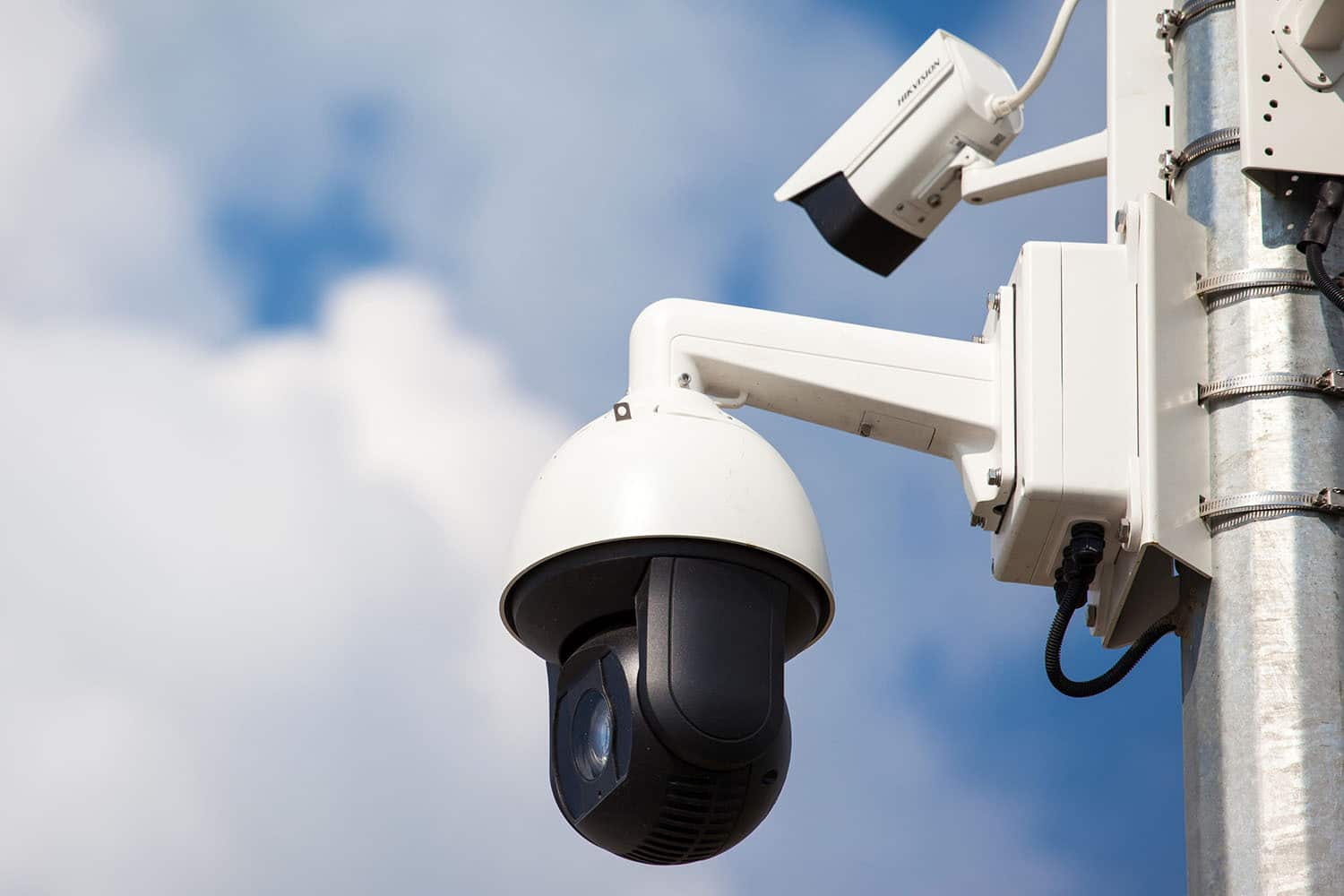
The clearest way to illustrate the gap is maintenance. In a traditional CCTV system, every hardware failure, software update, and storage issue is squarely the responsibility of the property owner. A VSaaS provider absorbs most of that operational overhead, which means your team isn’t troubleshooting camera connectivity at midnight when something goes offline.
There’s also the question of footage security. A DVR stored on-site can be stolen, damaged, or destroyed – sometimes deliberately, by the same people who just broke into your property.
Cloud-stored footage doesn’t have that vulnerability. It’s already off-site the moment it’s recorded, backed up, and accessible to you regardless of what happens to the hardware on the ground.
The tradeoff, of course, is internet dependency. A VSaaS system requires a stable, reasonably fast connection to function properly, which is something traditional CCTV doesn’t need.
For most commercial properties these days, this isn’t a meaningful limitation. For remote or temporary sites without reliable connectivity, however, mobile surveillance solutions that operate using cellular signals and solar power rather than Wi-Fi and hardwired connections are worth exploring as an alternative infrastructure approach.
Who Is VSaaS Best Suited For?
The short answer is: VSaaS is useful for most businesses, but it’s especially useful for businesses that need more than a handful of cameras and have more than one location to think about.
Multi-Site Operations
Managing security footage across multiple properties through traditional on-site systems means logging into different systems, maintaining different hardware, and dealing with different potential failure points. VSaaS consolidates all of your security needs into a single interface with one login and one dashboard for every camera.
Businesses Without Dedicated IT Staff
A VSaaS provider handles firmware updates, connectivity monitoring, storage management, and hardware troubleshooting. For small and mid-sized businesses that don’t have a full-time IT department to absorb that work, that’s a significant operational relief.
High-Value or High-Risk Properties
Construction sites, scrap yards, car dealerships, and industrial facilities are just the start. Really, any business that faces a genuine, recurring security threat benefits from the combination of cloud infrastructure and professional monitoring that VSaaS enables.
With VSaaS, your footage is always accessible, always backed up, and, with the right provider, it’s always being watched.
VSaaS: A Better Way to Secure Your Property
VSaaS isn’t a complicated concept once you strip away the acronym. It’s simply a smarter way to own and operate a security system.
Ultimately, a VSaaS security system is one where the infrastructure burden shifts to professionals, the footage lives somewhere it can’t be stolen or destroyed, and the system scales as your business does. For businesses that have outgrown basic camera setups but aren’t ready to build out a full on-site security infrastructure, it tends to be the obvious next step.
Pro-Vigil’s remote video monitoring platform is built around a great VSaaS offering: It’s cloud-based, AI-capable, and backed by trained virtual guards watching your property in real time. Get in touch to see what it looks like for your site.
FAQs: Video Surveillance as a Service
It stands for Video Surveillance as a Service.
Not necessarily. Many VSaaS providers can integrate with existing IP camera infrastructure, though older or incompatible hardware may limit what's possible. It's worth asking your provider during the evaluation process.
The upfront cost is typically lower, since you're not buying servers or DVRs. The ongoing subscription model means higher long-term operational costs compared to a fully owned system, but for most businesses, the tradeoff is worth it, given what's included: maintenance, updates, cloud storage, and monitoring.
That depends on the system. Most VSaaS solutions have contingency options like local buffering or cellular backup, but it’s worth confirming with your provider before signing anything.
Yes, and for high-risk properties, it absolutely should. A CCTV system can record a crime as it happened, but virtual guards stop it from happening in the first place.