What Factors Affect the Cost of a Virtual Guard Service?

The factors driving that price difference are worth understanding before you start getting quotes.
What Factors Affect the Cost of a Virtual Guard Service

Quick Answer: 

The cost of virtual guard service depends on several key factors: the number of cameras monitored, the size and complexity of your site, monitoring hours required, and response protocols. Most providers price by camera count and coverage window, meaning costs scale with your specific security needs rather than a flat rate.

If you’ve started researching remote video monitoring, you’ve probably noticed that pricing isn’t always easy to pin down. Unlike a physical product with a sticker price, virtual guard services are built around your specific site, which means the cost varies considerably depending on what you actually need to properly secure your business.

Ultimately, this is simply downstream from how virtual guard services work. A small retail lot monitored for four hours overnight is a fundamentally different engagement than a sprawling construction site requiring 24/7 coverage across a dozen cameras. The factors driving that price difference are worth understanding before you start getting quotes.

The Cost of Virtual Guard Services: What You’re Paying For

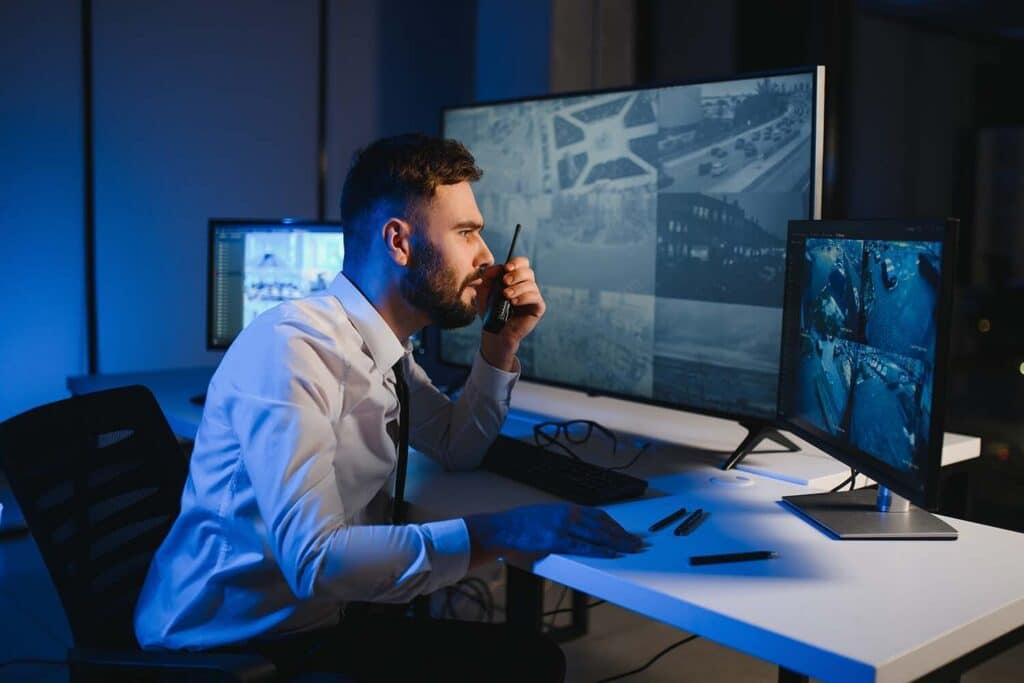
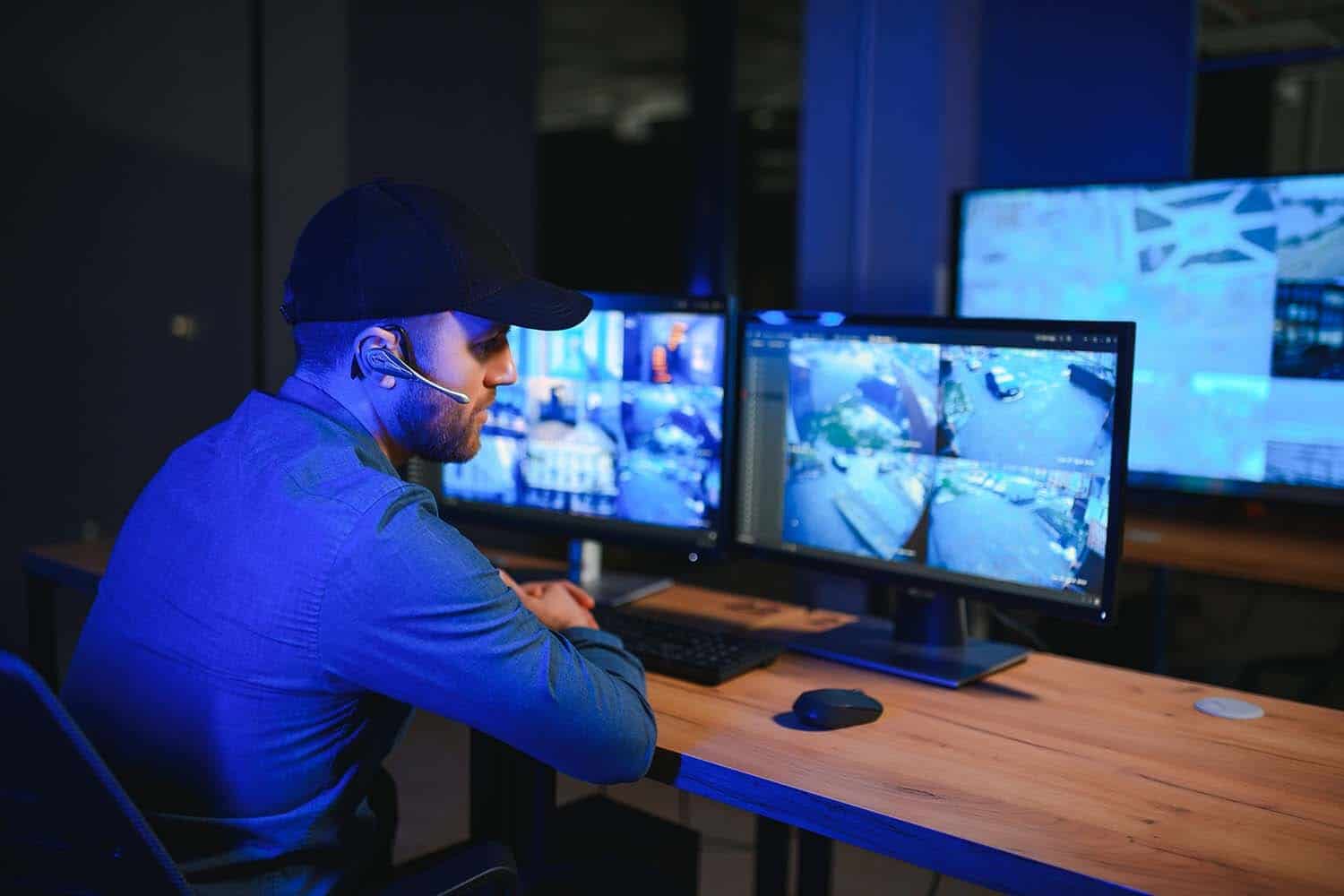
Virtual guard services either replace or supplement an onsite physical security presence with trained monitoring professionals watching your cameras in real time. When something happens, they respond immediately, doing things like triggering on-site alarms, issuing live audio warnings, and contacting law enforcement if necessary.

That capability has real operational costs behind it. Staffing, technology infrastructure, redundant monitoring systems, and response protocols all factor into what providers charge. Understanding the variables that influence your specific quote puts you in a better position to evaluate options and build a security setup that fits your budget.

The Key Variables That Drive Virtual Guard Pricing

No two sites are identical, and, consequently, no two quotes will be either. That said, most providers are pricing around the same core factors. Knowing what they are helps you understand what’s negotiable and what isn’t.

Camera Count and Coverage Area

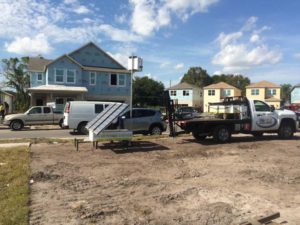
This is typically the primary pricing driver. More cameras mean more simultaneous feeds to monitor, which requires more operator attention and more sophisticated infrastructure to manage. A small yard with four cameras and a single entry point is a straightforward monitoring engagement. A multi-building industrial facility with twenty cameras, multiple gates, and multiple coverage zones is a significantly larger one.

Site complexity matters alongside raw camera count. A facility with irregular sightlines, dense blind spots, or high-traffic areas that require more active attention will generally cost more to monitor effectively than a simple open-lot setup with clean sightlines.

Monitoring Hours

Most providers structure pricing around your required coverage window. Common configurations include:

  • Overnight-only monitoring: Typically dusk to dawn, covering the highest-risk hours for most commercial sites

  • After-hours monitoring: Evenings and weekends when staff aren't present

  • 24/7 full coverage: Continuous monitoring regardless of business hours, common for high-value or high-risk sites

  • Event-based monitoring: Triggered only when motion detection or an alarm activates, rather than continuous live observation

The broader your required coverage window, the higher the cost, though 24/7 monitoring is often more cost-efficient per hour than it might initially appear when compared against the fully-loaded cost of equivalent physical guard coverage.

Response Protocol Complexity

Not all monitoring engagements are equal in terms of what operators are expected to do when something happens. A basic alert-and-notify setup differs considerably from a protocol that involves live audio intervention, tiered escalation procedures, detailed incident reporting, and direct coordination with local law enforcement.

Site-Specific Factors That Affect Your Virtual Guard Quote Cost
Site-Specific Factors That Affect Your Virtual Guard Quote Cost

Beyond camera count and monitoring hours, the physical characteristics of your site play a significant role in determining cost.

Infrastructure and Technology Compatibility

Providers need to be able to see your site clearly before they can monitor it effectively. If your existing camera infrastructure is outdated, poorly positioned, or incompatible with a provider’s monitoring platform, there may be upfront costs involved in upgrading or supplementing your hardware. Sites that already have modern IP cameras with clean sightlines, reliable connectivity, and good lighting coverage are generally faster and less expensive to onboard.

Connectivity matters too. Remote monitoring depends on a stable, high-bandwidth connection to transmit live footage. Sites in areas with unreliable internet infrastructure may require additional equipment, like 5G cellular backup systems, dedicated signal hardware, and so on, which all adds to the overall cost.

Industry and Risk Profile

Some industries carry higher inherent risk than others, and providers price accordingly. 

A car dealership or active construction site presents different threat levels, and different response demands, than a small suburban office park surrounded by an empty parking lot after hours. Higher-risk sites typically require more active monitoring attention and more robust response protocols, both of which influence pricing.

Contract Length and Scalability

Longer-term agreements typically come with more favorable pricing than month-to-month arrangements. If you’re securing a permanent facility, a multi-year monitoring contract will usually offer better value than a short-term engagement. Conversely, temporary needs, like a construction site mid-project, seasonal storage, or a site between tenants, may be priced differently to reflect the finite engagement window.

Is a Virtual Guard Service Worth the Cost?

The more useful comparison isn’t virtual guarding versus doing nothing. Rather, it’s virtual guarding versus a traditional physical guard. When you factor in hourly wages, benefits, scheduling gaps, and the simple reality that a single guard can’t watch an entire site simultaneously, remote monitoring consistently delivers broader coverage at a lower total cost.

For most commercial sites, the math is straightforward: one incident prevented effectively pays for months of monitoring.

Want to get started securing your own property – and curious how much your variables will impact the cost? Contact Pro-Vigil for a free quote today.

Virtual Guard Service Cost FAQs

In most cases, yes, often significantly so. Since a single guard can't watch an entire site at once, to get full coverage, you will need to scale up the onsite presence – and that means scaling up things like wages and benefits, too. On the other hand, virtual monitoring covers your full camera network simultaneously. For most commercial sites, the cost difference is substantial. This isn’t to say that there are no benefits from onsite guards, but that it might be more effective to pair your onsite presence with virtual guards rather than hiring more physical ones.

Yes. The more cameras, for instance, the higher the expense.

Typically. Multi-year agreements with established providers generally come with more favorable rates than rolling month-to-month arrangements. That said, short-term monitoring for construction sites, seasonal facilities, or properties between tenants is widely available, it's just priced to reflect the finite engagement window. If you're securing a permanent site, locking in a longer agreement is usually worth it.

Most providers can scale your monitoring plan as your needs change, though adding cameras mid-contract may affect your rate.

The only reliable way is to speak directly with a provider. Virtual guard pricing is built around your specific site needs. e.g., camera count, coverage hours, risk profile, and response protocols. Contact Pro-Vigil directly and we'll build a quote around what you actually need.

Picture of Jeremy White

Jeremy White

Jeremy White founded Pro-Vigil in 2006 and has spent the past two decades pioneering the remote video monitoring and security-as-a-service industries. With deep expertise in AI-powered surveillance, video analytics, and proactive crime deterrence, he has guided Pro-Vigil to becoming UL-Certified and earning the Five Diamonds Designation by The Monitoring Association — among the highest recognitions in the security industry. Connect with Jeremy on LinkedIn.

Share This Post

Facebook
Twitter
LinkedIn
Email

Security | Surveillance | Management | Compliance | Inspection
© 2020 Pro-Vigil. All Rights Reserved.