


Waking up to find that your property has been turned into someone’s personal dumping ground is more than just frustrating. Fixing it is expensive and time-consuming, and it certainly sends the wrong message to customers and employees who show up to piles of garbage, abandoned furniture, or other signs that your lot has become the neighborhood hangout spot after hours.
The problem isn’t always maliciously premeditated (though it’s always at least insensitive). Sometimes it’s opportunistic, caused by someone driving by at 2 AM seeing an empty lot and deciding the perfect place to offload that old mattress they don’t want to pay to dispose of.
Other times, it’s habitual. Groups – for instance, neighborhood kids engaging in the spirited, if vexing, rebellion of youth – discover your property makes a convenient after-hours gathering spot, and before you know it, you’re dealing with the same faces night after night and no shortage of empty beer bottles or ashes and butts of cigarettes and more.
Either way, the costs add up fast. There’s more obvious expenses, like cleanup and waste removal; then there’s less obvious damage like graffiti on your building or broken glass in your parking area, not to mention the potential liability if someone gets injured on your property. And, of course, dealing with all of this takes valuable hours out of the day that you or your staff spend dealing with it all instead of focusing on, you know, actual business.
Traditional solutions like signs, locks, and even part-time security patrols haven’t solved the problem. If they had, you wouldn’t be here.
So, what’s next?
Why Standard Security Measures Fall Short
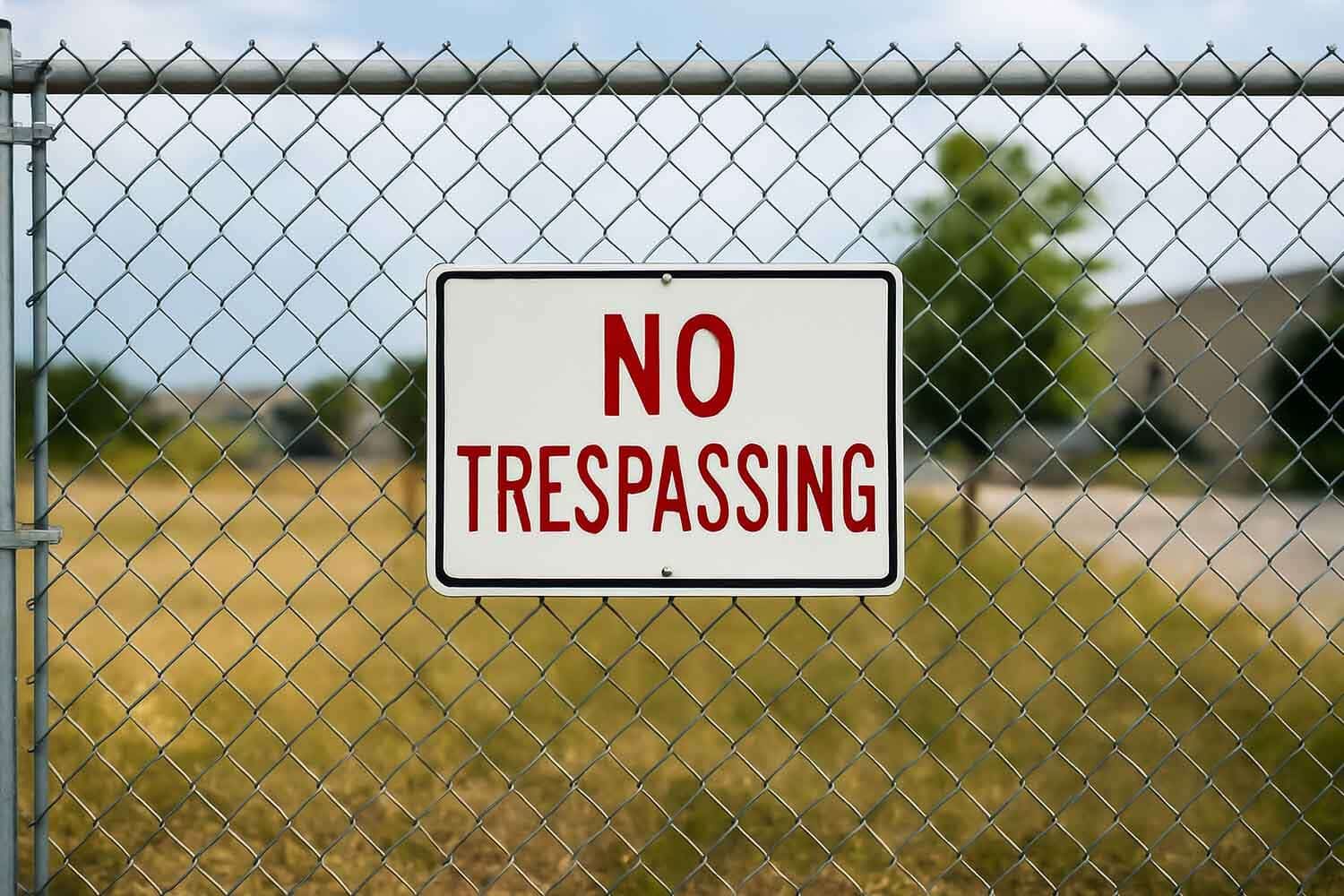
Most property owners start with basics like “No Trespassing” signs, better lighting, maybe a fence if the budget allows. These help, but they’re fundamentally passive measures. They might deter someone who’s just casually looking for a spot, but they won’t stop people who’ve already decided your property works for their purposes. Five-year-olds can be stubborn enough; you try telling a bunch of neighborhood teens “no, you can’t hang out here at night” and see if they listen to you.
This isn’t to say all of these are pointless or don’t help – indeed, they really can make a difference at the margins. But while they’ll deter some dumping or loitering, they won’t get all of it.
The Gaps in Traditional Approaches
Security guards who patrol multiple properties can only be in one place at a time. By the time they circle back to your location, dumpers have come and gone.
Even if you catch illegal dumping on a traditional CCTV camera system, you’re usually looking at grainy footage of someone’s tailgate, maybe a partial license plate if you’re lucky. Then what? You’ve got evidence, but you still have to clean up the mess, and good luck getting local authorities to prioritize your case when they’re dealing with more pressing issues. “Illegal dumping” isn’t often high on the to-do list compared to other crimes law enforcement is trying to handle.
Here’s a simple, plain truth: For the most part, deterrents only work if there’s a credible threat of getting caught in the act. Consider what doesn’t work well:
So, if this doesn’t work… what does?
How to Secure Your Property Against Dumping, Loitering, and More
The key difference between security that works and security that wastes money comes down to real-time intervention. People dump trash or loiter on your property because they believe – often, correctly – that no one is watching and, thus, no one will stop them.
Break that assumption, and the behavior stops.
Monitored surveillance changes the equation entirely. When someone pulls onto your property at midnight and is immediately notified that they’ve been seen and that the authorities are coming, that is more than a fence that can be climbed over or a motion-operated light blinking on. That is the sound of consequences arriving at the speed of a police cruiser.
A voice over a speaker system telling intruders or dumpers they’re being recorded and police are being notified does what a sign never could. Most people leave fast.
Smart players in the construction industry figured this out years ago. Sites were losing tens of thousands in copper wire theft, equipment vandalism, and other crimes until they switched to monitored systems. Now it’s standard practice on major projects.
What makes this approach effective isn’t just the technology. It’s the combination of visibility and human judgment. Cameras, on their own, simply collect footage. Monitoring services add the critical element – someone who can assess the situation in real time, determine if it’s a legitimate threat, and take appropriate action before damage occurs.
Your property needs the same capability whether you’re protecting a retail parking lot, a warehouse facility, or a vacant piece of commercial real estate between tenants.
How Active Video Monitoring Stops Commercial Site Security Problems Before They Start

Active monitoring works because it eliminates the window of opportunity – empty properties overnight – that dumpers and loiterers rely on. Instead of discovering a problem when your team shows up for work the next morning, trained operators watching your camera feeds can intervene within seconds of detecting activity.
Here’s what actually happens when someone enters your property after hours.