Common AI Warehouse Security Camera Use Cases
|
Warehouse Challenge |
How AI Camera Systems Help |
Business Benefit |
|
Unauthorized access |
Detect unauthorized people entering restricted areas and send instant alerts |
Improves facility security and reduces intrusion risks |
|
Forklift safety |
Monitor forklift speeds, routes, and interactions with pedestrians |
Reduces accidents and promotes safer operations |
|
Worker safety |
Detect spills, blocked exits, falls, or unsafe behaviors |
Helps prevent workplace injuries and supports OSHA compliance efforts |
|
Product theft |
Identify suspicious activity, track object movement, and record incidents |
Reduces product shrinkage and improves investigations |
|
Inventory monitoring |
Track the movement of pallets, packages, and inventory |
Improves inventory visibility and reduces misplaced items |
|
Loading dock monitoring |
Monitor loading and unloading activities for delays or unauthorized access |
Improves shipment accuracy and protects high-value goods |
|
Perimeter security |
Detect after-hours movement, vehicles, or perimeter breaches |
Enables faster response to potential security threats |
|
Workflow optimization |
Analyze traffic patterns, congestion, and equipment utilization |
Improves warehouse efficiency and resource allocation |
|
Incident investigation |
Automatically flag and retrieve relevant video clips |
Speeds up investigations and reduces manual video review |
|
Multi-site warehouse management |
Centralize monitoring and AI alerts across multiple facilities |
Provides consistent security and operational oversight across locations |
Common Warehouse Risks AI Cameras Can Detect
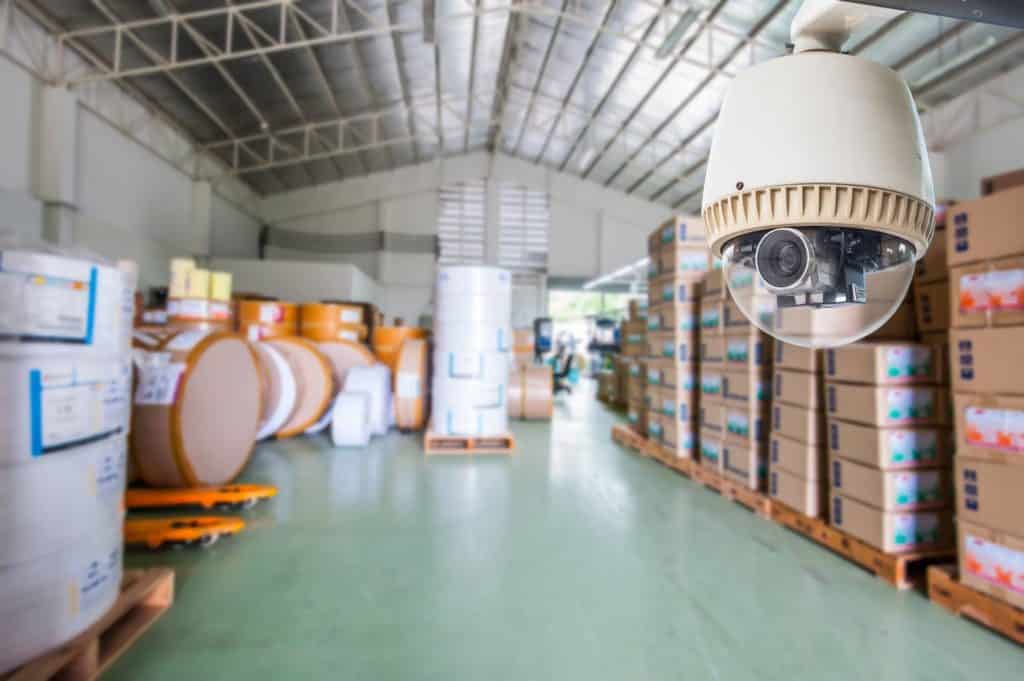
AI warehouse security cameras continuously analyze live video to identify potential security threats, safety hazards, and operational risks before they escalate. By using computer vision and real-time analytics, these systems can automatically detect unusual events and alert security teams or warehouse managers for a faster response.
|
Warehouse Risk |
How AI Cameras Help |
|
Unauthorized entry |
Detect unauthorized people entering restricted areas and send instant alerts. |
|
Forklift collisions |
Monitor forklift movement, speed, and proximity to pedestrians or equipment to help reduce accidents. |
|
Slip hazards |
Identify spills, debris, or other floor hazards that could lead to slips and falls. |
|
PPE violations |
Detect when employees are not wearing required personal protective equipment, such as safety vests or hard hats. |
|
Blocked exits |
Identify obstructed emergency exits and evacuation routes to support workplace safety. |
|
Fire hazards |
Detect smoke, flames, or unusual activity around high-risk equipment for faster emergency response. |
|
Tailgating |
Identify multiple people entering through a controlled access point using a single authorized credential. |
|
Suspicious behavior |
Recognize loitering, unusual movement patterns, or other behaviors that may indicate theft or security threats. |
Improving Worker Safety with AI Security Cameras
Detecting Workplace Hazards in Real Time
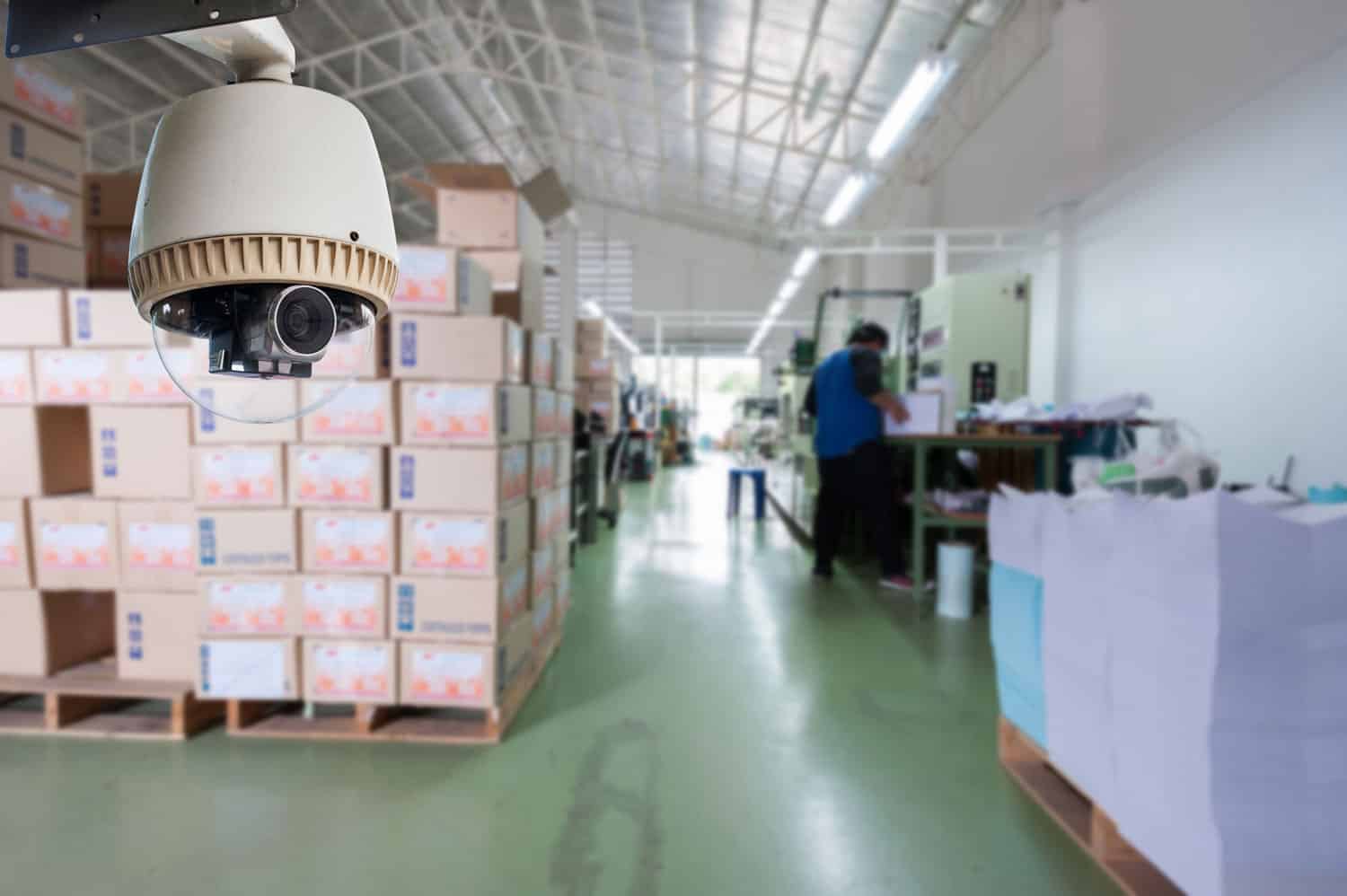
Warehouse safety is a significant concern in the U.S. Workplace accidents always have a considerable potential to cause severe injury or even death. AI camera systems can help detect potential safety concerns before they cause harm.
AI camera systems use computer vision algorithms to analyze real-time video data from cameras installed throughout the warehouse. These algorithms allow the camera system to identify potential hazards, such as obstructions, spills, and falls, and alert staff to take appropriate action.
With AI video surveillance, managers can automatically flag unsafe forklift speeds, improper lifting techniques, or blocked emergency exits. These systems turn passive monitoring into actionable prevention.
Proactive Safety Monitoring and Instant Alerts
Traditional video surveillance captures information from the past – you can see what happened leading up to the present to understand an event. But connected video systems powered by AI can connect you with warehouse activities as they’re occurring. These platforms can proactively identify potential hazards before they cause harm. You can alert workers to a possible danger immediately.
Periodic manual safety checks can lower warehouse accidents. But an AI-powered warehouse security system can alert you and your team to potential hazards and stop them before they cause harm. AI cameras can monitor specific warehouse areas for potential threats, such as areas with heavy traffic, hazardous materials, or machinery.
Using AI Insights to Prevent Future Accidents
AI camera systems also help review workflows to help your teams stay safer. By analyzing data from previous incidents, the system can identify patterns and areas at higher risk of accidents. This intelligent vigilance allows businesses to take preventative measures, such as redesigning layouts or implementing additional safety protocols before an accident occurs.
How to Prevent Warehouse Theft and Product Shrinkage with AI
As previously mentioned, warehouse theft can cost businesses billions of dollars. AI camera systems are improving warehouse security by monitoring workers in real time. They can track workers’ movements and identify when they are in potentially dangerous situations, such as when working near heavy machinery or carrying heavy loads. But they can also capture footage of the theft. This vigilance allows the AI camera system to alert workers or supervisors to take appropriate action to prevent property losses or damage.
These advanced systems are especially valuable in large facilities where human supervision alone isn’t feasible. With AI video surveillance, motion tracking and heat-mapping help pinpoint unusual after-hours activity and provide proof for investigations.
When combined with a smart warehouse surveillance network, AI-enabled analytics can even recognize employee badges, vehicles, or recurring patterns associated with theft or unsafe conduct.
How AI Improves Warehouse Efficiency
Optimizing Warehouse Workflows
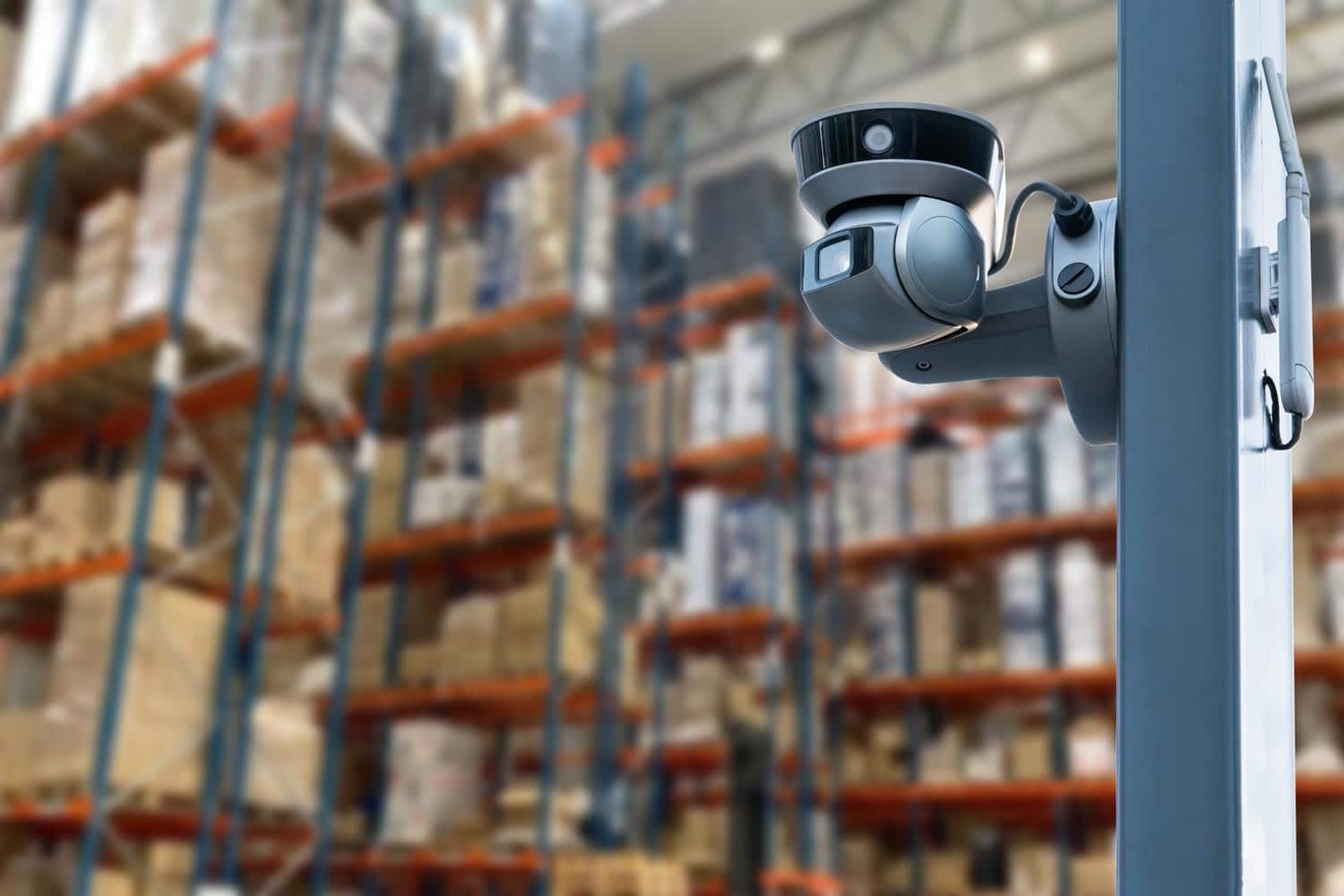
AI camera systems can also improve warehouse efficiency by assisting in process automation. For example, managers can use AI camera systems to track the movement of goods throughout the warehouse, from receipt to dispatch. Capturing this operational data allows businesses to optimize their warehouse operations, reducing the time it takes to locate and move goods – improving overall efficiency.
When connected to a warehouse camera system, these AI-enabled tools provide real-time inventory visibility. By linking video data with logistics software, teams gain insights into workflow efficiency, aisle congestion, and equipment usage.