
Today, instead of an on-site security guard — also called a live guard — you can opt for a virtual security guard who can watch your property from afar using advanced security technology.
No matter the business, live guards have always been a popular option to ensure safety. With technological advancements, virtual security guards have become increasingly viable alternatives to live guards. In this article, we will explore the differences between remote and on site security guards and weigh the pros and cons of each.
Quick Comparison: Virtual Security Guards vs On Site Security Guards
Not sure which type of security fits your business? Here’s a fast side-by-side look at on site security guards and virtual security guards before we dive into the details.
On-Site Security Guards | Virtual Security Guards | |
Presence | Physical, on location | Remote, camera-based |
Cost | Higher (salary + benefits) | Lower operational cost |
Coverage | Single patrol area | Multiple sites at once |
Response | Immediate physical action | Alert → authorities dispatched |
Best for | Single-site, high-touch needs | Multi-site, budget-conscious businesses |
What Are On Site Security Guards?
On site security guards, sometimes called “live” security guards (yes, we know it sounds silly), are physical security personnel stationed at a specific location. These guards are trained to detect and respond to any suspicious activities. They protect people, inventory, and property by securing the premises.
One of the main advantages of an on site security guard is that they provide a physical presence. Having a live guard can deter potential criminals. The presence of a security guard can also make employees and customers feel safer. On site security guards can quickly respond to any incidents that do occur. A live response can minimize damage and ensure the situation is controlled.
What Security Guards Can and Can’t Do
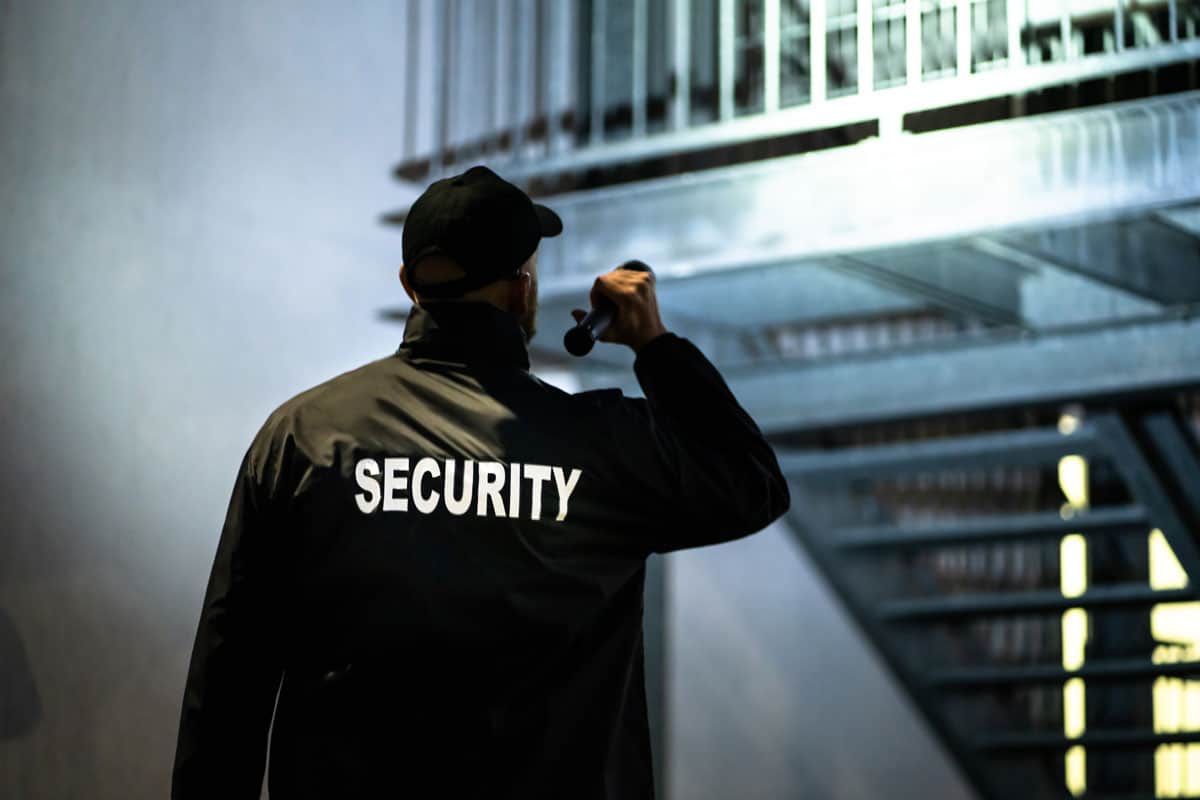
As crime increases, so does the business case for hiring physical security guards. There are more than 11,700 security companies around the U.S. and this number is growing.
The security services industry provides access to live guards, patrol vehicles, and ancillary services such as alarm systems. These are all things businesses feel they need to prevent crime. But there can be confusion about what on site security guards can and can’t do.
What Are the Top Responsibilities of a Live Security Guard?
The duties of a typical on site security guard include the following:
- Patrolling and monitoring to maintain security.
- Ensuring the safety of people, property, and assets.
- Preventing and responding to security incidents.
- Controlling access to restricted areas.
- Enforcing security policies.
- Conducting surveillance.
- Reporting incidents, providing support, and coordinating with law enforcement.
- Providing customer service to customers, employees, and visitors.
- Keeping accurate logs of security incidents.
- Performing other security-related tasks as needed
On the surface, the role of a security guard is similar to that of a police officer. This similarity may lead you to think they have some legal authority to prevent crime. However, there are very real and very critical differences between on-site guards and police officers.
What Can On Site Security Guards Do Legally?

Private companies employ live security guards as a crime deterrent. These live guards may carry a weapon, but they are not police officers. Security guards can:
- Detain a subject for the police to arrest.
- Ask you to leave or ban someone from a property.
- Use reasonable force to detain someone.
When it comes to what security guards can and can’t do, it depends on their jurisdiction and licensure. Generally, security guards cannot:
- Detain someone without cause.
- Use excessive force.
- Use a firearm without a license and training as any other private citizen might.
- Engage in discriminatory or harassing behavior.
- Invade someone’s privacy by searching them without their permission.
- Violate the confidentiality of their client or employer.
- Act outside their job description.
- Actually arrest anybody themselves.
A live security guard is legally contracted to protect a specific property. Their duties are limited to that location. The on-site security guard can request an examination of someone entering or leaving a business. However, they must obtain permission for the search. If the person refuses, a security guard can detain them.
A good security guard abides by the law. They act in accordance with company policies. What other qualities make for the best on-site guards?
What Makes a Good Live Security Guard?
Security guards have dangerous and difficult jobs. If you’re considering using them, you should look for security guards that exhibit:
- Situational awareness
- Excellent communication skills
- Honesty and integrity
- Physical fitness
- Professionalism
- Emotional maturity
- Attention to detail
- Quick thinking
- Customer service skills
- A track record of complying with company policies
On-site security officers need the ability to temper their behaviors in potentially volatile situations. The best security guards are calm and level-headed. Your business becomes vulnerable if the live security guard you hire does not exhibit these traits.
Risks of On-Site Security

Any company that hires a live security firm – that is, physical security guards on site – must be comfortable with the risks. Live security may be the most commonly used service, but there are liability issues to consider.
Knowing what security guards can do legally is essential if you’re hiring one of these companies. If the on site security guard violates someone’s rights, even if they are a potential criminal, it puts you at risk. If the guard isn’t appropriately trained in what on-site security can and can’t do, it increases the potential for excessive force. You should also feel comfortable with the on site security guards working at your business.
What happens if the security guard becomes injured on the job? There are as many liability risks related to slipping and falling as there are from firing a weapon. Hiring a security guard services firm can bring with it liabilities such as:
- Damages to property or people caused by the guard.
- Training and competency risks in performing the job.
- Cost risks, as fees increase.
- Personnel risks if the guard engages in misconduct or makes a mistake.
These potential liabilities might make you wonder if you should hire an on site security guard service. Is there an alternative with less risk?
What Are Virtual Security Guards?

Virtual security guards use digital technology to monitor and secure a location remotely. These guards use cameras, sensors, and other technology to detect any suspicious activities and alert the appropriate authorities if necessary.
A virtual security guard uses video surveillance to watch your property from afar. A virtual security guard can provide much of the same surveillance as an on-site physical guard. What’s missing is the risk associated with having a stranger on your property after hours.
What can and can’t a virtual security guard do? Virtual security guards like those offered by Pro-Vigil can:
- Proactively deter crime by using camera features like audible alerts.
- Alert police to have them come and let them deal with the criminal.
How Does a Remote Security Guard Work?
A virtual security guard, also known as a remote security guard or a virtual security officer, works by using technology to monitor a location remotely. Here’s how it works:
- Sensors and Cameras: Virtual security guards use a variety of sensors and cameras to monitor the premises. These can include motion sensors, door sensors, and video cameras, among others. The cameras are strategically placed around the property to provide maximum coverage, and they can capture footage of any suspicious activity.
- Monitoring Center:The sensors and cameras connect to a monitoring center, which is staffed by trained remote security personnel. This security hub can monitor your business 24/7/365, overnight, or at other times you specify.
The remote security guards watch a live feed of the footage captured by the on-site cameras. The monitoring center is your “eye in the sky,” and virtual guards can quickly respond to any incidents anywhere on the property. - Artificial Intelligence: Many virtual security guard services use artificial intelligence (AI) algorithms to analyze camera footage. These algorithms can detect patterns and anomalies, allowing them to quickly identify suspicious activity.
- Response: If the remote security guard detects suspicious activity, they follow the protocols you set. Typically, security personnel at the monitoring center watch the live camera feed to determine whether the activity warrants a response. If necessary, they will contact the appropriate authorities, such as the police or fire department.
- Communication: Virtual security guards can also communicate with individuals on the premises through two-way audio or video. Remote guards can provide verbal warnings or instructions through the video surveillance cameras. Alternatively, they can use the cameras to communicate with individuals in the event of an emergency.
Virtual security guards work by using technology to monitor and secure a location remotely. They provide a cost-effective and flexible security solution, allowing businesses and individuals to monitor their premises around the clock without needing a physical security presence.
For the full technical breakdown, camera types, and step-by-step response process behind the service, you can learn more on our Virtual Security Guard Services page.
What Are the Benefits of Virtual Security Guards?
There are several benefits to a remote or virtual security guard that a live on-site service does not offer. Virtual security is:
- Much less expensive: Despite a reduction in cost, it remains just as effective at stopping crime as a live guard service. Because they do not require a physical presence, they can be more affordable for businesses or individuals on a tight budget. Additionally, virtual security guards can monitor multiple locations simultaneously, making them ideal for larger properties or those with multiple locations.
- Liability-free: You don’t have to worry about the security guard getting hurt — or hurting someone. A virtual security guard can respond without risk.
- Comprehensive and always watching: Video surveillance can cover a lot of ground at your business. With video surveillance, a virtual security guard can monitor screens for every corner of your business 24/7/365. With a live security guard on site, eventually, they’ll walk away from a given part of your property – which means that nobody is watching that corner anymore.
For this reason, virtual security guards can be more effective than on-site guards in some situations. Because they are constantly monitoring the premises, they can detect suspicious activities or incidents faster than an on-site guard who may not be in the same location at the time of the incident. - Technology driven: The latest camera software uses artificial intelligence (AI) to detect activity even if your eyes don’t see it. The AI pings the virtual guard, who can zoom in to investigate.
What Are the Drawbacks of Virtual Security Guards?
However, virtual security guards do have some downsides. For one, they lack a physical presence, which can make some people feel less secure. Additionally, technology is not perfect, and virtual security guards can sometimes miss incidents or trigger false alarms.
Furthermore, even the most rapid response by police can be measured in minutes – and that could be enough time for, say, a determined vandal to smash a window or cause damage that an on site security guard might have been able to prevent.
Virtual Security Guards vs On Site Security Guards: Cost Comparison
The Price of a Live Guard
A single on site security guard typically requires costs far beyond just the hourly wage, including payroll taxes, workers’ compensation insurance, uniforms, and ongoing training. Add benefits for a full-time employee, and the cost of security guards climbs quickly, especially once overtime and holiday pay enter the picture.
The 24/7 Staffing Reality
Covering a property around the clock isn’t a one-person job. True 24/7 security monitoring with manned guarding typically requires two or three guard shifts a day, seven days a week. For most businesses, that math makes continuous manned security difficult to justify.
Scaling Across Multiple Sites
Virtual guarding really starts demonstrating its value here. A single remote monitoring center can watch dozens of properties at once, spreading the cost of trained personnel across every site instead of stationing one guard per location. For businesses managing commercial security solutions across several sites, this scalability is often the deciding factor.
Coverage & Monitoring Capability
Coverage is another area where the two approaches diverge. An on-site guard, however diligent, can only be in one place at a time, which means blind spots are inevitable as they patrol from one corner of the property to the next. Virtual security guards close those gaps with a network of cameras that never look away.
A modern video surveillance security guard setup typically combines:
- Mobile surveillance units for temporary or hard-to-wire locations
- Fixed cameras with intelligent video analytics that flag movement automatically
- Motion and door sensors layered on top of live video monitoring
- CCTV monitoring feeding a central monitoring center
Because this technology runs continuously, businesses get true 24/7 security monitoring rather than coverage that depends on a single guard’s patrol route. And because one monitoring center can watch multiple properties, remote video monitoring services scale far more easily than adding another guard to the payroll at every site.
Response Time & Incident Handling
When something happens on the property, response looks different for each option. An on site security guard can physically intervene right away, stepping in, calling for backup, or confronting a trespasser directly. That immediacy is a real advantage in situations that call for an on-the-spot human decision.
A virtual guard usually follows a structured escalation process:
Detect → Verify → Warn → Dispatch Authorities
Intelligent video analytics flag unusual activity, a trained operator verifies it’s a genuine threat rather than a stray cat or blowing trash, then issues an audible warning through on-site speakers if appropriate, and contacts police if the situation still warrants it. The whole process typically takes only moments, though it isn’t the same as having someone physically on scene.
How On-site Guards vs. Virtual Guards Deter Crime
Deterrence works differently for each model, but both aim for the same outcome: crime prevention before it starts.
A visible on site security guard in uniform is a classic deterrent. Most opportunistic criminals simply move on rather than risk a confrontation, and manned security has relied on this visual presence for decades.
Virtual security guards deter differently. A camera with a flashing light and a live audio warning can be just as unsettling to an intruder as a guard’s flashlight. Layer in AI-triggered alerts that catch activity a human might miss, and virtual guarding adds a second, always-on layer of proactive monitoring.
Logs, Reporting & Accountability
Documentation matters when an incident needs to be reviewed, or when it ends up in court. Because monitored security systems timestamp and record everything automatically, virtual guarding tends to produce a more consistent evidence trail than handwritten guard logs.
The Future of Security May Be Hybrid Models
Many businesses aren’t choosing one option exclusively. A growing number blend manned guarding with remote security monitoring, keeping on-site staff during business hours and virtual coverage overnight, therefore combining human judgment with AI security guards technology.
As monitored security systems become more capable, expect this hybrid approach to keep growing, with businesses leaning less on full-time physical guards and more on remote-first coverage backed by a person on call when it’s truly needed.
Which is the Best Option: Virtual Security Guards vs. On Site Security Guards?
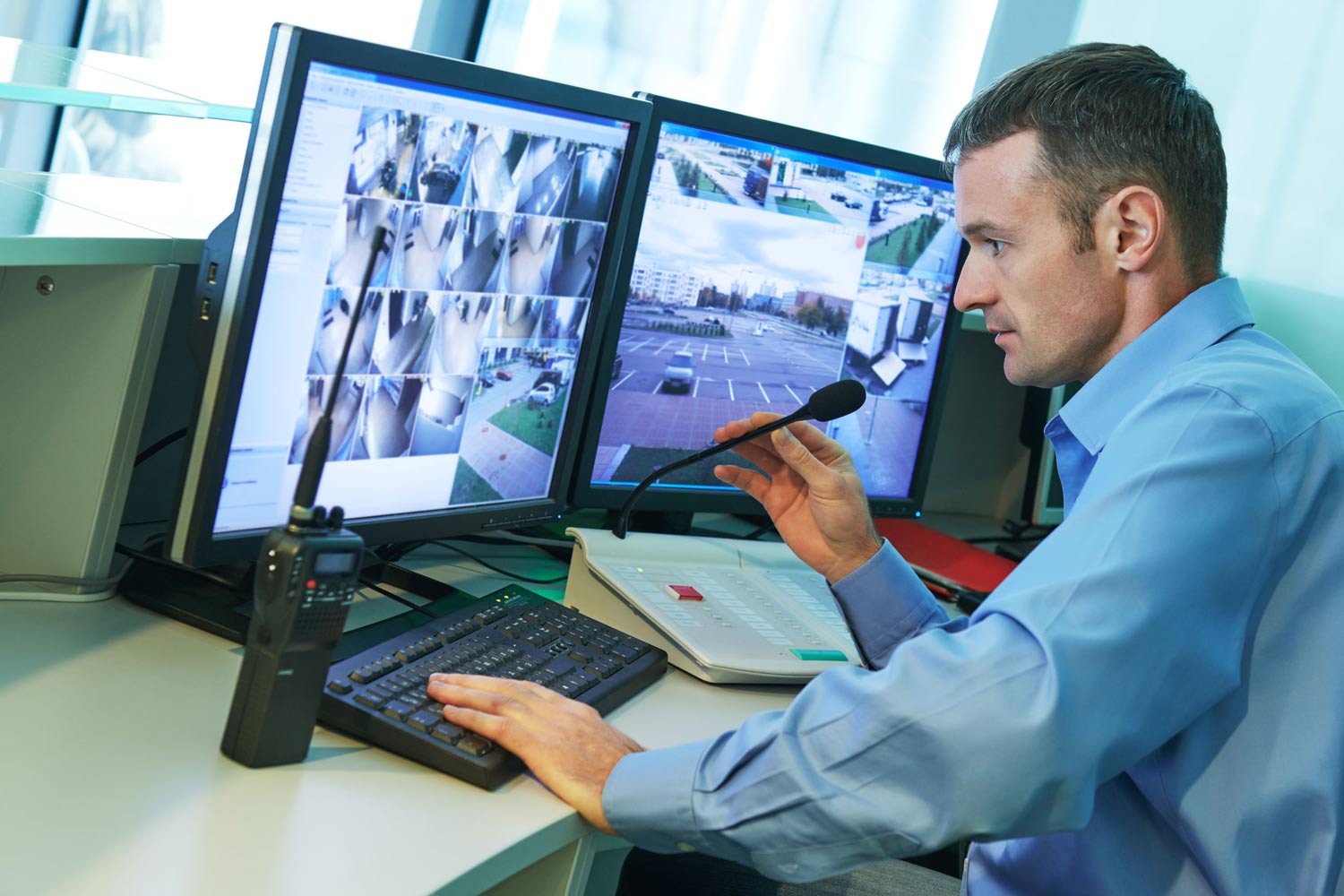
Choosing between on site security guards and virtual security guards ultimately comes down to your budget, footprint, and how much you value physical presence versus continuous coverage. Let’s break down the trade-offs:
Factor | On Site Security Guards | Virtual Security Guards |
Presence | Physical on location | Remote monitoring |
Cost | Higher (including salary, benefits, training) | Lower operational cost |
Coverage | Limited to patrol area | Multiple locations simultaneously |
Response | Immediate physical intervention | Remote alert + authorities |
Technology | Limited tools | AI, analytics, sensors, VMS |
Crime deterrence | Strong visual deterrent | Strong surveillance + audio deterrence |
Risk | Physical safety risk | Minimal on-site risk |
On-Site vs. Virtual Guards: Which To Choose?
To recap this (extensive) blog, let’s break it down into this simple quick-decision guide:
Choose On-Site Guards If:
- You have a single, high-traffic location where a physical presence matters
- Visitor check-in or access control is a major part of the job
- You need someone who can regularly physically intervene
Choose Virtual Guards If:
- You manage multiple sites, or a large outdoor property with no way to physically patrol it all
- Your biggest exposure is overnight or after-hours
- Budget and scalability matter more to you than having a physical presence
Choose a Hybrid Model if:
- You need daytime, customer-facing coverage but can’t justify also paying for it overnight
- You want the deterrence of both a visible guard and always-on camera coverage
- Different parts of your property have different risk levels, like a staffed front office with an unmonitored back lot
On site security guards are ideal if you require a physical presence and want to ensure someone is always available to respond to incidents. Virtual security guards, on the other hand, are a good choice if you have multiple locations to monitor or are on a tight budget. If you’re worried about what security guards can do legally on your property, it’s a valid concern. But technology provides us with an alternative that increases the security of your property, lessens liability risk, and saves you money.
Some businesses may choose to use a combination of virtual and on site security guards to get the best of both worlds. For example, you may choose to have virtual security guards monitor your property overnight while on-site guards are present during business hours. This option can provide comprehensive coverage while still being cost-effective.
Security is a critical concern for businesses and individuals alike. Virtual security guards and on-site security guards both offer unique advantages and disadvantages. By understanding the pros and cons of each, you can make an informed decision and ensure that your property and the people inside are safe and secure.
Call Pro-Vigil about our virtual security guard service. It’s the next evolution in protecting your business.
Virtual Guards vs. On-Site Guards: FAQs