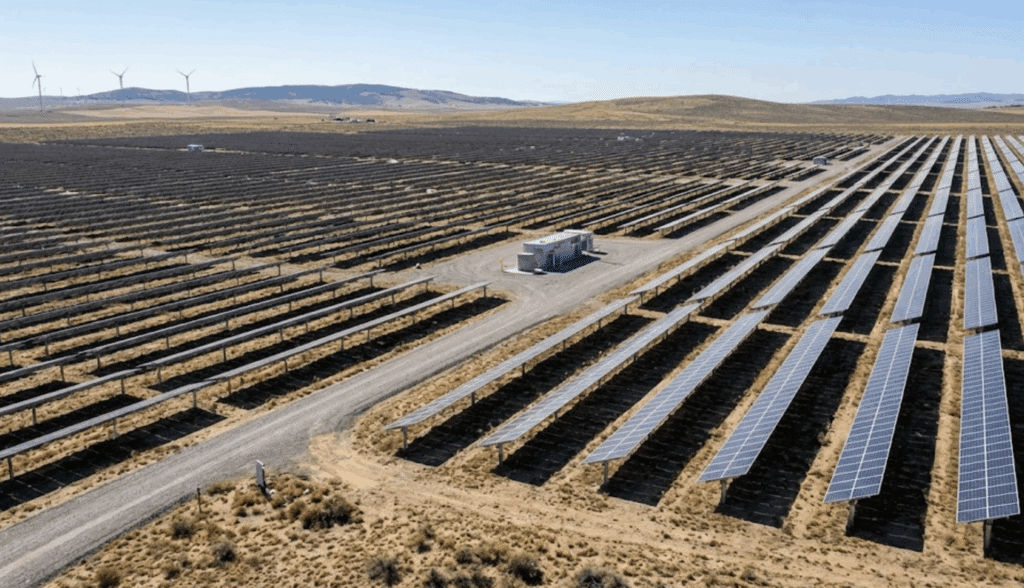
Solar farms are often located in remote, open areas where large numbers of panels, wiring, and equipment are spread across wide sections of land. While this setup is necessary for energy production, it also creates a unique security challenge.
These sites are valuable, difficult to patrol, and often far from immediate response. As a result, solar farms have become targets for theft, vandalism, and intentional destruction.
Protecting these environments requires more than cameras that record activity. It requires a remote video monitoring system that can detect suspicious behavior early and deter individuals before damage occurs.
Why Solar Farms Are Vulnerable
Solar installations are typically designed for efficiency, not security. Panels are mounted in rows across large areas, often with limited physical barriers and minimal overnight staffing. This creates several risks:
- Theft of copper wiring and electrical components
- Removal or damage of solar panels themselves
- Trespassing across large, unmonitored areas
- Deliberate acts of vandalism or destruction
Because these sites are remote, incidents may go unnoticed for hours or even days if there is no active monitoring in place.
Real Incidents Highlight the Risk
Solar infrastructure has increasingly become a target not only for theft, but also for intentional damage. In one recent case, a man in New Mexico was arrested after damaging solar panels that powered water wells for livestock, disrupting critical infrastructure in a rural area.
Other incidents across the U.S. have involved individuals damaging or attempting to destroy solar facilities, sometimes causing significant operational and financial impact, such as a 2023 incident at a solar plant in Nevada that damaged key infrastructure, and a 2024 case in California where a solar facility sustained widespread damage requiring significant repairs.
These events highlight an important reality: solar farms are not just passive assets—they require active protection.
Why Traditional Security Falls Short in Remote Areas
Many solar sites rely on fencing or cameras that record activity. While these measures can help establish a perimeter, they often do not stop incidents from happening. In remote locations:
- Security patrols may take time to reach the site
- There may be no on-site personnel after hours
- Cameras may capture footage but not prevent damage
By the time an issue is discovered, panels may already be damaged or materials removed.
Securing Remote Solar Sites Without Infrastructure
One of the biggest challenges with solar farms is that they are often located in areas without reliable power or internet connectivity. This is where solar-powered mobile remote video monitoring units are especially effective.
These systems are designed to operate independently and can be deployed in remote environments using:
- Solar power, eliminating the need for external electricity
- Cellular connectivity, allowing alerts to be transmitted in real time
- Elevated camera systems, providing visibility across large sections of the array
Because they do not depend on existing infrastructure, these units can be installed quickly and repositioned as needed.
How Proactive Monitoring Helps Prevent Damage
Remote video monitoring detects suspicious activity across solar farms and allows monitoring professionals to respond while an incident is developing.
When movement is detected in restricted areas, monitoring agents review the activity and can respond with:
- Loud sirens or audio deterrents
- Security alarms or flashing lights
- Escalation to law enforcement if individuals do not leave
This type of response is especially important for solar sites because damage can happen quickly. A single individual can remove wiring or damage multiple panels in a short period of time. By intervening early, monitoring teams can often stop the activity before significant damage occurs.
At the same time, the system records and stores high-definition footage, which can be used to support investigations if an incident takes place.
Protecting Critical Energy Infrastructure
Solar farms represent a growing part of the nation’s energy infrastructure. Protecting these sites is not just about preventing theft—it is about maintaining reliable operations and avoiding costly downtime.
Remote video monitoring provides a practical solution for these environments by combining:
- AI-enabled cameras that detect suspicious activity
- Monitoring professionals who respond in real time
- Mobile, solar-powered units designed for remote locations
- Recorded video that supports investigations
Companies such as Pro-Vigil specialize in protecting remote and large-scale properties like solar farms, helping organizations detect risks early and deter incidents before they result in damage.
For solar operators managing large, remote installations, the ability to detect, deter, and document activity can make the difference between uninterrupted operations and costly disruption.
Frequently Asked Questions
Solar farms contain valuable copper wiring, aluminum racking, and electronic inverters, all marketable as scrap metal. Sites are typically large, remote, and minimally staffed, making them easy targets for organized theft crews who know they can work without interruption. A single theft incident can cost hundreds of thousands of dollars in equipment and lost energy production.
Copper wiring theft is the most common and costly incident, thieves strip grounding wire, inter-panel cabling, and collection system conductors. Inverter theft, panel removal, and racking system damage also occur regularly. Vandalism, including panel cracking and deliberate equipment damage, is a secondary concern, particularly at sites near roads or communities.
Yes. Mobile remote monitoring units are solar-powered and transmit via cellular networks, making them fully self-sufficient. They can be deployed at solar sites during construction, before any facility power systems are operational, and continue operating throughout the life of the project without depending on the site’s electrical or networking infrastructure.
AI-enabled cameras are positioned at perimeter access points, along fence lines, and near high-value equipment clusters like inverter stations. The overlapping fields of view create a comprehensive detection zone across the entire perimeter. Mobile units can be repositioned as site conditions change, and additional units can be added to cover expansion areas or newly identified vulnerabilities.
A live monitoring operator receives an immediate alert and reviews the footage in real time. If the intrusion is confirmed, the operator issues a verbal warning through on-site speakers and contacts law enforcement with verified video. The remote response capability means incidents can be addressed within minutes, even at sites hours away from the nearest security personnel.