Quick Answer:
Yes, but it works best as part of a layered security strategy. An electric fence security system uses electrified wires to deter unauthorized access, theft, and trespassing. Although electric fencing helps strengthen perimeter protection, combining it with AI-powered surveillance, intrusion detection, and remote monitoring creates a more complete security strategy.
Clearly, an electric fence isn’t something you can install and forget about. The questions that remain are—does your business need one, and is it enough on its own?
Does installing an electric fence for burglars help your business, or could it actually harm it? Electric fence security can be a first line of defense when attempting to stop theft, vandalism, or trespassing. But there are lots of workarounds that allow criminals to bypass the fencing.
Also, what if a customer, criminal, or employee comes in contact with your electric fence system? Are there some liability issues related to an electric fence that business owners must consider?
We all know that electric fences are good at deterring animals. Before you invest in an expensive electric fence security for human burglars, consider these points. Pro-Vigil offers comprehensive security assessments and customized solutions to help you choose the most effective and safe perimeter protection for your business.
What Is an Electric Fence Security System?
An electric fence security system is a perimeter security solution that delivers short, high-voltage electrical pulses through electrified wires installed along a property’s boundary. Unlike agricultural electric fences designed primarily to contain livestock, commercial security electric fences are intended to deter unauthorized access by creating both a physical and psychological barrier.
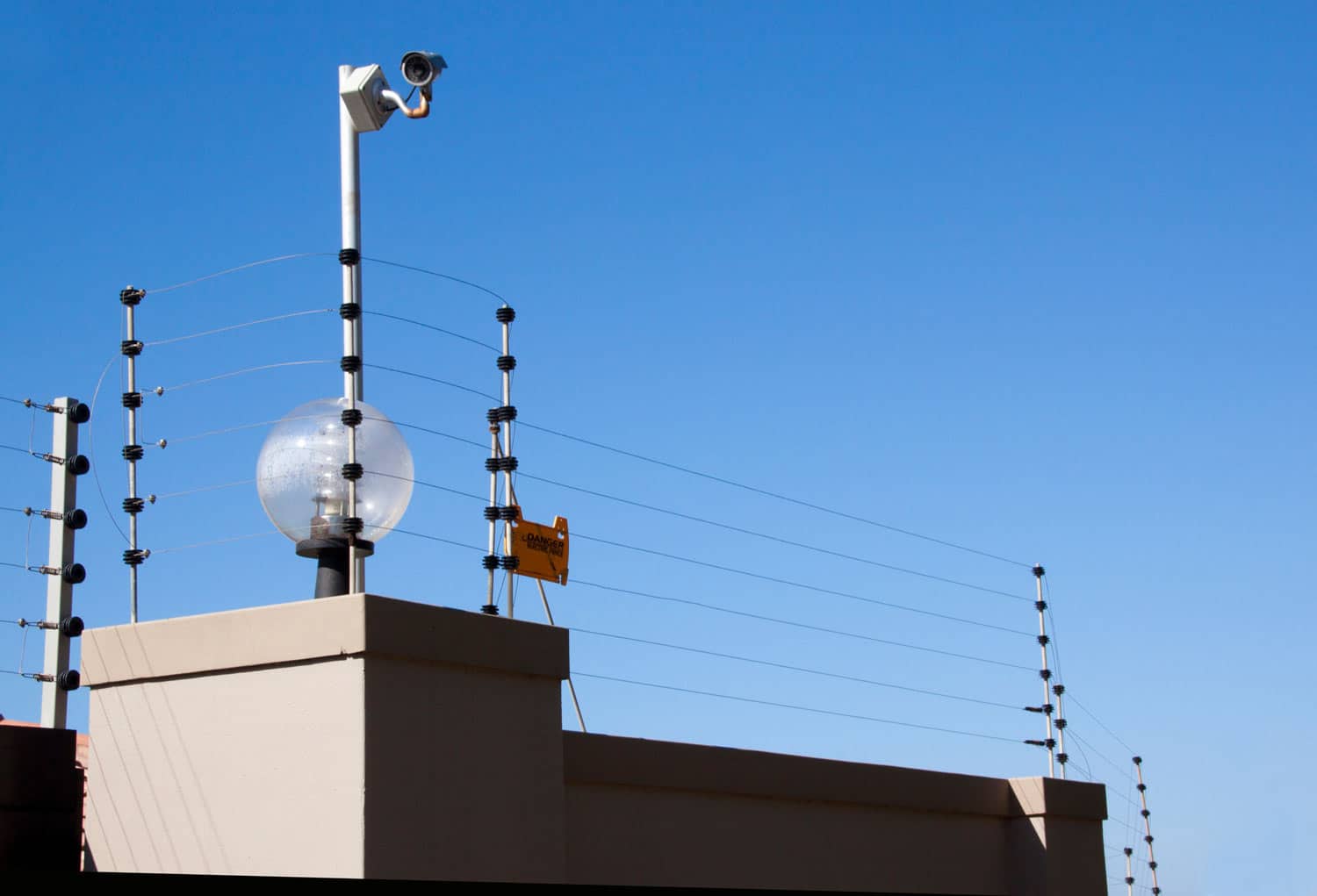
Modern systems usually include energizers, insulated fence wires, warning signs, grounding components, and monitoring equipment that can detect tampering or power interruptions.
Electric fencing is widely used to strengthen perimeter security at warehouses, manufacturing facilities, construction sites, utilities, data centers, and other commercial properties with valuable assets.
While electric fences can help deter unauthorized access, they provide stronger protection when combined with other security solutions that can detect, verify, and respond to threats in real time.
How Does an Electric Fence System Work?
An electric fence security system works by sending short, controlled electrical pulses through conductive wires installed around a property’s perimeter. When contact is made with the electrified wire, a short electrical pulse flows through the connected circuit, creating a deterrent shock that encourages the person to move away from the fence.
Most electric fence systems include:
- An energizer to create controlled electrical pulses.
- Conductive wires installed around the perimeter.
- Grounding components to complete the circuit.
- Monitoring technology to alert operators of disruptions or attempted breaches.
Unlike a standard physical barrier, an electric fence combines a visible deterrent with an active response designed to prevent unauthorized entry.
For businesses, electric fences are often used as part of a layered security approach. When integrated with video surveillance, perimeter intrusion detection, and remote monitoring, they can help security teams identify and respond to attempted breaches more effectively.
Where Are Electric Fence Systems Commonly Used?
Electric fence systems are often deployed in areas where businesses require stronger perimeter security to deter unauthorized entry, theft, vandalism, and trespassing. They are often installed around properties with valuable equipment, sensitive operations, or large outdoor areas that require continuous security monitoring.
Common applications include:
- Industrial facilities and warehouses: Electric fencing can help protect equipment, inventory, and restricted areas from unauthorized entry.
- Construction sites: These systems can help secure job sites, materials, and machinery that are vulnerable to theft or vandalism.
- Utility and critical infrastructure sites: Power facilities, communication sites, and other essential infrastructure often use perimeter security measures to prevent unauthorized access.
- Data centers and high-security facilities: Electric fences can provide an additional barrier around locations that require strict access control.
- Commercial properties and storage yards: Businesses with outdoor assets, vehicles, or equipment may use electric fencing to strengthen perimeter protection.
Although electric fences serve as an effective perimeter deterrent, combining them with solutions like AI-powered cameras, intrusion detection, and remote monitoring creates a more comprehensive security system.
Pro-Vigil Tip: Properties that are difficult to monitor in person require greater emphasis on early detection and reliable verification. Large outdoor areas, remote locations, and vacant facilities often include long perimeter fences and limited lines of sight. Positioning cameras around access points, blind spots, likely intrusion routes, and high-value assets helps maximize coverage.
Types of Electric Security Fences
Electric security fences are available in various configurations designed to meet different security requirements, property types, and environmental conditions. While all electric fences use controlled electrical pulses to deter unauthorized access, their construction and features can vary significantly.
- Standalone Electric Security Fences: Complete perimeter security systems designed with electrified wires, energizers, grounding components, and monitoring features to protect the boundaries of commercial properties.
- Electric Fence Topping Systems: Security enhancements installed above existing walls, gates, or traditional fencing to create an additional barrier against climbing or unauthorized entry.
- Electric Wire Fence Systems: Multi-strand electrified wire installations commonly used around large properties, industrial sites, warehouses, and outdoor areas requiring perimeter protection.
- Solar-Powered Electric Fence Systems: Powered by solar panels, these fence solutions provide perimeter protection in off-grid areas or locations where connecting to a conventional electrical supply is challenging.
- Hybrid Electric Fence Security Systems: Integrated security solutions that pair electric fencing with smart technologies, including surveillance cameras, intrusion alerts, access control, and remote monitoring for enhanced perimeter protection.
Pros and Cons of Electric Fence Security
We can all agree that there is an ever-increasing need to develop foolproof business security. Whether your business is in an urban or rural setting, it’s a potential target. At some point, you may consider an electric fence system to deter bad behavior. Electric fencing helps industrial companies and other businesses protect against vandalism, burglary, trespassing, or anything else a criminal can come up with.
However, there are pros and cons to getting an electric fence security installation that you may not have considered.
Benefits of an Electric Fence System
- Electric fences are usually lightweight and easy to install. While that doesn’t mean they’re cheap, they’re low maintenance unless someone breaks through.
- The materials found in an electric fence system are durable. You have some options when building your system, but all should withstand normal weather elements.
- An electric fence built for humans is a very visible deterrent for burglars. These security systems are clearly marked as electrified. The keep out signs are usually quite prevalent. This makes the electric fence system a good first line of defense.
Electric Fence System Drawbacks
The problem with any static security system is that a smart criminal can figure out a workaround. That’s exactly why video surveillance uses intelligent software to outsmart criminals.
Have you seen Jurassic Park? Remember the scene where the velociraptors were systematically testing the electric fence for weakness? That’s common in real life, too. Criminals know to test electric fences in several ways, including:
- Throwing a piece of wood to break wires, then stepping away to see if there is a response from a security presence on the property.
- Hitting the insulators to break off the bracket.
- Using rubber car floor mats as insulators to climb over the fence.
Eventually, they’ll find a way in, unless the electric fence system is combined with other types of security.
And if you saw Jurassic Park, then of course you understand what happens when the power goes out on an electric fence system.
There is one more drawback to an electric fence for burglars—they can harm more people than criminals with their shock.
Pro-Vigil Insight: Relying on a single security device can leave businesses unaware of equipment failures until an incident occurs. Security planning should prioritize equipment health and system availability alongside proper installation.
Can Criminals Bypass an Electric Fence?
While electric fences can act as a strong visual and physical deterrent, they are not impossible to overcome. Experienced criminals may look for weaknesses in a fence system, including damaged wiring, power failures, gaps in coverage, or poorly maintained components. Some may attempt to disable sections of the fence, exploit vulnerabilities in the installation, or use insulating materials to reduce the risk of receiving a shock.
This is why relying on an electric fence as the only security measure can leave businesses vulnerable. A determined intruder may eventually find ways around a standalone perimeter barrier, especially if there is no system in place to detect and respond to attempted breaches.
Combining electric fencing with security technologies such as AI-powered video surveillance, intrusion detection, access control, and remote monitoring creates multiple layers of protection. This approach allows businesses to identify suspicious activity, verify threats, and respond more quickly when an attempted intrusion occurs.
Is My Electric Fence System a Liability?
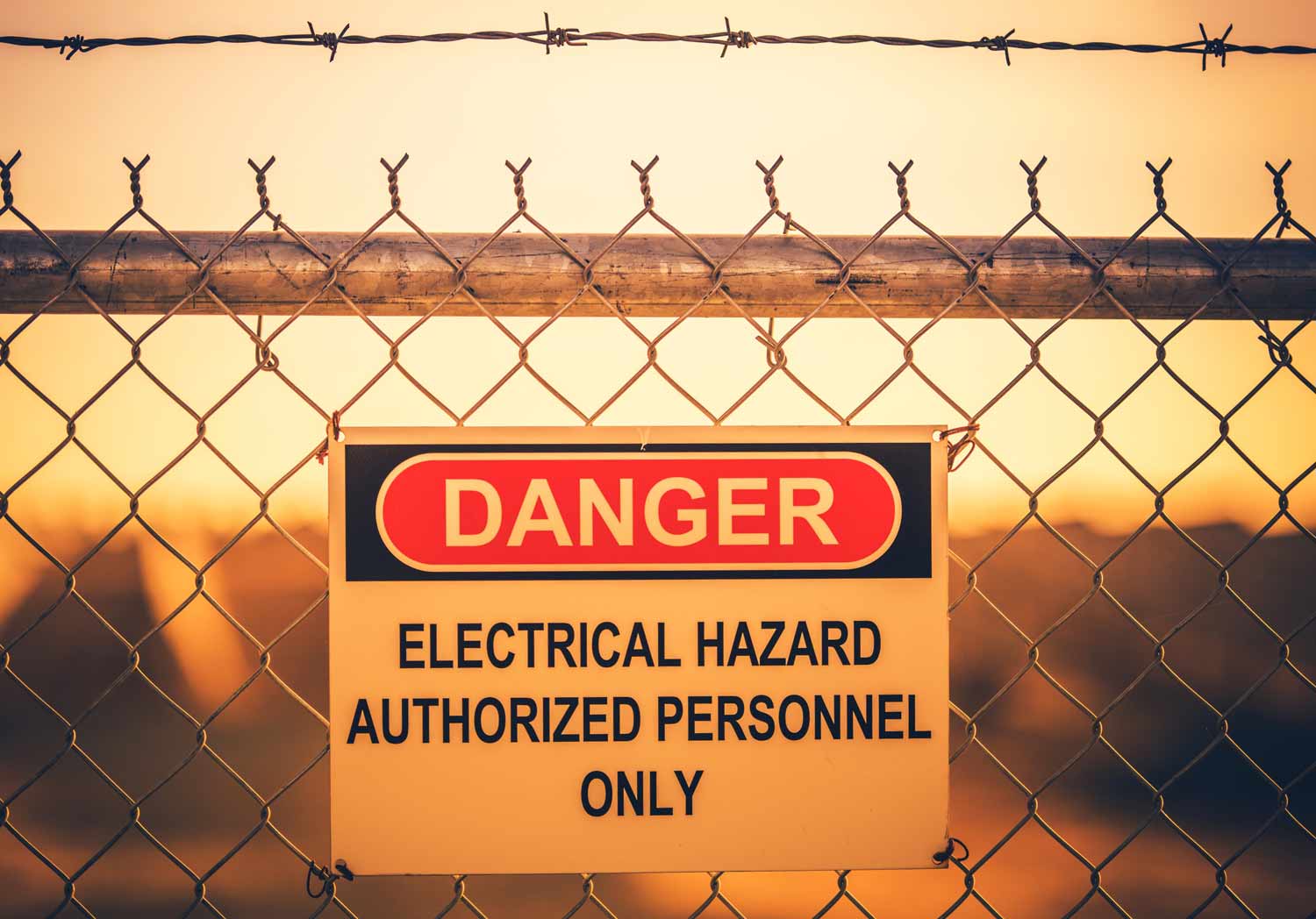
Electric fences typically aren’t lethal for humans, but they are a potential liability. Electric fencing is built with multiple wire strands powered by a transformer. The fencing is a pulsed system, which ebbs and flows across the lines. It is this pulsing effect that keeps a 10,000-volt security system from acting as a lethal deterrent.
“Deaths from electric fences without a pulsing regulator have resulted in criminal prosecution.”
They cite a 1988 death of a woman in Maryland that resulted in manslaughter charges and a 2008 death of a six-year-old Texas child where the owner of the property line fencing pled guilty to negligent homicide.
The problem and potential danger of electric fence security is that more than criminals can get caught up in their lines. Children, animals, and even customers or your employees can receive a nasty shock from these fences. If a person or animal gets entangled with the lines, there is risk of serious injury or death. Adults with pacemakers face a real threat from these powerful security deterrents.
With fire season approaching, we should also mention that the spark from an improperly installed fence could pose a risk. Always make sure brush and debris are cleared from around the electric fence system.
Local zoning rules are typically the laws that govern electric fence installation and maintenance. They’ve come about over time because improperly installed fences sometimes do not have the pulsing effect, and instead just deliver a big full-on dose of powerful electricity. Zoning rules often require warning signs on electric fencing, and in some jurisdictions, a property owner must receive permission from their neighbors before installing a fence. Also, some zoning laws stipulate how close your electric fence can be to other electrical systems grounded in the earth, such as a phone or cable.
There is also the issue of access for firefighters, paramedics, and police during an emergency.
Clearly, an electric fence for human deterrence isn’t something you can install and forget about. The questions that remain are—does your business need one, and is it enough on its own?
Traditional Security Fencing vs Electric Fence vs Video Surveillance
Businesses have several options when securing their perimeter, and each solution offers different advantages. The effectiveness of traditional fencing, electric fencing, and video surveillance varies based on the environment, security challenges, and how quickly a business needs to detect and respond to incidents.
|
Security Solution |
How It Works |
Advantages |
Limitations |
|
Traditional Security Fencing |
Creates a physical barrier using materials such as chain-link, steel, or concrete fencing. |
Provides a visible boundary, helps control access points, and can improve property protection. |
Can often be climbed, cut, or bypassed without additional detection systems. |
|
Electric Fence Systems |
Uses electrified wires to deliver controlled pulses that discourage unauthorized access. |
Creates an active deterrent and adds another layer of perimeter protection. |
Can be disabled, damaged, or bypassed and may create liability concerns if not properly installed and maintained. |
|
Video Surveillance Systems |
Uses cameras, analytics, and monitoring tools to detect and record activity around a property. |
Provides real-time visibility, evidence collection, and the ability to identify and respond to threats remotely. |
Requires proper camera placement, network connectivity, and ongoing monitoring to be effective. |
For many businesses, the strongest security strategy combines multiple layers rather than relying on a single solution. Pairing perimeter barriers such as fencing with AI-powered video surveillance and remote monitoring helps organizations detect threats earlier and respond more effectively.
Can You Integrate Electric Fences with CCTV and Remote Monitoring?
Yes, electric fence systems can be integrated with CCTV cameras and remote monitoring solutions to create a more comprehensive security system. While an electric fence acts as a physical and psychological deterrent, surveillance cameras provide visibility into activity around the perimeter and help security teams verify potential threats.
When combined with AI-powered video surveillance, electric fence systems can help identify unusual activity, detect attempted intrusions, and deliver real-time alerts to security teams. Remote monitoring professionals can then evaluate the situation and coordinate an appropriate response without requiring anyone to be onsite.
This layered approach helps businesses move beyond a standalone barrier by combining prevention, detection, and response capabilities. For commercial properties, integrating electric fencing with intelligent surveillance and remote monitoring can provide stronger protection against theft, vandalism, and trespassing.
Pro-Vigil Tip: Don’t focus camera coverage only on the fence line. The goal is to capture the full sequence of an intrusion, including how someone approaches the property, where they attempt to gain access, and which assets or areas they can reach after crossing the perimeter.
How to Integrate an Electric Fence with CCTV and Remote Monitoring
Most commercial electric fence systems can be integrated with security cameras and monitoring platforms by:
- Connecting the fence controller to the security system so fence alarms trigger alerts.
- Positioning CCTV cameras to monitor the fence line, gates, and other likely entry points.
- Configuring event-based recording so cameras automatically record when the fence detects tampering or a breach.
- Sending alerts to a remote monitoring center where security personnel can verify the incident and coordinate an appropriate response.
- Testing the integrated system regularly to ensure fence alarms, cameras, notifications, and monitoring workflows operate together as expected.
Best Practices for Electric Fence Security
A properly installed and maintained commercial electric fence system is essential for ensuring reliable perimeter protection. Businesses should consider several best practices to improve security effectiveness, reduce risks, and maintain compliance with local requirements.
- Conduct a security assessment before installation: Evaluate the property’s layout, potential entry points, surrounding environment, and security risks to determine the right type of electric fencing system.
- Use proper warning signs and markings: Clearly visible warnings help communicate that the fence is electrified and may be required to meet local safety regulations.
- Perform regular inspections and maintenance: Check wiring, energizers, grounding systems, and other components regularly to identify damage, power issues, or system failures.
- Maintain clear surroundings: Keep vegetation, debris, and other materials away from the fence line to prevent interference, reduce fire risks, and ensure proper operation.
- Integrate with other security technologies: Combine electric fencing with video surveillance, intrusion detection, access control, and remote monitoring to create a layered security strategy.
- Follow local regulations and safety requirements: Ensure installation and operation comply with applicable zoning laws, electrical standards, and safety guidelines.
Following these practices helps businesses maximize the effectiveness of electric fence systems while reducing potential security gaps and liability concerns.
Pro-Vigil Field Note: Every security alert should answer two questions: What happened? and Does it require action? Pairing detection technology with visual verification helps distinguish genuine threats from routine activity, enabling faster and more informed responses.
Should Your Business Install an Electric Fence System?
Electric fences can certainly work as a deterrent. However, because no single system on its own is infallible, we often recommend the use of solar-powered video surveillance cameras that are Wi-Fi enabled to monitor your business. That way, even if the electric fence goes out, you still have eyes in the sky to monitor your business. Today’s IP-cameras use AI technology to work smarter, and they operate in real-time online. Also, modern video surveillance can be combined with virtual security guards who monitor your cameras remotely 24/7. These approaches make for a much more sophisticated approach that goes beyond electric fence security. Today’s criminals are sophisticated, smart, and they can bypass a stand-alone security fence. You need more to reduce the risk of trespassing, vandalism, burglary, or other criminal behaviors.
An electric fence system is one approach to combating crime. But because it can be bypassed or subject to failure, your business needs less of a one-off and more of a true security infrastructure. The team at Pro-Vigil has been designing and installing tighter business security for years. We can help your business. Contact us for the best security options to fit your goals and budget.
FAQs
The cost of electric fence installation depends on several factors, such as:
- Property size
- Fence type and design
- Materials and components
- Installation complexity
- Power requirements
- Additional security features
A professional assessment can help determine the right solution and overall cost.
A properly installed and maintained electric fence system can last many years.
The lifespan depends on the quality of components, environmental conditions, and regular maintenance.
Businesses should evaluate their security risks, property layout, local regulations, maintenance requirements, liability concerns, and how the fence will integrate with existing security systems.
Electric fence regulations vary by location. Businesses should check local zoning laws, safety requirements, and installation guidelines before deploying an electric security fence.
With the addition of backup power solutions like batteries or solar panels, electric fences can continue providing perimeter protection even when the main power supply is unavailable.
Electric fences should be inspected regularly to check for damaged wires, grounding issues, power problems, and other conditions that could affect performance.
The exact schedule depends on the system and environment.
- AI-powered video surveillance
- Intrusion detection
- Access control
- Remote monitoring
Electric fences work best as part of a layered security approach that includes:
- AI-powered video surveillance
- Intrusion detection
- Access control
- Remote monitoring
An electric fence alarm system combines an electrified perimeter fence with alert capabilities that notify security teams when the fence is touched, damaged, tampered with, or experiences a system fault. These alerts can be integrated with monitoring systems for faster response.