Quick Answer & Key Takeaways
- AI facial recognition cameras identify people in real time by matching facial features against a stored database.
- Adoption spans construction, warehouses, retail, healthcare, manufacturing, and logistics, driven by demand for real-time security monitoring and access control.
- Top facial recognition algorithms now exceed 99% accuracy in NIST’s own testing, though real-world performance still varies with lighting, camera angle, and image quality.
- Only Illinois, Texas, and Washington currently have dedicated biometric privacy laws in the US; there’s no comprehensive federal law yet, though some Congress members have discussed it.
- Responsible deployment depends on more than accurate technology, since transparency, consent, data minimization, and human oversight all matter.
- Top remote security companies pair AI face recognition camera technology with regular human monitoring to balance security gains with privacy protections.
AI facial recognition cameras are transforming modern security by helping businesses, governments, and homeowners identify individuals in real time. While AI-powered surveillance improves security and operational efficiency, it also raises important privacy and ethical concerns.
The Rise of AI Cameras and Facial Recognition
AI cameras equipped with facial recognition have rapidly increased in our society. These cameras are ubiquitous in public spaces, airports, commercial establishments, and residential areas. The technology behind them is a sophisticated combination of hardware and software that allows the identification of individuals based on their facial features. You’ll find AI facial recognition in various applications, including surveillance, authentication, and marketing.
What is AI facial recognition?
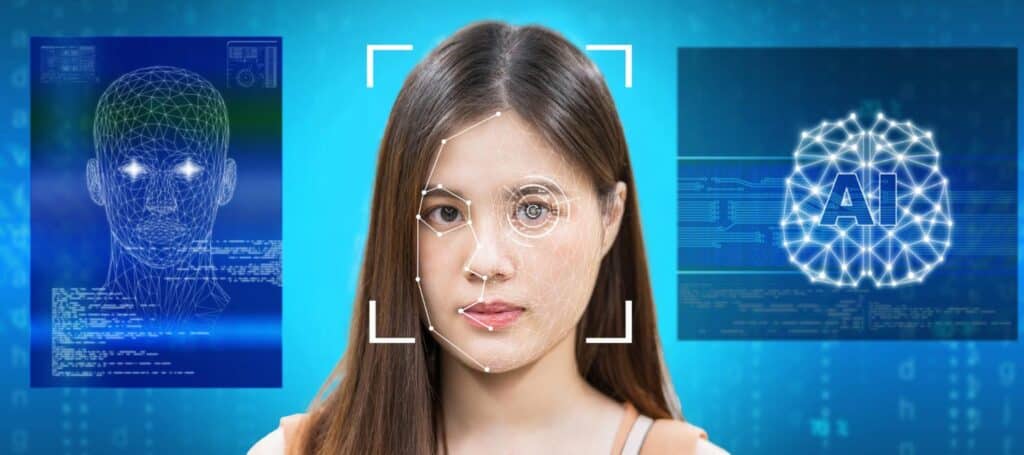
AI facial recognition is a form of biometric technology that uses artificial intelligence to identify or verify a person’s identity from an image or video. An AI face recognition camera captures a live image, converts the unique geometry of a person’s face into a numeric template, and compares that template against a stored database to look for a match.
Whether you call it “using a camera for facial recognition” or an AI face recognition camera, the underlying process is the same. It sits within the broader field of computer vision, and today it’s increasingly built directly into an AI camera rather than sold as standalone software bolted onto a plain video feed. The role of AI in facial recognition security keeps expanding as algorithms improve and hardware costs drop.
How AI Facial Recognition Works
Every AI face recognition camera relies on roughly the same five-step pipeline:
Face Detection → Feature Extraction → Facial Embeddings → Database Matching → Confidence Score
- Face detection: The camera locates a face within a video frame, separating it from the background.
- Feature extraction: The camera measures distinctive landmarks, e.g., eye spacing, nose shape, jawline contour.
- Facial embeddings: The AI system converts those measurements into a numeric string, a mathematical fingerprint unique to that face.
- Database matching: The system compares the embedding against a database of enrolled faces.
- Confidence score: This expresses how certain the system is; low-confidence results typically get flagged for human review rather than acted on automatically, which is why most modern AI security camera systems don’t treat a match as final on their own.
According to NIST’s Face Recognition Vendor Test (FRVT), top-performing algorithms now correctly match faces more than 99% of the time under controlled conditions, up sharply from error rates near 50% a decade ago. Many providers now ship this capability as part of integrated AI camera systems rather than bolt-on software.
Industries Using AI Facial Recognition
AI-powered facial recognition security has moved well beyond airports and law enforcement. Increasingly plausible – and increasingly common – use cases now include:
- Construction: verifying worker identity at site entrances and keeping unauthorized visitors off active job sites.
- Warehouses: controlling access to high-value inventory and restricted zones without badges that can be lost or shared.
- Retail: flagging known shoplifters using facial recognition surveillance cameras alongside traditional loss-prevention tools.
- Healthcare: confirming patient identity through biometric authentication at check-in and restricting access to medication storage and sensitive records.
- Manufacturing: managing access to hazardous equipment and machinery, with an automatic audit trail of who was on the floor and when.
- Logistics: authenticating drivers and staff at loading docks and distribution centers, where badge-sharing is a common vulnerability.
Benefits of AI Facial Recognition Security Cameras
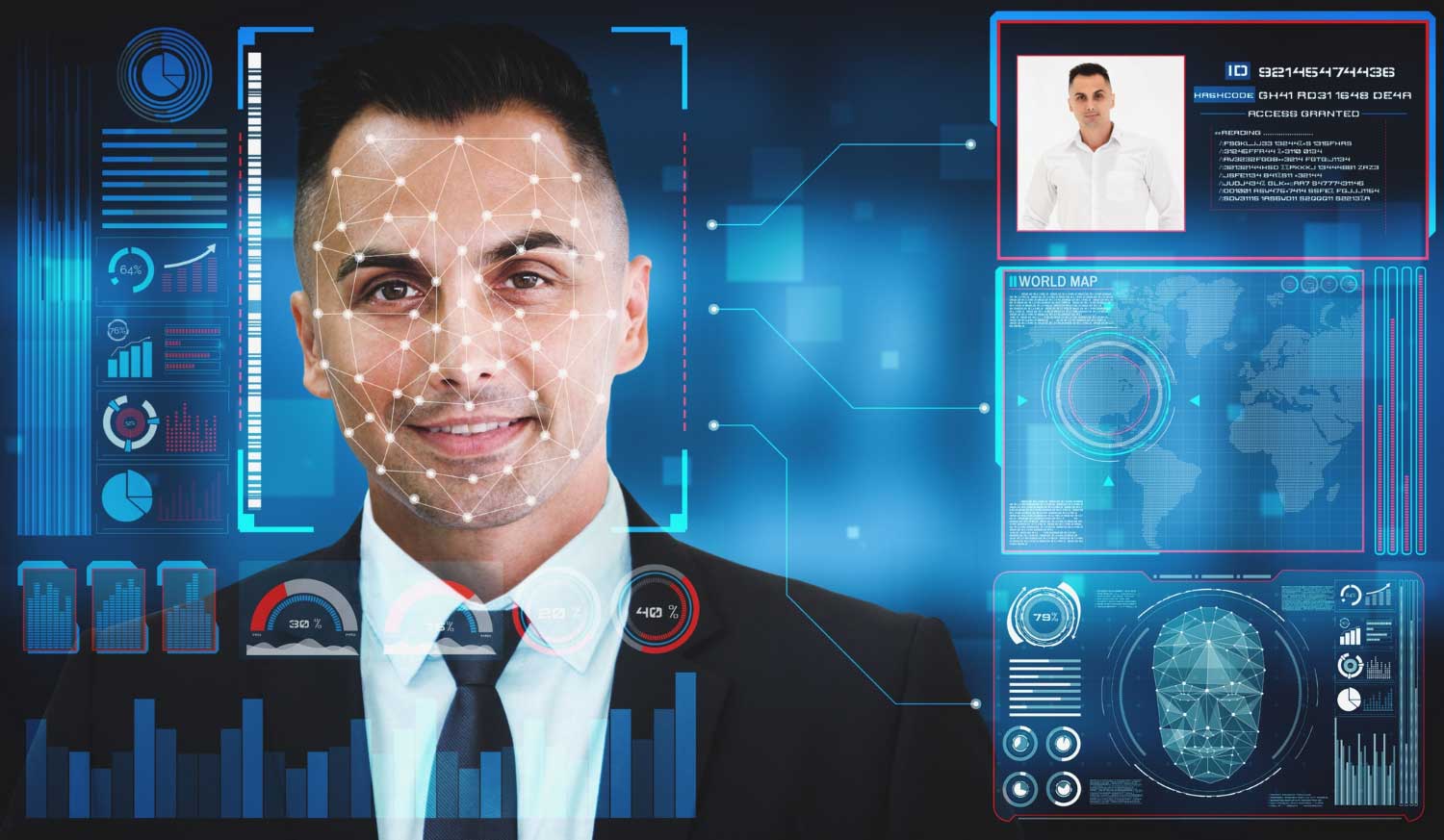
AI facial recognition cameras do a lot of good. The technology makes it easy to unlock your cell phone. These tools can help track license plates during a child’s abduction. They can even scan people boarding planes, matching faces against a “do not fly” list.
Enhanced Security
One of the most significant advantages of AI cameras and facial recognition technology is the bolstering of security. These systems offer an effective way to identify and track individuals in real time. In law enforcement, this technology assists in locating and apprehending suspects quickly. Face recognition surveillance cameras prevent crimes and enhance public safety.
Security cameras with facial recognition help with access control, securing sensitive facilities, and authenticating users on devices. This technology is particularly appealing to businesses and organizations that prioritize security.
Efficiency and Convenience
Beyond security, AI cameras and facial recognition provide efficiency and convenience in daily life. In retail, businesses use these systems to analyze customer behavior and preferences. AI cameras enable personalized marketing strategies, something consumers say they want. In healthcare, they streamline patient identification and medical records access. AI facial recognition cameras ensure care delivery to the right individuals at the right time.
Similarly, AI cameras and facial recognition can enhance the customer experience in the hospitality and entertainment industries. Face recognition surveillance cameras can simplify check-ins and help tailor services to individual preferences. This convenience extends to smart homes and devices. AI cameras make for a more user-friendly experience by recognizing and adapting to the preferences and needs of the people living there.
Traditional CCTV vs. Facial Recognition Camera
So, what separates a traditional “standard” CCTV camera from a facial recognition security camera?
|
Traditional CCTV |
Facial Recognition Camera |
|
Records video only |
Identifies individuals |
|
Requires manual review |
Automated recognition |
|
Reactive monitoring |
Real-time alerts |
|
Limited analytics |
AI-powered insights |
|
Basic security |
Enhanced access control |
|
No identity verification |
Biometric identification |
It’s worth noting that these are not necessarily qualities of a specific camera; rather, they are qualities of the software that powers them. An IP-capable camera that connects to the internet is only as strong – or as weak – as the software behind it. So, if your provider doesn’t have AI capabilities, consider requesting they add them, or switching to a new option.
Privacy Risks and Ethical Concerns of AI Facial Recognition Cameras
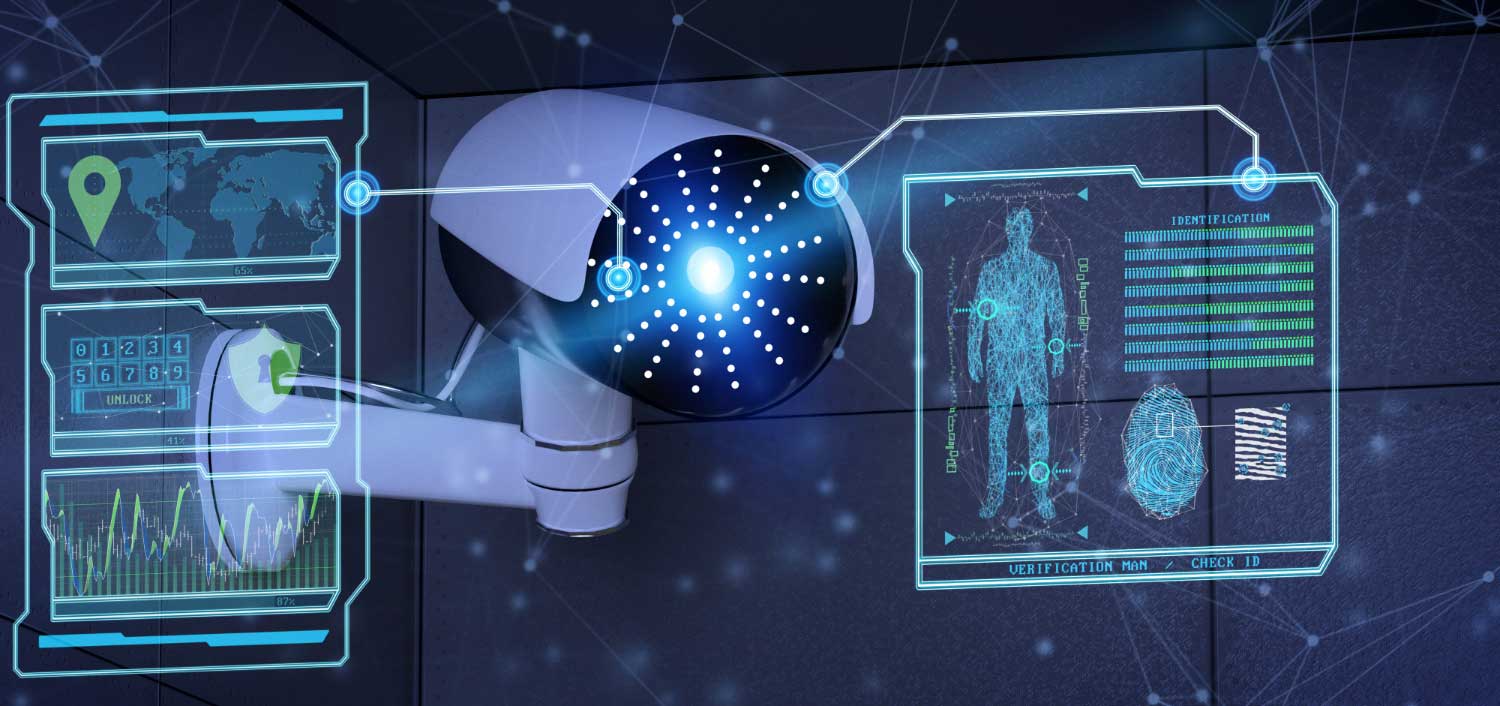
AI cameras and facial recognition also come with privacy concerns. There is potential for mass surveillance and the abuse of personal data. The ubiquitous presence of AI cameras in public spaces can lead to the constant monitoring of individuals without their consent. Misusing facial recognition data can have severe consequences, such as identity theft or unauthorized access to personal information.
Both private industries as well as government facilities use video surveillance. Today, more than 70 million video surveillance cameras are all around you in businesses, buildings, and on street corners. It’s a trade-off most of us can live with to some degree, sacrificing privacy for better security.
But the Brookings Institute cautions, “It is important to note that these trade-offs do not affect all individuals equally. In fact, surveillance and data collection have disproportionately affected communities of color.” Face recognition surveillance cameras are less accurate when detecting people of color. Harvard University says, “Despite widespread adoption, face recognition was recently banned for use by police and local agencies in several cities, including Boston and San Francisco. Why? Of the dominant biometrics in use (fingerprint, iris, palm, voice, and face), face recognition is the least accurate and is rife with privacy concerns.”
AI algorithms are not infallible. Errors can occur when matching faces, leading to innocent individuals mistakenly associated with criminal activities. These false identifications can have devastating consequences, tarnishing an individual’s reputation and even leading to unjust arrests.
The use of facial recognition technology raises ethical and civil liberties concerns. Many argue that the technology risks enabling a surveillance state, where individuals are constantly under scrutiny by both public and private entities. Constant surveillance stifles freedom of expression and discourages individuals from engaging in public discourse and activism.
NIST’s own testing bears this out: The agency’s demographic performance reports show that false-negative and false-positive rates can vary measurably by age, sex, and race, particularly in poor lighting or with lower-quality images, i.e., the exact conditions common for AI surveillance cameras deployed in the real world rather than a controlled testing lab.
AI Facial Recognition and The Need for Regulation

The debate over AI cameras and facial recognition has prompted calls for comprehensive regulations to strike a balance between security and privacy. Governments, technology companies, and civil rights organizations are working to establish guidelines and rules for the responsible use of this technology.
For instance, the European Union’s General Data Protection Regulation (GDPR) imposes strict rules on collecting and processing personal data, including biometric data like facial recognition. It empowers individuals to control their data by requiring consent for how organizations use it.
U.S. State Biometric Privacy Laws
In the U.S., only three states currently regulate facial biometrics under a dedicated statute: Illinois, Texas, and Washington.
- Illinois’ Biometric Information Privacy Act (BIPA): requires written consent before collecting biometric data and is the only one of the three with a private right of action; statutory damages run $1,000 per negligent violation and $5,000 per intentional one.
- Texas’ Capture or Use of Biometric Identifier Act (CUBI): requires informed consent for commercial capture, enforced only by the state Attorney General, with penalties up to $25,000 per violation; this was the law behind a $1.4 billion settlement with Meta in 2024.
- Washington’s biometric law (RCW 19.375): similarly requires notice and consent, with Attorney General enforcement and penalties up to $7,500 per violation.
About twenty additional states now treat biometric data as sensitive personal information under broader privacy laws, even without a dedicated biometric statute.
Several bills have been introduced in Congress, including proposals that would require law enforcement agencies to undergo regular NIST accuracy and bias testing, but none has advanced past committee,
Tech companies are also taking steps to address AI camera privacy concerns. Some have voluntarily stopped selling facial recognition technology to law enforcement agencies, acknowledging the need for a more robust regulatory framework.
Best Practices for Responsible AI Surveillance
As AI and facial recognition tools become standard in commercial security, deployment practices matter as much as the technology. Businesses considering AI-powered security cameras can reduce both privacy risk and liability by following a few core practices:
- Provide clear notice that facial recognition is in use, not just a generic “video surveillance” sign.
- Obtain consent where required by law, and document it.
- Limit retention; keep biometric data only as long as it serves a stated purpose, then delete it on schedule.
- Restrict access to enrolled data to employees who genuinely need it.
- Keep a human in the loop on low-confidence matches as part of your incident response process.
- Audit for bias periodically, using independent testing rather than a vendor’s own claims.
- Never sell or share biometric data outside the stated purpose of collection.
Security cameras with facial recognition are just one of the tools employed by Pro-Vigil. AI-powered software is rapidly evolving. We help companies balance security and privacy to use these powerful resources – protecting their business and assets while not infringing on the privacy of innocent people. Talk to the Pro-Vigil team today about your physical security footprint. We are the leader in 24/7 real-time surveillance.
AI Facial Recognition Cameras: FAQs