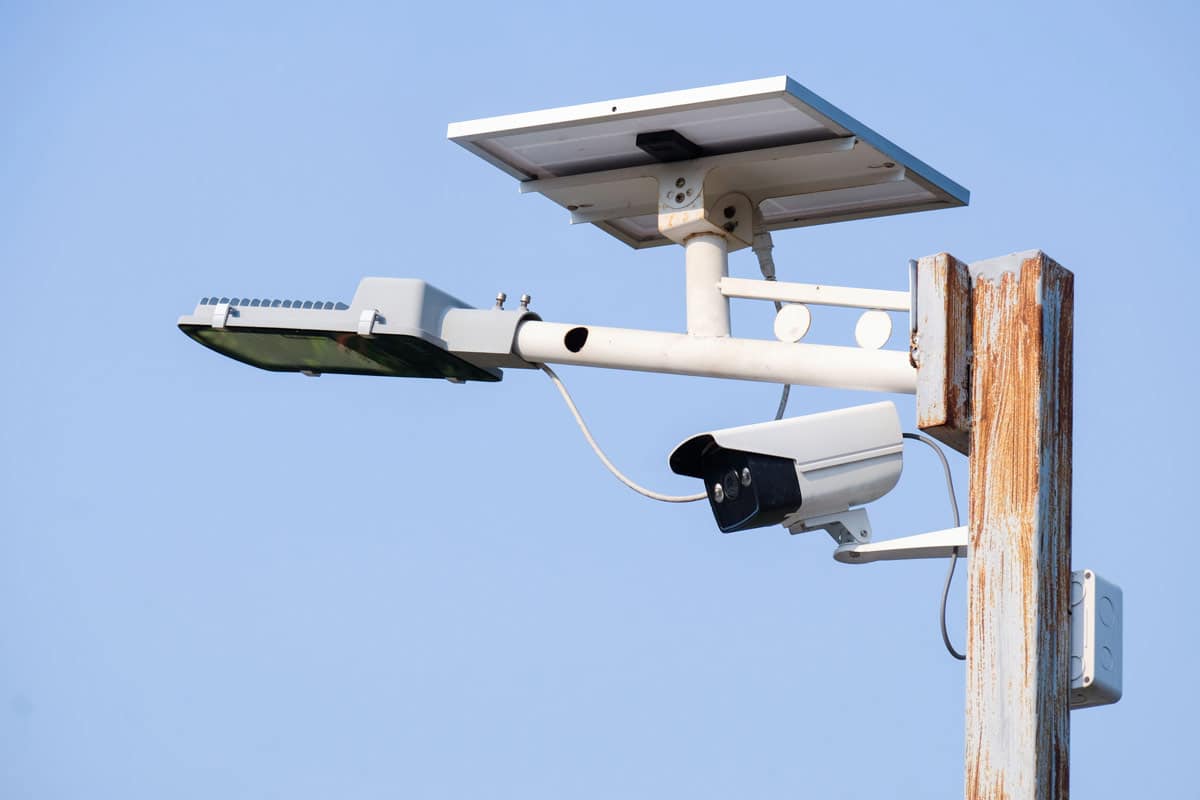
A solar-powered security camera generates its own operating power via an attached solar panel and battery, rather than drawing from a building’s electrical grid. Paired with cellular connectivity, this removes the two infrastructure dependencies, power and wired internet, that most limit where a camera can be deployed.
This combination makes solar power particularly useful for remote sites with no grid power access, like rural storage yards or agricultural properties, and for temporary deployments where running permanent electrical infrastructure isn’t cost-justified.
Solar capacity has to be sized to the site’s actual sun exposure and the camera’s power draw, including any always-on features like continuous recording or AI processing, to ensure reliable operation through periods of reduced sunlight. An undersized solar setup is a common cause of intermittent coverage.