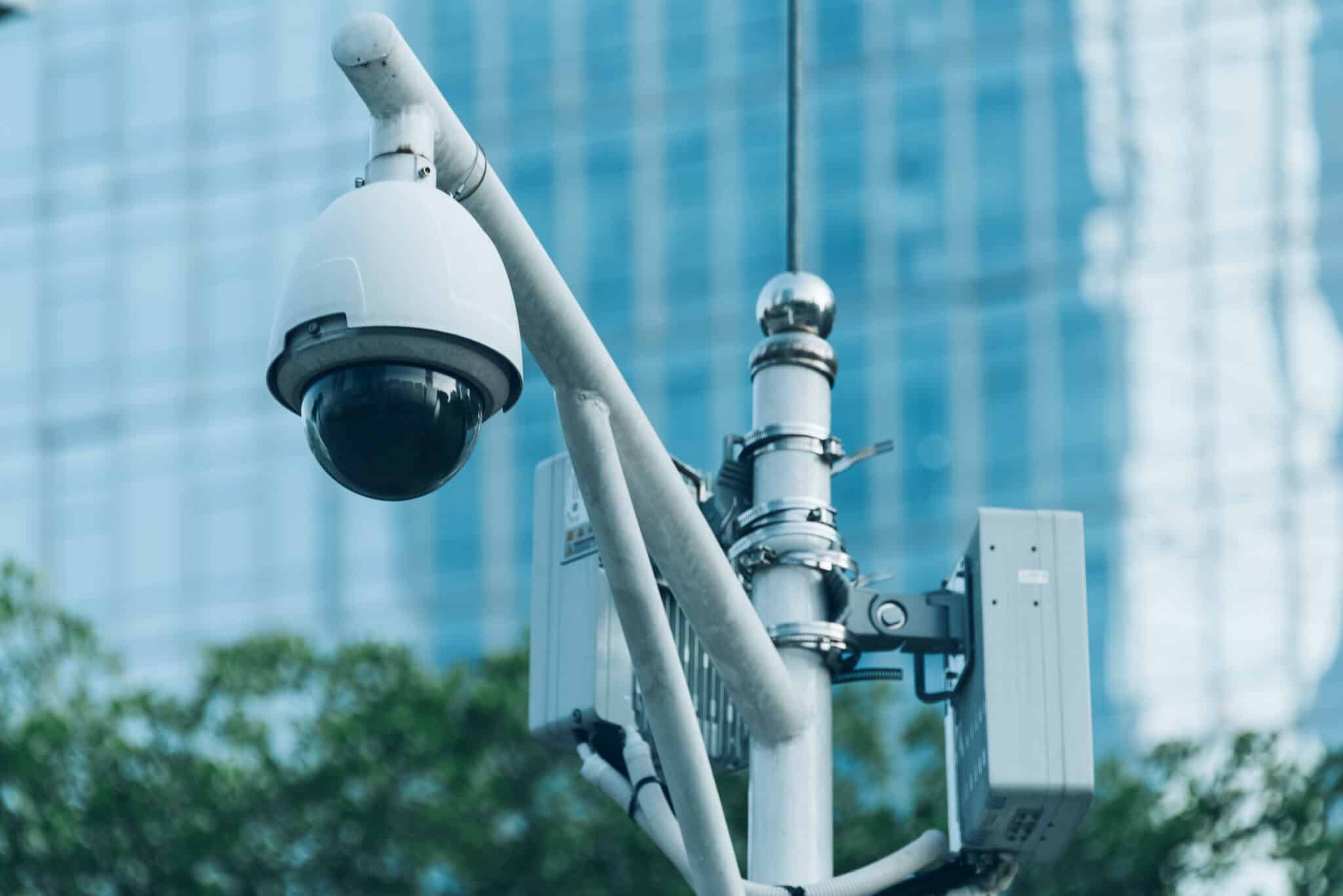
CCTV stands for Closed-Circuit Television. The term originated to describe video systems in which footage is transmitted to a defined, closed set of monitors – as opposed to broadcast television, where a signal is sent openly to any receiver. In contemporary usage, it has become a general-purpose term for security camera installations, regardless of the technology involved.
Traditional CCTV systems used analog cameras connected by coaxial cable to on-site recording equipment, with footage stored locally and accessed through dedicated hardware. These systems established the basic security camera model that remained standard for decades: cameras record continuously or on motion trigger, footage is stored on-site, and review happens after the fact when something goes wrong. Think about security guards in movies, snoozing in front of a bank of video feeds showing a heist going off – that’s a traditional CCTV system in (not-so-great) action.
The shift to networked IP cameras has changed most of the underlying technology while the terminology persisted. Modern systems described colloquially as “CCTV” may use cloud storage, remote access, AI analytics, and live monitoring, none of which would have been recognized features of original CCTV infrastructure.
The term is still useful as a general descriptor, but worth understanding in context. When evaluating a security system, the relevant questions aren’t whether something is or isn’t “CCTV” – they’re about what the system does with footage, who is watching, and whether it has any active response capability.