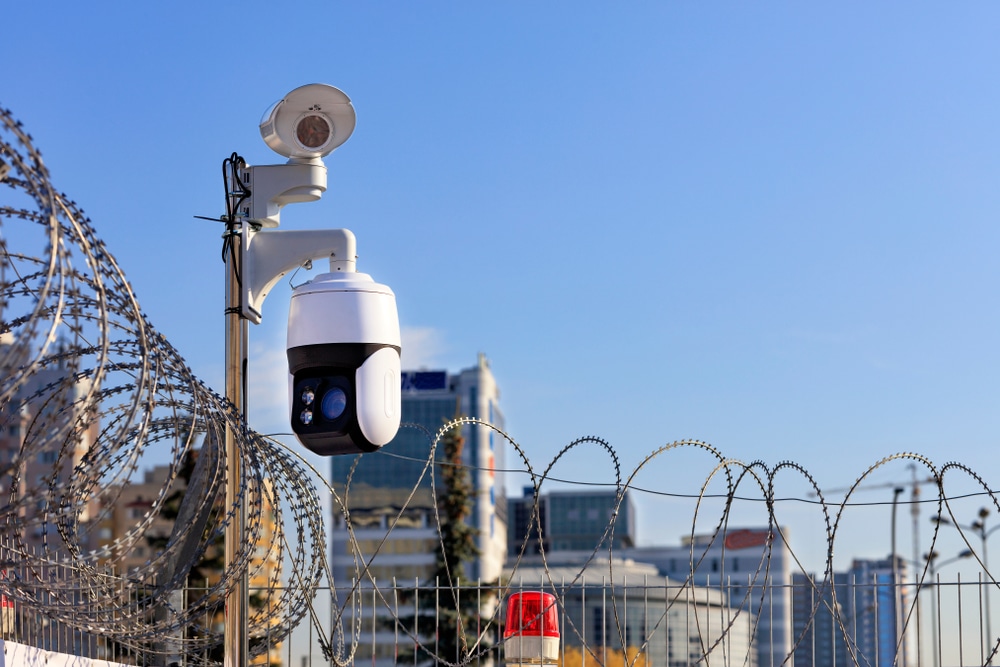
Camera masking is a video surveillance configuration setting that designates specific zones within a camera’s field of view as inactive for the purposes of motion detection and alerting. Movement within a masked zone is ignored by the system, while everything outside the masked area is monitored normally.
The most common use is eliminating predictable sources of non-threatening motion that fall within a camera’s view, like a road visible in the background of an entrance camera, a flagpole moving in the wind, or a portion of a neighboring property that can’t be excluded through camera positioning alone. Without masking, these sources could generate continuous alerts. With it, they’re simply removed from consideration.
Masking configurations require ongoing maintenance rather than one-time setup. A few reasons this matters in practice:
- Seasonal changes: foliage that didn’t exist in winter may grow into frame by summer
- Camera changes: any physical adjustment or addition requires masking to be reviewed and reconfigured for the affected views
- Site changes: new structures, different neighboring activity, or modified site layouts can make existing masking settings outdated – this is especially important for construction sites
A well-maintained masking configuration reduces alert volume and keeps monitoring attention concentrated on areas where it’s actually needed.